





CHIANG RAI – As temperatures start to fall and soft morning fog settles over the limestone mountains of the far north, the Tourism Authority of Thailand (TAT) officially declares high season open. For those in Chiang Rai, winter is not just a cooler few months; it feels like a complete shift in character. The bright green of the rainy season fades into soft pink cherry blossoms and glowing golden sunrises above misty valleys.
From fragrant tea slopes in the highlands to bold works of art in the city, Chiang Rai continues to shine as Thailand’s winter highlight. Whether someone loves photographing mist-filled valleys or wants to meet hill-tribe communities and learn their traditions, these 10 winter spots capture the heart of the province this year.

1. Phu Chi Fa: The Cliff That Touches the Sky
Phu Chi Fa holds its title as Chiang Rai’s classic winter viewpoint for a reason. Sitting at 1,628 meters above sea level on the Thai-Lao border, this famous peak offers one of the most loved sunrises in Thailand.
From December to January, the valley below usually fills with a thick sea of mist, so only the tops of nearby mountains rise above the clouds like scattered islands.
For the best experience, visitors should reach the forest park base before 5:00 a.m. The hike to the summit is about 750 meters and not too difficult, and most people reach the top just in time to watch the first light spread across the sky.
Editor’s tip: Wear layers. Before sunrise, temperatures often fall into the single digits Celsius.

2. Doi Mae Salong: Cherry Blossoms and Yunnan Heritage
Doi Mae Salong (Ban Santikhiri) feels like a small corner of old Yunnan set in northern Thailand. Founded by the 93rd Division of the Chinese Nationalist Army, this mountain village has grown into one of the country’s leading tea regions.
In late December and early January, Wild Himalayan Cherry trees burst into bloom along the winding roads, covering the hillsides with soft pink flowers, Thailand’s answer to Japanese sakura. Visitors can sip hot oolong tea at one of the many plantations and gaze across layered terraces.
A stop is not complete without tasting Yunnanese-style pork leg served with fluffy mantou buns at a local restaurant.

3. Singha Park: Hot-Air Balloons and Winter Fields
Locals know Singha Park as Rai Boon Rawd, and it offers far more than its large golden lion statue. This wide agro-tourism park comes alive in the cool season.
The main winter event is the International Balloon Fiesta, usually held around Valentine’s week in February, when colorful hot-air balloons float above the fields and the lake.
Visitors who miss the festival still find plenty to enjoy. Winter flower gardens, tea plantation tours, cycling routes, and a scenic zipline keep both kids and adults busy. For sunset, the Barn House Pizzeria inside the park serves food with some of the best evening views in Chiang Rai.

4. Doi Tung Royal Villa and Mae Fah Luang Garden
Doi Tung carries the living legacy of Her Royal Highness the Princess Mother. In the cool season, Mae Fah Luang Garden turns into a quilt of carefully designed flowerbeds, filled with cold-climate plants that struggle to grow in most other parts of Thailand.
From December to January, the “Colors of Doi Tung” Festival brings the area to life. The walking street fills with Lanna handicrafts, hill-tribe cultural performances, and stalls selling local food. The whole project is a strong example of community-based tourism that supports the Lahu, Akha, and Tai Yai communities who live on this mountain.

5. Choui Fong Tea Plantation: Clean Lines and Wide Horizons
Choui Fong in Mae Chan is a favorite spot for anyone who loves simple design, wide views, and good tea. The plantation stretches across rolling hills, and its modern café buildings blend into the terraced slopes in a clean, understated way.
Tea grows here all year, but winter light gives the fields a crisp, bright quality. The rows of green bushes stand out sharply against a blue sky, which makes it ideal for photography.
Popular treats include green tea tiramisu, iced or hot tea, and fresh tea leaf spring rolls, all enjoyed while looking out over endless tea terraces.
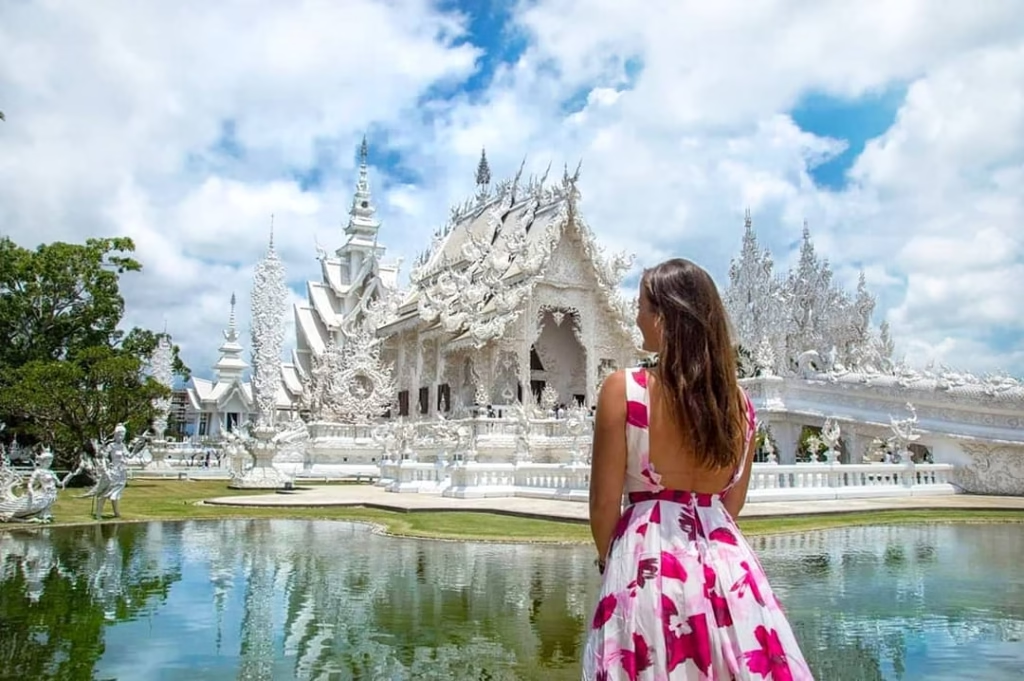
6. Wat Rong Khun (The White Temple)
Wat Rong Khun might not be a natural site, but it is one of the most recognized landmarks in northern Thailand. Created by national artist Chalermchai Kositpipat, the all-white temple represents the purity of the Buddha, accented by millions of tiny mirrors in the plaster.
On clear winter days, sunlight bounces off these mirrors and creates an almost glowing effect. The temple complex tells stories of heaven and hell through rich details, murals, and sculptures. For many travelers, this is an essential stop on any Chiang Rai winter itinerary.

7. Wat Rong Suea Ten (The Blue Temple)
Wat Rong Suea Ten, better known as the Blue Temple, is a newer attraction but has quickly become one of Chiang Rai’s most photographed sites. Designed by a student of Chalermchai, the temple stands out with its deep sapphire walls, gold trim, and flowing art.
Against the cool-season sky, the blue tones look even more striking. Unlike more traditional temples that feel solemn and reserved, the Blue Temple bursts with bold, modern Buddhist art. Every corner seems alive with color, patterns, and statues, which makes it a favorite for visitors who enjoy visual detail.

8. The Golden Triangle (Chiang Saen)
The Golden Triangle, where the Mekong and Ruak rivers meet, marks the point where Thailand, Laos, and Myanmar touch. Cool season is the best time to visit, when morning fog slowly lifts to reveal green riverbanks on all three sides.
Travelers can start at the Hall of Opium Museum to learn about the region’s deep, often difficult history with the opium trade. After that, a long-tail boat ride along the Mekong lets visitors see the border area from the water, with cooler air and clear views that are far more pleasant than during hot and humid months.

9. Khun Korn Waterfall: A Cool-Season Jungle Hike
Those who want more movement in their winter trip can head to Khun Korn Forest Park, home to the tallest waterfall in Chiang Rai province. The hike is about 1.4 kilometers each way, passing through bamboo stands and mixed forest.
At the end of the trail, a 70-meter waterfall crashes into a rocky pool. In the cool season, the air feels fresh rather than sticky, and the mist from the falls is energizing. The trek works well as a half-day outing for anyone who wants a break from city streets and temple visits.

10. Doi Chang: Coffee at the Top
Doi Chang has earned a strong reputation in the coffee world and helped put Chiang Rai on the global map for Thai beans. Sitting at about 1,400 meters, it is one of the country’s highest coffee-growing areas.
Winter also lines up with the coffee harvest. Visitors can watch farmers pick ripe red cherries, sort them, and dry or wash them, depending on the method. The air is crisp, the aroma of freshly roasted beans hangs in the breeze, and small cafés along the ridge look out over valleys and peaks.
Doi Chang reflects a modern side of Chiang Rai, where quality coffee, sustainable farming, and laid-back mountain life come together in one place.
A Note for Winter Travelers
Accommodation in Chiang Rai fills up fast during December, especially around Doi Tung and Phu Chi Fa on long weekends and holidays. Early booking helps avoid last-minute stress.
When visiting major temples, including the “Big Three” (White, Blue, and Black), visitors should dress modestly. Shoulders and knees need to be covered, so a light scarf or shawl in a daypack is very useful.
Chiang Rai’s winter season is short but unforgettable. Whether someone sits with a hot drink on a misty terrace or explores a temple gleaming in the cold light, this is when the province feels at its most magical.

Suggested 3-Day Winter Itinerary in Chiang Rai
Day 1: The Artistic Side of the City
Morning
Start the day at Wat Rong Khun (the White Temple). Arriving around 8:00 a.m. helps avoid big tour groups and gives time to walk through the complex in relative quiet.
Late Morning
Continue to Singha Park. Renting a bicycle is an easy way to explore the tea fields, lakes, and flower gardens while the air is still cool.
Afternoon
Visit Wat Rong Suea Ten (the Blue Temple) and enjoy its deep blue interior and statues. Then head up the hill to Wat Huay Pla Kang. Visitors can ride the elevator inside the large Guan Yin statue, often called the Big Buddha, for panoramic views over Chiang Rai.
Evening
Finish the day at the Chiang Rai Night Bazaar. A bubbling pot of Jaew Hon (Thai hot pot) is perfect for warming up in the cool night air.
Day 2: Northern Borders and Mountain Gardens
Morning
Drive north to the Golden Triangle. Spend time at the Hall of Opium to get a clear picture of the Mekong region’s past and how the area changed from opium fields to tourism and agriculture.
Afternoon
Head up to Doi Tung. Stroll through Mae Fah Luang Garden, then try the Tree Top Walk for a short but exciting walk along elevated walkways in the treetops.
Sunset and Evening
Continue to Doi Mae Salong and check in at a local guesthouse. As the air turns cold, a traditional Yunnanese dinner tastes especially comforting. The quiet mountain village at night feels calm and peaceful.
Day 3: Sunrise Spectacle and Nature Escape
Pre-dawn
Leave for Phu Chi Fa. The drive from Chiang Rai city center takes around 2.5 hours, so many travelers stay near the base the night before. Those who hike up before sunrise are rewarded with the famous sea of mist and glowing sky.
Morning
On the way back, stop at Choui Fong Tea Plantation in Mae Chan. Enjoy a cup of tea or dessert while looking over the stepped green fields one last time.
Afternoon
Fit in one final nature stop at Khun Korn Waterfall. The shaded hike and cool spray from the falls are a refreshing way to wrap up the trip before heading back to the city.

Getting Around Chiang Rai in Winter
- Motorbike rental
Ideal for solo travelers or couples who ride with confidence. Daily rentals usually range from 250 to 300 THB. Roads in the north are steep and curvy, so riders should have experience and an International Driving Permit. Good jackets and gloves help with the wind chill during early mornings and evenings. - Car with driver
Families or groups often prefer a private van or SUV with a local driver. Rates usually start around 1,500 to 2,500 THB per day, plus fuel. Drivers from the area know the steep curves around places like Phu Chi Fa far better than any GPS. - The Green Bus
For visitors coming from Chiang Mai, the Green Bus is a reliable option. The trip takes about 3.5 hours. Booking the VIP class provides more legroom and a more comfortable ride. - Public songthaews
Shared red or white pickup trucks with benches in the back work well for short hops around town, usually 20 to 50 THB per ride. However, they rarely go deep into the mountains to places like Doi Mae Salong unless arranged as a private charter.
Staying in Style: Boutique Hotels on Doi Mae Salong
For the second night of a winter trip, staying in the highlands around Doi Mae Salong is part of the experience. The chilly morning air, fog rolling across the tea slopes, and sunrise over the hills feel very different from the city.
Recent feedback from local hoteliers highlights these small properties as strong choices for mid-December stays:
| Hotel Name | Style & Highlight | Current Est. Price (Nightly) |
|---|---|---|
| 101 Tea Green View Resort | Best for tea fans, minimalist rooms over endless tea rows | THB 1,800+ |
| Thai T Garden Home | Best view, friendly service, balconies perfect for sunrise | THB 1,600+ |
| Baan Hom Muen Li | Romantic pick, light-filled rooms with crisp mountain views | THB 1,150+ |
| Wang Put Tan Boutique | Modern Yunnanese style with cozy boutique comfort | THB 980+ |
Journalist’s suggestion:
Guests at 101 Tea Green View should try the oolong-infused dishes at dinner. At Baan Hom Muen Li, the balconies are ideal for early-morning photos as the mist hangs in the valley below Santikhiri village.
Final Checklist Before Heading North
- Warm clothing:
Even if afternoons reach 25°C, early mornings on peaks like Doi Mae Salong can fall below 10°C. A light down jacket, long pants, and socks help a lot. - Temple wear:
Keep a light shawl or scarf in a bag for visits to temples. Shoulders and knees should be covered for both men and women. - Cash:
Most city cafés, gas stations, and larger shops accept cards, but small hill-tribe markets, roadside stalls, and some mountain lodges prefer cash in Thai Baht.
Chiang Rai calls to anyone who loves cool air, mountain views, and a slower pace. Winter is the best time to see this northern province at its brightest, from mist-filled sunrises and tea and coffee farms to glowing temples and quiet villages.


