Last Updated on August 1, 2026 by Jeff Tomas
BEIJING, China – In late July, severe cracks appeared at a reservoir in Guangdong province, sending panic through local communities. As water levels surged from persistent heavy rains, authorities scrambled to evacuate several villages downstream. This terrifying near-miss highlights a dangerous reality for millions of people living across the country.
China currently operates over 90,000 reservoirs, but the vast majority are aging and plagued by poor maintenance. When torrential storms strike, these critical structures often struggle to hold back the immense floodwaters. Now, water management experts are sounding the alarm over a looming national infrastructure disaster.
Key Takeaways
- Massive Infrastructure Risk: China relies on over 40,000 aging dams that have outlived their designed lifespan, creating severe flooding risks for downstream communities.
- Questionable Repair Funds: Millions of dollars intended for critical dam maintenance are frequently mismanaged, leaving emergency floodgates completely broken when natural disasters strike.
- Three Gorges Dam Under Pressure: Rising floodwaters from upstream regions are placing unprecedented and dangerous stress on the world’s largest hydroelectric dam.
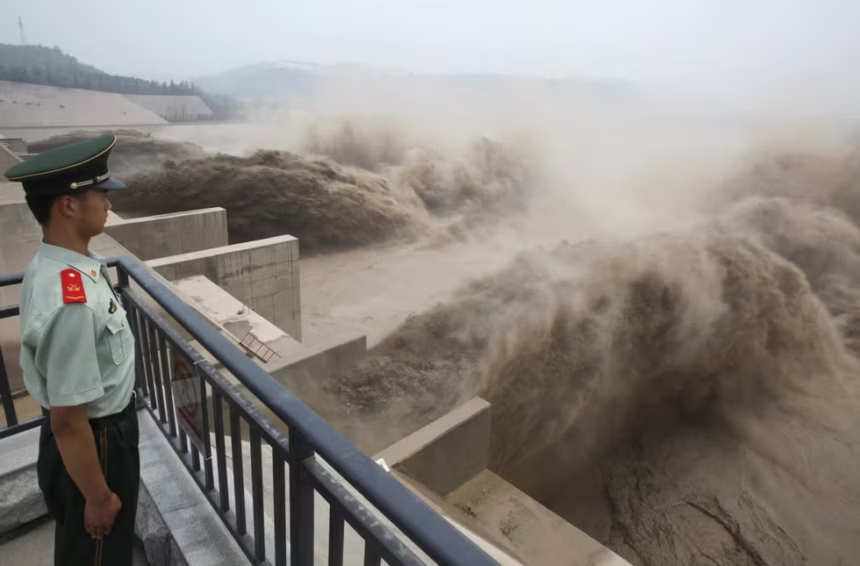
The Xiai Reservoir was built in 2005 as a protective measure for the surrounding southern region. However, intense summer rainstorms quickly pushed the reservoir’s water levels to a highly dangerous point. To prevent a catastrophic breach, local operators began discharging the floodwaters at their maximum possible capacity.
This urgent release sent a massive wall of water directly into the nearby town of Huangcun. Videos shared widely on social media showed thick floodwaters reaching the second floor of local homes. Scared pigs were even seen climbing onto residential rooftops to survive the rapidly rising waters.
Trapped residents filmed the heavy destruction and shared the terrifying scenes with the outside world. This sudden flooding event has sparked widespread anger and frustration among the general Chinese public. People are demanding to know why a relatively modern dam failed to properly control the floodwaters.
Caught Off Guard by Sudden Floods
Citizens wonder how much money was truly spent on safe construction and regular structural inspections. The severe flooding problems go far beyond one small town in the southern Guangdong province. In late July, a powerful typhoon battered the coastal areas with extreme winds and heavy rain.
While the storm passed quickly, the resulting flooding disaster had only just begun for residents. Across the entire province, 338 medium and large reservoirs opened their floodgates to lower water levels. This simultaneous release sent massive, uncontrolled surges of water into the vulnerable towns and valleys below.
The Baipenzhu Reservoir, the fourth largest in the region, saw its water levels soar dangerously high. Consequently, local rivers quickly exceeded their official warning marks, spilling into nearby streets and farms. Towns in Lianping County endured two full days and nights of heavy, unrelenting summer rain.
When the upstream reservoirs finally started releasing water, the weary towns were almost instantly submerged. Many residents woke up in the dark to find their homes and vehicles completely ruined. They strongly argue that local officials should have released the excess water much earlier.
Without proper early warnings, a natural rainstorm was essentially turned into a deadly man-made disaster. In Meizhou city, the chaotic situation turned deadly when multiple dams released water at once. Roads quickly transformed into rushing rivers, trapping terrified people inside their personal vehicles.
Tragic Losses in Remote Villages
Sadly, several residents were swept away and later found dead inside their submerged cars. A very similar nightmare unfolded in Jilin province during the final weeks of July. Floodwaters roared through the streets of Changyang town, even though it had not rained there locally.
A huge wave of muddy water and debris chased terrified residents down the main road. Officials later admitted that the upstream reservoir was operating well above its safe flood control limit. They had to release water to prevent a total dam collapse, but they failed to warn anyone.
The hidden dangers of aging infrastructure became horribly clear in the southern province of Guangxi. On July 6th, the Leolan Reservoir completely breached and wiped out several downstream towns. Authorities officially reported 39 deaths, but local survivors believe the real death toll is much higher.
This older earthen dam was originally built in 1958 and had a long history of structural issues. According to government records, the facility recently received 457 million yuan for major structural repairs. Officials even praised the newly repaired dam as a perfect model project for water safety.
Yet, whistleblowers claim the expensive repair work was terrible and failed basic safety inspections. A properly designed reservoir usually features a secondary fuse dam that breaks first to relieve pressure. When the main Leolan dam suddenly failed, the secondary dam remained completely intact.
Misplaced Money and Broken Systems
During the emergency, the reservoir director desperately tried to call his bosses for permission to act. However, the mobile phone signal was completely dead in the remote area surrounding the dam. Even worse, the main flood discharge gates jammed and refused to fully open when needed.
Independent water experts point out that relying on manual judgment always delays emergency disaster responses. By the time workers spot a severe problem, it is already too late for the public. This massive failure cost dozens of lives and destroyed entire rural communities in an instant.
Critics are now asking where the 457 million yuan in repair funds actually went. Financial records show that much of the money paid for useless cosmetic upgrades. Funds were spent on painting dormitories and replacing handrails instead of fixing the dam’s core structure.
These recent failures remind many people of the darkest chapter in China’s long flooding history. In August 1975, the Banqiao Reservoir in Henan province collapsed after record-breaking typhoon rainfall. A massive wall of water broke free and wiped out absolutely everything in its path.
This catastrophic failure killed an estimated 240,000 people across the heavily populated region. According to historic coverage by Weather Underground, the resulting flood wave was over six miles wide. It is widely considered the deadliest structural failure in modern human history.
Thousands of Reservoirs Disappear from Records
During the 1975 crisis, the critical floodgates had rusted completely shut from years of neglect. When workers desperately tried to open them, only a few of the rusty gates moved. The situation with the Leolan Reservoir shows that similar problems still exist in the country today.
China has aggressively tried to tame its massive rivers over the last seventy years. The central government has built nearly 95,000 reservoirs across the vast nation. That equals an incredible average of 30 dams for every single county in the country.
However, a strange discrepancy has recently appeared in the official government infrastructure numbers. In 2011, a national survey recorded over 98,000 functioning reservoirs in the country. By the current year, that total number had mysteriously dropped by more than 3,000 dams.
Experts wonder if these missing dams were safely dismantled or if they simply washed away. The government has never provided a clear public explanation about the missing water infrastructure. Since 1954, official records admit that over 3,500 dams have completely breached.
The vast majority of China’s smaller dams are simple earth-rock structures. Water resources experts confirm that 92 percent of the country’s dams fall into this specific category. These older earthen dams are highly vulnerable to heavy rain and constant water erosion.
Engineers originally designed these earthen structures to last for roughly fifty years of service. Today, more than 42,000 reservoirs have officially passed that half-century mark. Another 21,000 dams have been operating constantly for over sixty years.
This means that tens of thousands of dams are currently operating on borrowed time. Routine maintenance is often delayed or ignored completely due to shrinking local government budgets. Independent observers call this a massive disaster hanging over the heads of 1.4 billion citizens.
The Looming Threat to the Three Gorges Dam
When disaster strikes, the public is often told to donate money for local relief efforts. Critics argue that the central government has plenty of money for infrastructure projects. The real issue is that repair budgets are frequently stolen or wasted on bad contracts.
The danger of sudden flooding is not going away anytime soon for the Chinese public. In late July, massive rainstorms heavily pounded the central and southwestern regions of the country. Cities like Chongqing saw their busy streets vanish under deep, rapidly moving floodwaters.
Restaurant workers frantically stacked sandbags, but the water easily broke through the temporary barriers. The central government had to trigger a level-four emergency response for the entire province. This severe weather pattern seriously threatens the major rivers in the Yangtze basin.
All of this upstream water eventually flows into one highly specific place. It heads straight for the massive reservoir behind the world-famous Three Gorges Dam. The Three Gorges Dam is the largest hydroelectric power station on the entire planet.
It was built to control the devastating floods that historically plagued the Yangtze River basin. However, the expensive megaproject has faced intense criticism from scientists since the very beginning. When the dam was approved in the 1990s, many experts warned against the massive project.
Critics claimed that the construction was plagued by corruption, bribery, and severe corner-cutting. They warned that altering the mighty river so drastically would trigger earthquakes and deadly landslides. The Guardian previously reported that extreme floods have pushed the Three Gorges Dam to its limits.
Millions Displaced and an Uncertain Future
During heavy rain seasons, the massive structure faces the largest water inflows in its history. Operators are forced to open multiple floodgates to relieve the incredible pressure on the concrete. To build the dam, the government forcibly relocated more than one million innocent people.
According to Britannica, the project destroyed countless natural features and historic archaeological sites. Now, the resulting reservoir holds back an unimaginable amount of heavy water. If a major upstream flood hits Sichuan, the Three Gorges Dam takes the brunt.
Any failure or forced water release here would deeply devastate the lower Yangtze River basin. Millions of human lives and the core of China’s economy sit directly downstream. Decades ago, a prominent university professor loudly warned that the dam was a terrible mistake.
He predicted that the giant structure would eventually become a lethal hazard to the country. Today, as severe weather becomes more common, his old warnings sound more accurate than ever. The ongoing crisis with smaller dams proves that concrete and steel cannot stop nature forever. Ultimately, unless safety inspections drastically improve, the absolute worst may be yet to come.
Trending News:
Guangxi Dam Collapses After Typhoon Maysak Brings Record Rains to Southern China
China to Begin Construction of Mega-Hydroelectric Dam in Tibet Despite Protest