




Last Updated on March 23, 2026 by Jeff Tomas
CHIANG RAI – Residents of the Ruammit Karen community have called on the Chiang Rai governor to take serious action over toxic contamination in the Kok River, saying the problem is harming both health and livelihoods. They are also asking for urgent water testing and a stable supply of clean water.
On March 22, 2026, villagers from Ruammit Village, Moo 2, Mae Yao Subdistrict, Mueang Chiang Rai District, submitted a formal letter to the governor of Chiang Rai.
The community includes Karen, Hmong, Lahu, and Akha families, with more than 90 households and about 400 residents. In the letter, they said pollution in the Kok River has disrupted daily life for a long time and now needs immediate attention.
The community sits along the river and depends on it for household use, farming, and cultural tourism. It also supports elephant care, which is one of the village’s main sources of income.

Kok River Heavy Metal Contamination
However, villagers say the Kok River has stayed muddy all year, which points to a worsening ecosystem. They also cited water and sediment test results that found heavy metal contamination, especially arsenic above safety standards. The problem may be linked to upstream cross-border activity.
The effects are already showing in the village. Residents have reported rashes, itching, bumps, and skin irritation. At the same time, unusual symptoms have also been seen in elephants, making it harder for people to use river water as they once did.
As a result, the pollution is hitting both public health and the local economy. Even households that do not drink river water directly still face risk through skin contact and eating aquatic animals from the area.
Because of these concerns, villagers have tried to solve part of the problem on their own. They have dug more than 50 shallow wells and groundwater wells to avoid using river water directly.
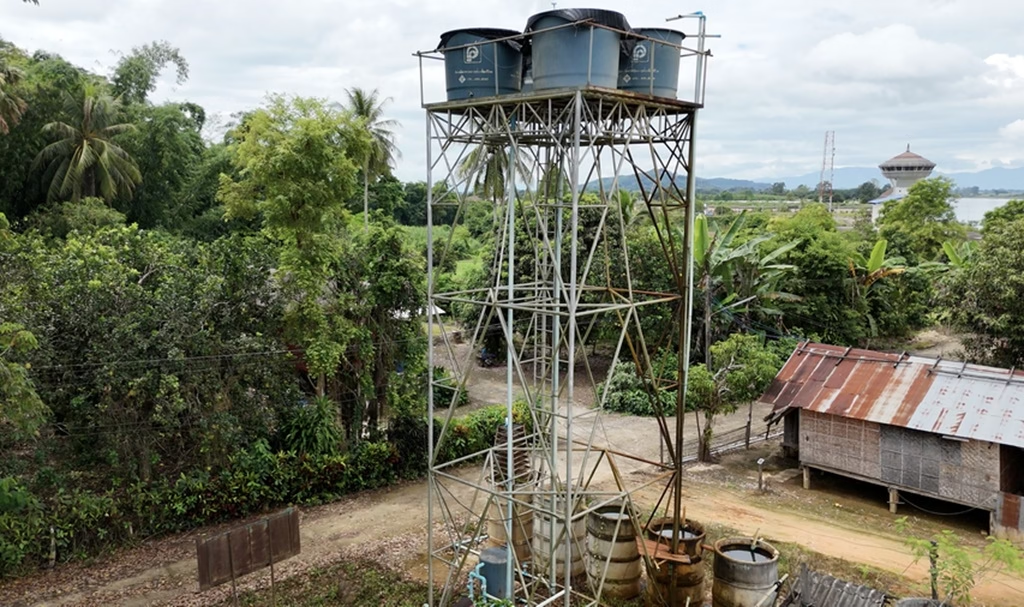
Clean Drinking Water
Still, no full and regular water quality checks have been carried out, so people remain unsure whether the water is truly safe.
The community also referred to the Ethnic Groups Protection and Promotion of Traditional Livelihood Act B.E. 2568, which requires the state to protect the rights and way of life of ethnic communities.
Along with that, they submitted four urgent demands. First, they want full and transparent testing of all local water sources. Next, they are asking for safe and standard clean water supplies.
They also want continued support for clean drinking water. Finally, they are calling for health checks for residents, along with a long-term monitoring system for possible health impacts.
Villagers stressed that clear water means life, while polluted water slowly wears people down. They are now urging all related agencies to move quickly and take clear action before the damage spreads further and becomes more severe in the future.
Related News:
Chiang Rai Hosts World Water Day Event Along the Kok River
Chiang Rai Guide to Lanna Culture, Temples, and Hill Tribes


