




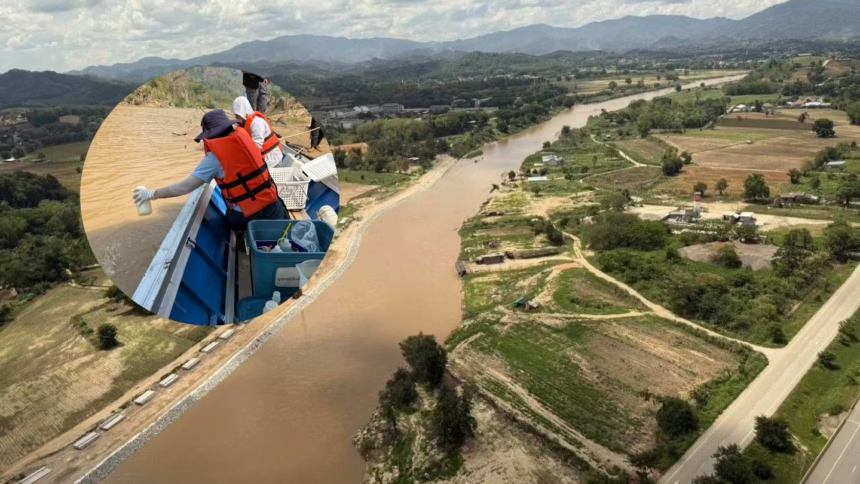
CHIANG RAI – A research team from Mae Fah Luang University and Chiang Rai Rajabhat University has sent policy recommendations to the government, calling for arsenic contamination in the Kok River and cross-border pollution to be treated as a national agenda.
The group also asked the state to set up a clear health-risk management plan and share study findings with the public, after tests found arsenic building up in nail and hair samples from residents living along the river basin.
On March 8, 2026, Assistant Professor Dr. Satian Chanta, a lecturer in Natural Resources and Environmental Management at the Faculty of Science and Technology, Chiang Rai Rajabhat University, said the two universities prepared the recommendations based on a community-led public policy study.
The research, focused on health impacts linked to toxic contamination in the Kok River in Chiang Rai, used a Health Impact Assessment approach. The proposals followed results showing arsenic accumulation in samples collected from people living near the river.
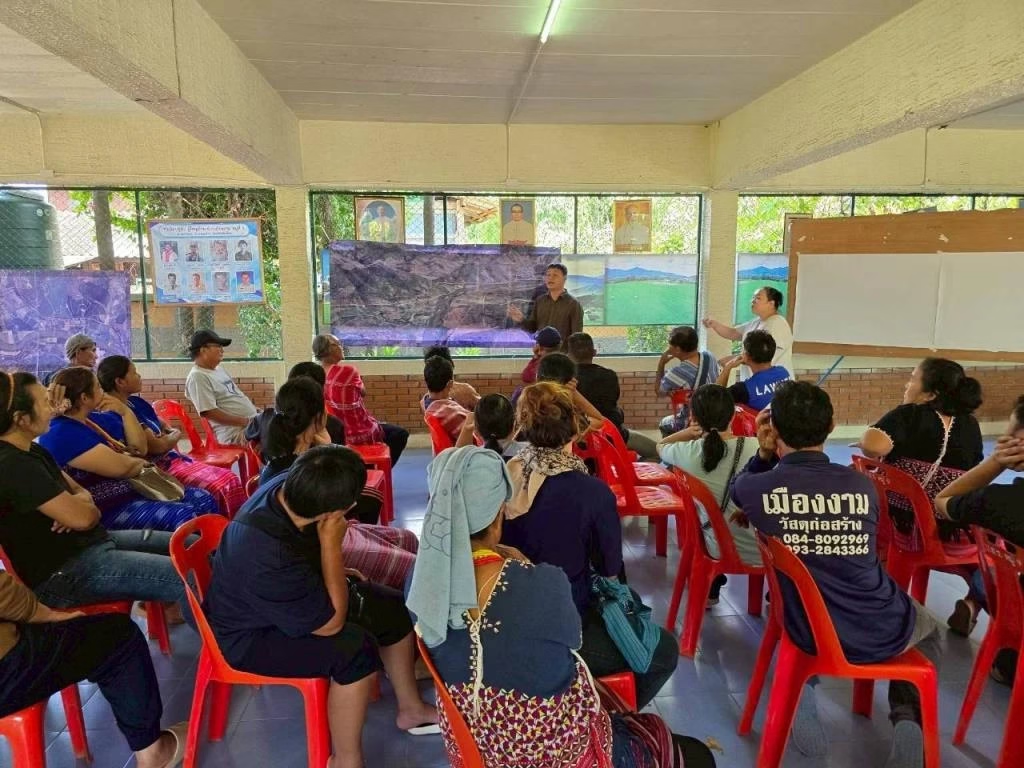
Health Proposals Focus on Risk Maps
Dr. Satian said the health recommendations ask the state, including public health agencies, local administrative bodies, and related groups, to create a plan to manage health risks from arsenic exposure. In addition, the team proposed a community health-risk map that uses data from people who tested positive for arsenic, so agencies can plan steps to lower risk across the river basin.
The researchers also recommended annual health screenings for people in higher-risk areas. Alongside that, they urged stronger health data systems, better risk communication that fits local needs, and support for communities to manage health risks themselves, with backing from the government and local authorities.
Another proposal calls on public health agencies to set reference standards for arsenic levels accumulated in the body, so teams can monitor residents in a consistent way.
The researchers also asked authorities to classify arsenic poisoning as a condition that requires surveillance in at-risk areas, tied to both work and environmental exposure. They recommended using epidemiology methods to investigate, track, and monitor cases in an organized system.
For residents who already show arsenic in their bodies, the team proposed follow-up screening, confirmatory testing, and a referral pathway into medical care. They also called for an ongoing surveillance and investigation system for arsenic poisoning in communities facing higher exposure.

Social and economic proposals
On the social and economic side, the researchers recommended that the state and any academic institutions studying the issue share information and findings openly with residents and the wider public. They also encouraged public participation and involvement from civil society groups in research activities.
In addition, they proposed economic support and compensation for people and businesses harmed by heavy metal contamination in the river. The team highlighted agriculture, fishing, and tourism as sectors that can suffer direct losses. They also suggested trust-building measures, such as regular arsenic testing in tourist areas and other high-use locations.
For environmental measures, the researchers urged the state to act quickly on heavy metal contamination in water used for daily life. They recommended support for safe water supplies and upgrades to community water systems, so they meet accepted standards.
At the same time, they called for a faster search for the source of contamination in the Kok River, plus a monitoring and control system that addresses pollution at its origin. A key part of the proposal pushes Thailand to treat cross-border pollution as a national agenda, so agencies can coordinate actions at a larger scale.
The team also suggested that the government consider declaring affected areas as an environmental and health disaster zone. That step, they said, could help agencies apply prevention and response measures in a more organized way.
Dr. Satian added that community feedback and input from local agencies point to concerns beyond the river itself. Residents also worry about pollution sources inside the area, including agricultural chemical use, hazardous waste handling, and toxic waste in communities.
The researchers said the state should support controls for these issues in parallel, because solving the problem at its source matters for long-term results.


