MAE SAI – Border residents and environmental advocates demanded Friday that Bangkok halt mineral imports from Myanmar and block mining equipment exports to stop heavy metal contamination in the Sai River.
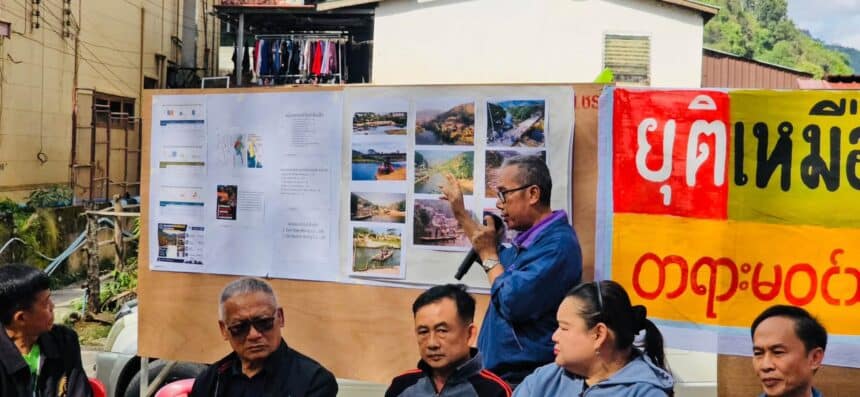
Gathered at the Tham Pha Chom community hall along the Thai-Myanmar border in Chiang Rai province on Nov. 13, the Kok-Sai-Ruak-Mekong Protection Network warned that toxic runoff from upstream Chinese-backed mines is poisoning tap water supplies, threatening farms and eroding consumer confidence across the northern border economy.
Key Takeaways
- Thai authorities detected heavy metals in the Sai River more than 23 consecutive times after upstream mining expanded in Myanmar.
- Over 20 mining operators work in Tachileik alone, alongside new Chinese and Russian tungsten ventures in Wa-controlled and Myanmar military zones.
- Academics and community leaders urge Thailand to stop importing Myanmar minerals and re-exporting them to China through Laem Chabang Port.
Cutting the Cross-Border Supply Chain
Elders displayed archival photographs comparing the once-clear Sai River with today’s thick, muddy waters. Village headman Sgt. Maj. Pongpreeda Punjakhan of Moo 1 in Mae Sai said residents have endured severe hardship since before 2024 as turbidity gave way to confirmed heavy metal toxicity.
Thailand’s Pollution Control Department has monitored the waterway for over a year, confirming round-the-clock contamination. Dr. Suebsakul Kidnukorn, an international development scholar at Mae Fah Luang University, said water testing alone fails to protect communities.
Blaming armed ethnic enclaves for enforcement gridlock tells only half the story, Suebsakul said. Mines require official Myanmar permits before operators truck antimony, tin, manganese and tungsten across Thai territory to Laem Chabang Port for shipment to China. Stopping Thai transit and banning chemical and machinery exports to Myanmar would force Beijing and Naypyidaw to negotiate, he added.
Upstream Rush Fuels Golden Triangle Crisis
The pollution spike follows an unregulated extraction boom across Myanmar’s Shan State since 2021, where weak oversight and civil conflict accelerated toxic mining along Mekong tributaries. Because the Sai River feeds directly into the Ruak and Mekong rivers, sediment-heavy runoff carries arsenic and lead across major agricultural plains.
Community monitors reported more than 20 mining firms operating in Tachileik township. Further north in Mong Ton, Chinese companies partnered with the United Wa State Army to develop large tungsten deposits, while Russian firms joined Myanmar authorities on the same mountain range just 20 kilometers from Thailand.
Chiang Rai MP Monthicha Chaiyaban told attendees she raised the crisis in Parliament and pushed three ministries to accelerate construction of the Mae Kham Reservoir as a clean backup water source for local farms.