


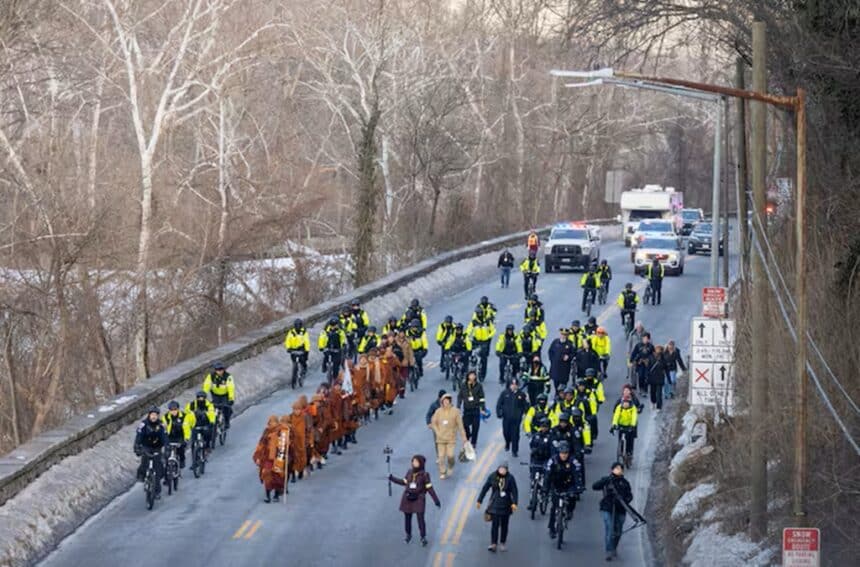
WASHINGTON, D.C. – A line of Buddhist monks entered the nation’s capital Tuesday morning, stepping quietly across a bridge over the Potomac River to finish a 15-week walk that began in Fort Worth, Texas.
The group moved in silence, watched by cheering supporters and accompanied by police escorts. Their 2,300-mile pilgrimage carried a simple theme: peace, compassion, nonviolence, and mindful living, shared at a time when many Americans feel split apart.
Wearing saffron robes, the monks crossed Chain Bridge from Arlington, Virginia, into Washington, D.C., shortly after 8 a.m. on February 10, 2026. People gathered along the route with handmade signs, phones held up for photos, and quiet words of support.
After staying the night at Marymount University in Arlington, their arrival felt like more than a finish line. For many watching, it came across as a heartfelt offering to a country hungry for calmer ground.
Bhikkhu Pannakara, vice president of the Huong Dao Vipassana Bhavana Center in Fort Worth, led the group. The 19 monks came from Theravada Buddhist monasteries in different parts of the world. They started on October 26, 2025, for what organizers called a “Walk for Peace.”
The point, they said, is that peace begins inside each person and then spreads outward. Pannakara repeated that message throughout the walk: when people grow peace within themselves, it can move into families and communities.
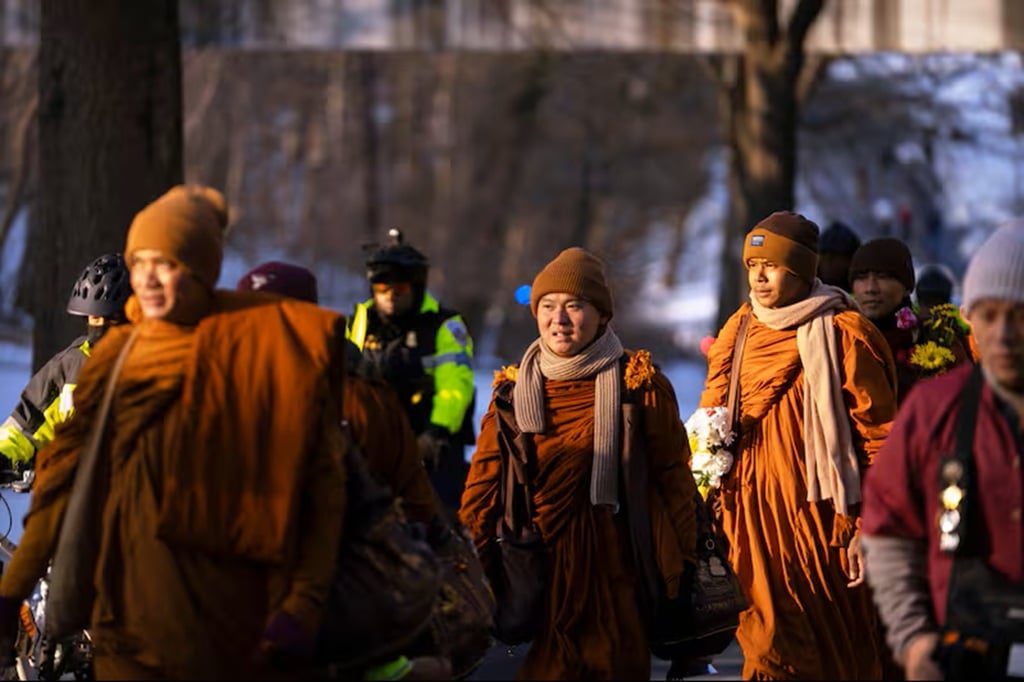
Monks Walked Barefoot and in Socks
The trek drew huge attention along the way and spread fast on social media, with millions following updates. In towns across the South and beyond, crowds formed along roadsides even during cold snaps.
Many offered food, water, and warm greetings, turning the walk into a people-powered show of support. A rescue dog named Aloka, once a stray and later a steady companion, became a surprise favorite. The name, which means “divine light” in Sanskrit, fit the spirit of the walk and the care shown to all living beings.
Most days, the monks walked barefoot or wore plain socks, staying close to the simple practices tied to their tradition. When winter weather turned harsh, including snowy stretches in some areas, they sometimes put on boots for safety.
Still, the approach stayed the same: steady steps, close attention, and few distractions. Over 108 days, they covered about 2,300 miles (roughly 3,700 kilometers). Supporters often described the effort as a moving form of meditation, meant to loosen attachments and strengthen awareness.
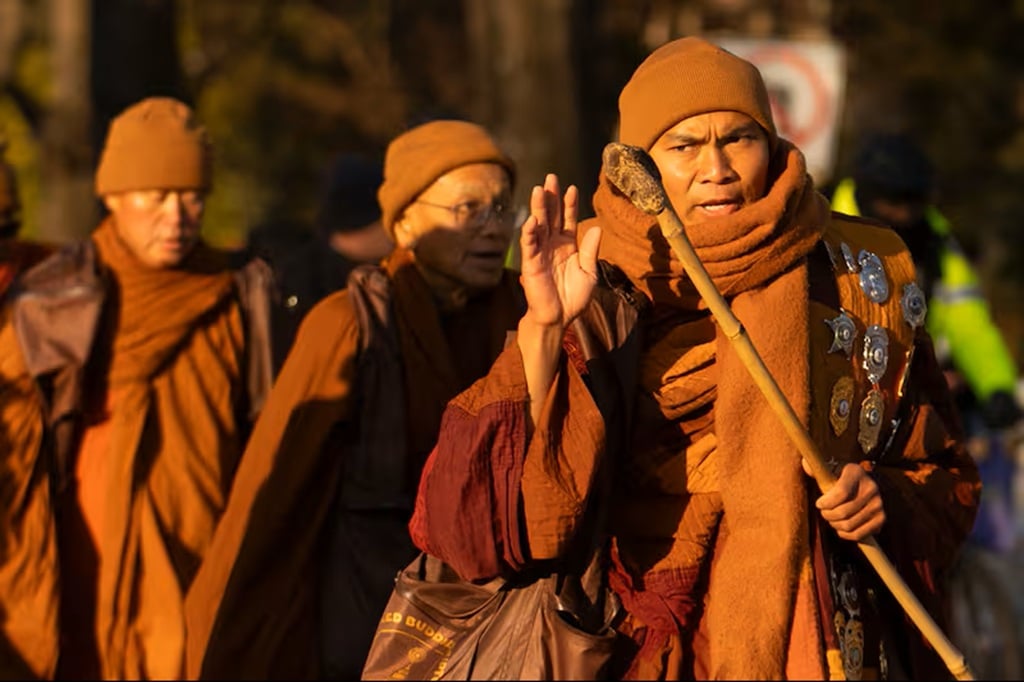
A Long-Standing Practice in Theravada Buddhism
Peace walks have deep roots in Theravada Buddhism, which focuses on the early teachings of Gautama Buddha. In Thai tradition, this type of journey is often called tudong (from the Pali dhutanga). It centers on strict, simple practices meant to build detachment, mindfulness, and compassion. Monks may travel long distances, sometimes barefoot, and let their presence speak more than their words.
These walks go back centuries and often include walking meditation, where each step is taken with care and attention. In recent years, similar pilgrimages have also been used to address present-day concerns, from caring for the environment to easing social conflict.
The Walk for Peace followed that same thread, treating the long route as a public lesson. By passing quietly through cities, small towns, and rural areas, the monks encouraged people to pause and think about kindness and nonviolence in daily life.
The trip also tested them. Conditions shifted from hot Texas days at the start to freezing temperatures farther north. Even so, their calm routine stayed intact. The monks kept a disciplined single-file line and often received help from local police to keep them safe along busy roads. In many communities, they stopped for short teachings and reminders that lasting change starts with each person’s mind and heart.
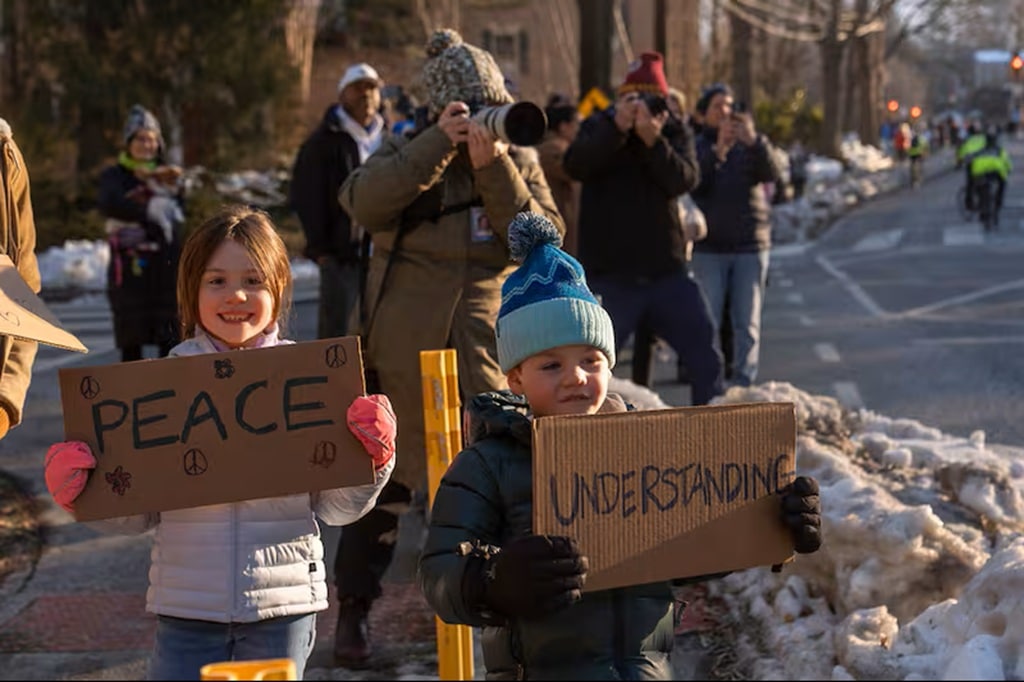
A Meaningful Arrival During a Tense Moment
When the monks stepped into Washington, D.C., the symbolism was hard to miss. Crossing the Potomac, often seen as a boundary between Virginia and the capital, felt like a quiet statement about closing gaps in a divided time.
People gathered near the bridge and later along routes that included the C&O Canal and paths beside the Potomac River. Later, nearly 3,500 people filled American University’s Bender Arena for the group’s first large public event in the city, where the monks spoke about mindfulness and healing.
The walk landed during a stretch when political conflict and social stress filled the news. Instead of loud chants or rallies, the monks offered stillness and steady movement. Many onlookers said that the contrast made the message easier to hear. Leaders in several states along the route issued proclamations backing the walk and praising its call for unity, compassion, and nonviolence.
After arriving, the monks planned a few more appearances in the area, then expected to ride a bus back to Texas, with an early Saturday return to Fort Worth. Their home base, the Huong Dao Vipassana Bhavana Center, is also tied to plans for a future Buddhist temple project in the United States.
In a world full of noise, the Walk for Peace reminded many people that quiet, consistent action can still carry weight. As one person near Chain Bridge said, “They didn’t shout, they just walked, and that said more than words.”
The journey ended at the Potomac, but many supporters believe the message will keep moving, long after the last footsteps disappear.