




CHIANG RAI – Aggressive mining expansion across eastern Myanmar is severely contaminating vital transboundary river systems. Toxic industrial runoff now flows unchecked from Shan State straight into northern Thailand.
Recent environmental monitoring reveals unsafe heavy metal levels across the Kok, Sai, Ruak, and Mekong rivers. Upstream mountain ranges are being stripped bare for gold, lead, manganese, and rare earth deposits.
Key Takeaways
- Widespread River Contamination: Toxic mining runoff originating in Shan State severely pollutes four major shared waterways—the Sai, Kok, Ruak, and Mekong rivers.
- Rapid Commercial Extraction: More than 20 industrial-scale mines operate directly across the Thai border in Tachileik, extracting gold, lead, manganese, and antimony.
- Escalating Cross-Border Health Crisis: Over 23 official water quality tests show heavy metal levels exceeding safety thresholds, frequently crippling local municipal drinking supplies.
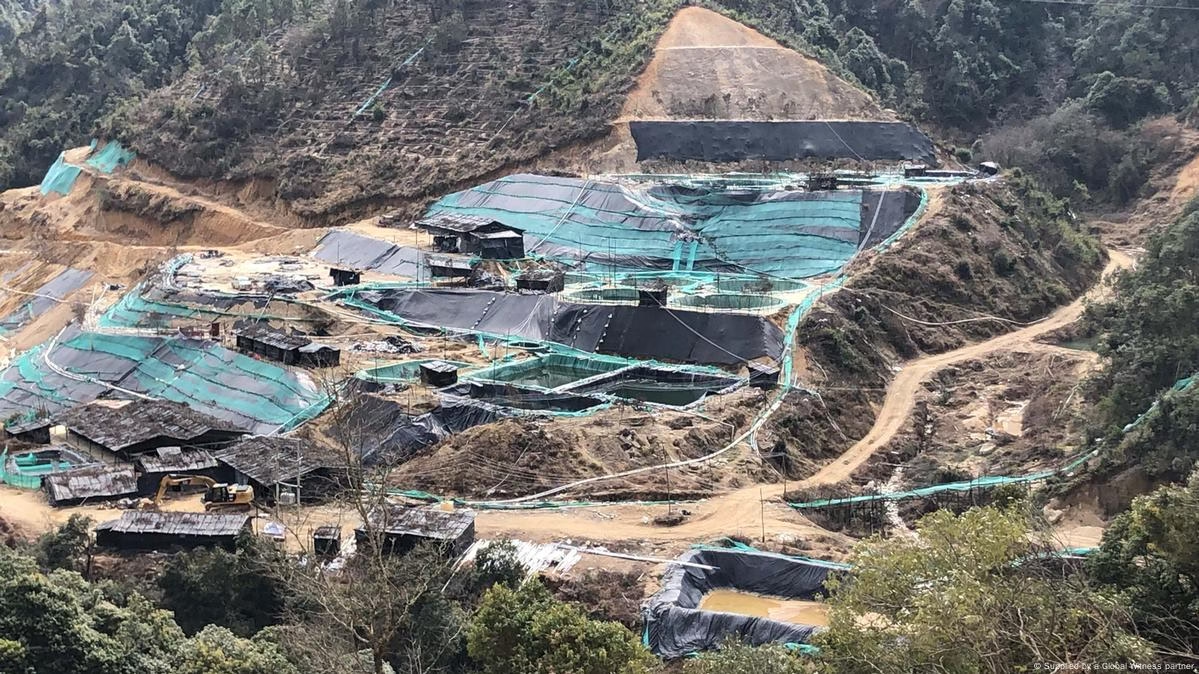
Tachileik district sits directly opposite Mae Sai in Chiang Rai and has evolved into an uncontrolled industrial mining corridor. Over twenty major commercial concessions currently blast deep tunnels and excavate open pits across surrounding hillsides.
In Thadeua subdistrict alone, numerous commercial outfits operate adjacent plots, including Shwe Labb Kaung International Trading and Loi Long. Meanwhile, corporate ventures such as Mayflower Mining Enterprise maintain intimate ties with Myanmar military commanders, dodging environmental oversight.
Nearby Ko township accommodates six commercial manganese dioxide extraction sites alongside dedicated lead mining facilities managed by Sein Naw Mining. Because environmental containment remains absent, untreated tailings continuously wash down steep mountain channels during torrential monsoons.
Local villagers report that entire hillsides have been cleared of dense forest cover to make room for heavy excavation machinery. The loss of protective tree canopies accelerates topsoil erosion, causing frequent landslides that dump thousands of tons of sediment into regional waterways.

Dangerous Rare Earth Leaching in Autonomous Militant Zones
Deeper inside territory controlled by the United Wa State Army, industrial extraction activities have accelerated dramatically. Satellite surveillance verified by human rights organizations shows large-scale rare earth mining compounds operating near Doi Kaw Wan.
These remote industrial facilities employ in-situ acid leaching techniques to strip valuable heavy elements directly from mountain bedrock. Extensive investigations published by Reuters reveal that injecting highly corrosive acids into underground aquifers creates permanent ecological destruction.
Circular evaporation ponds located along the Nam Pai river direct poisonous chemical waste toward the Salween and Mekong basins. These toxic leaching fields pose grave ecological hazards for farming communities living downstream.
Satellite imagery shows that dozens of chemical collection pits sit perilously close to the Kok River, just kilometers before it enters Chiang Mai province. Consequently, environmental advocates fear that chemical seepage into underlying groundwater reserves may cause irreversible contamination for decades.

Crippled Water Systems and Severe Downstream Health Hazards
Dr. Suebsakun Kidnukorn, a distinguished international development researcher at Mae Fah Luang University, observes that local riverways have failed to clear up since disastrous monsoon floods. Extreme turbidity and toxic chemicals frequently compel water utilities to shut off municipal tap water production entirely.
Some extraction pits sit merely ten kilometers from Thai border gates, creating persistent cross-border airborne dust and waterborne sludge. Consequently, northern Thai civil society advocates demand mandatory supply chain tracing on all raw mineral shipments entering border customs.
Farmers in border districts also face severe challenges irrigating their agricultural fields, as polluted river water coats productive crops in dense mineral silt. Local healthcare workers report a marked rise in skin rashes, respiratory irritation, and gastrointestinal illnesses among families dependent on the river.
Urgent Demands for Cross-Border Diplomatic Intervention
Pianporn Deetes, executive director of Rivers and Rights, warns that river testing without political pressure accomplishes nothing. Official testing records compiled by the Pollution Control Department show toxic runoff exceeding safe limits across 23 successive sample collections.
Chiang Rai provincial authorities led by Governor Choocheep have mobilized emergency task forces to secure emergency groundwater and offer health screenings. Thai officials are finalizing technical environmental dossiers to force bilateral negotiations with Myanmar and protect downstream communities.
Community leaders stress that testing the water for another century will yield identical toxic results unless both nations enforce rigorous environmental laws. Cross-border diplomacy and transparent regional regulations remain the only viable pathway toward restoring the Golden Triangle’s shared water basins.


