




The 2026 Thailand elections won’t feel like just another date on a calendar for many people. For some, it will feel like a chance to breathe again. For others, it will feel like another round of uncertainty they didn’t ask for.
If you live in Thailand, you’ve probably seen how quickly politics can change daily life, prices, jobs, and even the mood in your home. This guide breaks down what’s confirmed, what’s still changing, how voting works, how to prepare, and how to avoid misinformation that spreads fast in group chats.
What’s confirmed vs what’s not (as of today)
As of January 2026, several core facts are widely reported by major Thai newsrooms and official government channels, and they match across multiple reports.
Confirmed (based on official announcements and consistent reporting):
- Election day: Sunday, February 8, 2026, with polling open 8:00 a.m. to 5:00 p.m.
- Advance voting day: Sunday, February 1, 2026
- Why there’s an election now: the House of Representatives was dissolved on December 12, 2025
- Results timeline: official results are expected by April 9, 2026, with the new House meeting within 15 days after the results, which points to mid to late April for the first sitting
For a quick official summary of the schedule as communicated publicly, see Thailand’s government PR channel: general election scheduled for 8 February 2026. Major outlets also reported the Election Commission’s plan, including advance voting: Election Commission sets Feb 8 as election date.
About the referendum on the same day
Reporting in January 2026 indicates that a referendum will be held on February 8, 2026, alongside the MP election. Because referendum details can cause confusion, it’s smart to verify the final question wording and voting procedure through the Election Commission of Thailand (ECT) announcements and official notices before election week.
What’s not safe to treat as “confirmed” from social media
- Claims about “last-minute rule changes” with no ECT notice
- Screenshots that show a “new polling station list” but don’t link to an official source
- Viral posts saying certain groups “can’t vote” or “must bring extra documents”
When in doubt, treat it as unconfirmed until it appears on ECT channels, in the Royal Gazette, or in reporting by reputable Thai newsrooms.
The dates and deadlines people keep asking about
These are the dates people keep bookmarking and then second-guessing:
- Dec 12, 2025: House dissolved (triggering the election timeline)
- Feb 1, 2026: advance voting day (often called out-of-constituency voting)
- Feb 8, 2026 (8 a.m. to 5 p.m.): election day
- By Apr 9, 2026: official results timeline reported by major outlets
- Mid to late April 2026: new House meets within 15 days after official results (timing depends on certification)
Advance voting usually has a registration window. Reporting for this election cycle described a registration period running from late December into early January. If you’re not sure whether you registered, or whether your situation requires registration, double-check through ECT channels because small procedural details can change.
How to check what’s real, fast (official sources first)
Many voters have seen this pattern: a rumor hits Line or Facebook, a screenshot looks official, then a correction comes days later.
A fast way to reduce mistakes:
- Start with ECT: use the ECT website, official announcements, and verified social channels. If ECT posts it, it’s real.
- Check official notices: major changes and formal rules may also appear through government announcements and the Royal Gazette.
- Cross-check with trusted newsrooms: if a major claim is true, more than one reputable outlet will report it with sourcing.
Be careful with fake “ECT pages.” A common trick is to use a page name that looks official and post polished graphics. If it doesn’t link back to ECT, don’t treat it as confirmation.
How Thailand’s election system works (simple explanation)
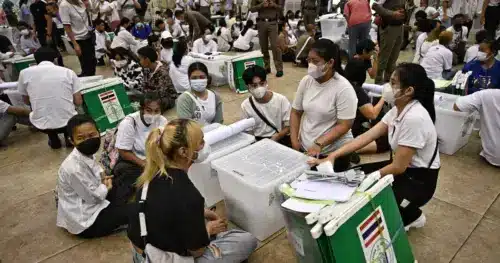
Thailand’s general election chooses members of the House of Representatives. That House matters because it shapes the government’s direction, budgets, and laws, and it plays a central role in government formation after results are final.
For 2026, reporting indicates voters will receive two election ballots:
- one for a constituency MP (your local representative)
- one for a party-list vote (supporting a political party at the national level)
Coalitions are common in Thailand. That means a party can do well and still need partners to form a stable government. If you’ve ever watched coalition talks drag on while daily life keeps moving, you already know why the weeks after election day can feel tense.
If any technical details about counting rules or ballot design are updated close to election day, ECT’s final guidance should be treated as the last word.
Two votes, two choices: constituency MP vs party-list vote
Think of the two ballots like choosing:
- A person to represent your area, and
- A party’s direction for the country
Example: a voter in Chiang Rai might recognize local candidates who show up at community events and talk about roads, flood support, farm prices, or local hospitals. That’s the constituency choice.
The party-list vote is different. It signals which party you want to have more strength in the House overall, even if your local candidate race is tight or crowded.
These two choices don’t always match, and that’s normal. Some voters pick a local candidate they trust, then pick a different party for the national picture.
How a prime minister is picked after the votes are counted
After ballots are counted and results are certified, parties negotiate to form a government. The path usually looks like this:
- Parties review seat totals and possible partners.
- Coalition talks begin, sometimes fast, sometimes messy.
- The House meets, chooses its leadership, and then moves to select a prime minister under the rules in force at that time.
One key point: winning the most seats doesn’t always guarantee forming the government. Coalition math and partner choices matter. Past coverage shows how quickly alliances can shift in tight numbers, as seen in reporting like Pheu Thai nears House majority with 98 seats needed, which highlights how coalition building can become the real contest after voting ends.
Your practical voter guide for the 2026 Thailand elections
People don’t skip voting because they don’t care. Many skip because the steps feel unclear, work schedules are tight, or they’re worried they’ll show up at the wrong place.
Treat preparation like packing for a short trip. If you get the basics right, election day becomes simpler.
Before voting day: what to prepare and what to double-check
- Confirm eligibility: most voters are automatically listed based on household registration, but it’s worth checking your status if you moved recently.
- Check your polling station: stations can change from one election to the next.
- Confirm whether you need advance voting registration: Advance voting can require registration by a deadline.
- Plan your timing: lines can be short at midday in some places and long in others, especially in dense areas.
- Keep your ID ready: bring the identification ECT says is accepted. Don’t rely on what a friend says in a chat.
This matters for employers too. Shift workers, retail staff, and service workers should plan early so voting doesn’t become a last-minute scramble.
If you cannot vote on election day (and overseas voting in Thailand basics)
If you can’t vote on February 8, the main option is usually advance voting (February 1), but rules and deadlines can be strict. Some election cycles also include a process to notify authorities if you miss voting. Check ECT guidance for what applies this time, and what it means in practice.
For overseas voting Thailand, procedures vary by location and timeline. Reporting in January 2026 described overseas voting windows and separate handling for MP ballots and referendum ballots. See this summary from a Thai newsroom: overseas voting and referendum count timeline. Because embassies and consulates may have specific appointment rules, confirm details with ECT and your local Thai mission.
What voters in Thailand are feeling right now
Many voters feel hope and want a reset. Many also feel fatigue after years of political conflict, court cases, protests, and leadership changes. There’s also anger at corruption, fear of instability, pride in civic duty, and a quiet sense of responsibility that shows up on election morning.
If you’ve ever stood in a line while people whisper about rumors, or seen families disagree at dinner, you know elections aren’t just about parties. They’re about relationships, money stress, and whether the country feels steady.
The kitchen-table issues: prices, pay, debt, and daily security
People notice the cost of living in the most ordinary places: wet markets, rent payments, fuel bills, school costs, and hospital fees. Wages and job security matter just as much as headline promises. Household debt is part of daily life for many families, and small changes in interest rates or income can hit hard.
Campaign promises can sound simple. Governing is harder because budgets have limits and trade-offs are real. Voters often listen for plans that match their daily reality, not just slogans.
Big-picture questions: clean air, rights, and stability after election day
PM2.5 pollution, especially during the burning season, has become a shared worry across regions. Many also care about trust in institutions and whether politics can cool down after the vote. Conversations about rights and freedom of speech can be sensitive, but they still shape how safe people feel when they speak, organize, or criticize.
Respect matters. Elections don’t require people to agree, but they do require people to live together the next day.
Key issues likely to shape the 2026 Thailand elections
While every voter has a different “top issue,” several themes are likely to dominate conversations, debates, and coalition talks:
- Cost of living and wages: food prices, rent, energy costs, and salary growth
- Jobs and growth: especially for young workers and new graduates
- Debt relief and small business support: household debt and access to credit
- PM2.5 and environment: enforcement, regional cooperation, and health impacts
- Healthcare and aging: access, staffing, and costs
- Education: quality, inequality, and practical job skills
- Tourism and local income: stability, safety, and fair distribution of benefits
- Regional inequality: Bangkok versus provinces, and border area concerns
- Military-civil relations: stability, public trust, and long-term rules of politics
For background on the overall election and listed contenders, some readers use reference pages like 2026 Thai general election, but official procedures and final candidate lists should still be verified through ECT announcements.
How to spot misinformation fast during the 2026 Thailand elections
Election misinformation often works like a spark in dry grass. It spreads fast because it triggers anger or fear, and people share it to protect friends. That’s how good people end up spreading bad information.
Edited clips, cropped screenshots, and fake “official notices” are common. The goal is usually simple: confuse voters, boost or depress turnout, or undermine trust in the count.
A quick fact-check toolkit you can use in 2 minutes
- Check the source name: is it ECT, a government channel, or a known newsroom?
- Look for a date and context: old posts often get re-shared as if they’re new.
- Ask for the original link: screenshots without links are easy to fake.
- Reverse image search: reused photos often come from past elections or other countries.
- Compare with two credible outlets: if only one page reports it, be cautious.
- Watch for emotional manipulation: posts that demand urgent sharing often aim to make you skip thinking.
- When unsure, don’t share: wait for ECT updates or verified reporting.
FAQs people are asking about Thailand’s general election 2026
FAQ set: dates, voting steps, overseas voting, and results timeline
What are the 2026 Thailand elections?
They are Thailand’s general election to choose members of the House of Representatives. The results shape which parties can form a government and influence major policy decisions. In 2026, the report also indicates that a referendum will be held on the same day. Always confirm ballot details through ECT updates.
When are the 2026 Thailand elections?
As of January 2026, reporting and public announcements, election day is Sunday, February 8, 2026, with polls open 8:00 a.m. to 5:00 p.m. Advance voting is reported for February 1, 2026. For the latest confirmation, check ECT announcements close to election week.
Who can vote in Thailand’s election?
In general, Thai citizens who meet the legal voting age and eligibility rules can vote, usually based on household registration records. Eligibility can be affected by certain legal restrictions. Because details depend on current rules and personal status, the safest step is to confirm your status through official ECT channels.
How does Thailand’s election system work (party-list vs constituency)?
Most voters receive two ballots: one for a constituency MP (a local representative) and one for a party-list vote (supporting a party nationally). The mix influences both local representation and the overall strength of parties in the House. Final ballot instructions should be checked with ECT.
How do I check my polling station in Thailand?
Polling stations can change, even if your address doesn’t. Use official ECT tools and announcements to confirm your polling location before election day. Don’t rely on a screenshot from social media. If you see conflicting information, trust the most recent ECT notice or verified ECT tool.
Can Thai citizens abroad vote in the 2026 Thailand elections?
Overseas voting is usually available, but the process and deadlines depend on ECT rules and the embassy or consulate location. Reporting in January 2026 described overseas voting windows and the different handling of MP ballots versus referendum ballots. Confirm dates, registration steps, and locations through ECT and your local Thai mission.
What ID do I need to vote in Thailand?
Accepted ID types and whether digital IDs are allowed can depend on ECT rules for that election. Bring the identification that ECT says is valid, and make sure it’s ready before you leave home. If your ID has expired or is missing, contact official channels early to avoid problems.
What happens if I cannot vote on election day?
Advance voting is the main option for many voters who can’t vote on election day, but it can require registration and has its own deadline. Some elections also include a formal process for notifying of absence. Because procedures can change, confirm your options through ECT guidance as early as possible.
How are votes counted and when are results announced?
Counting starts after polls close. Preliminary results may appear earlier, but official certification can take longer. Reporting for 2026 points to official results being completed by April 9, 2026, with the new House meeting within 15 days after certification. Check ECT for official timelines and updates.
How can I avoid misinformation during the 2026 Thailand elections?
Start with ECT sources, then cross-check with reputable Thai newsrooms. Be cautious with forwarded messages, cropped videos, and “urgent” claims that push you to share fast. Ask for original links, verify dates, and use reverse image search for viral photos. When unsure, don’t share.
Does voting affect who becomes prime minister in Thailand?
Yes, but not in a simple, direct way. Your vote affects which parties and MPs win seats, which then shapes coalition talks and the House’s ability to form a government. A party can win many seats and still need partners. The prime minister selection process depends on the rules in force after certification.
What issues matter most to voters in Thailand right now?
Cost of living, wages, jobs, and debt are common “kitchen-table” concerns. Many voters also care about PM2.5 pollution, healthcare access, education quality, tourism income, and regional inequality. Others focus on stability, trust in institutions, and the long-term rules of politics. Different regions may prioritize different needs.
Sources and update policy you can trust
This guide relies on:
- Election Commission of Thailand (ECT) announcements and tools (for final dates, polling stations, and voting procedures)
- Official government communications and formal notices, including Royal Gazette notices when applicable
- Reporting from major Thai newsrooms and official channels, including: Thailand PRD election schedule summary, Bangkok Post report on the election date, and NationThailand on overseas voting and counting
Last updated: January 2026. This page should be updated if ECT publishes new procedures, changes deadlines, or releases final referendum details. Corrections are welcome when shared with links to official notices or credible newsroom reporting.
Conclusion
The 2026 Thailand elections are arriving with real hope, real stress, and real consequences for daily life. The best approach is simple: stick to what’s confirmed, prepare early, and verify anything that sounds too dramatic to be true. Check ECT updates, confirm your polling station, and help stop rumors by sharing only verified information.