



Last Updated on October 19, 2026 by Jeff Tomas
BANGKOK – The Resort Tow of Pattaya is facing a severe tourism drought that threatens to destabilize Thailand’s broader economic recovery. During the recent summer months, some hotels in this famous coastal city reported occupancy rates plunging to a devastating 15 percent. This figure is alarming for a hospitality sector where a standard property needs at least 40 to 50 percent just to break even.
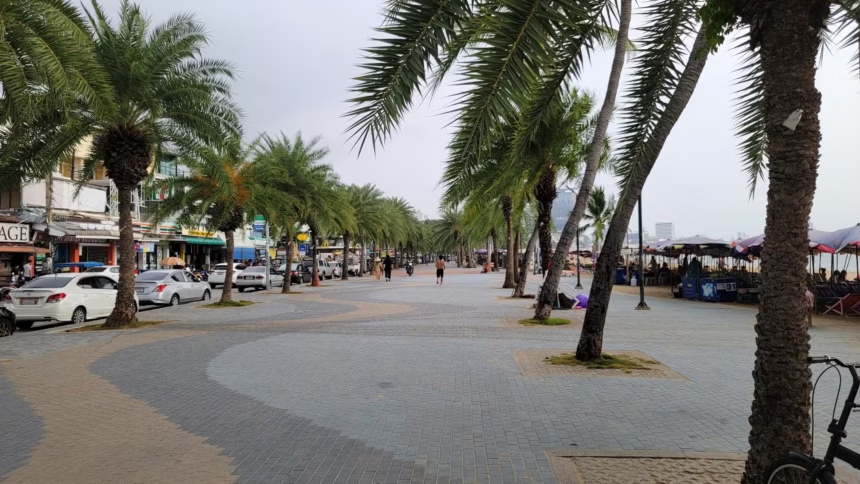
Visitors strolling down Beach Road recently might have noticed the eerily quiet atmosphere. Hotel pools sit empty with sunbeds neatly stacked at noon, while iconic baht buses roll down the streets with nobody in the back. Pattaya was never supposed to be a quiet city, but the bustling noise that once defined it has noticeably faded away.
Key Takeaways
- Pattaya’s low-season hotel occupancy collapsed to 15-20%, falling dangerously below the crucial break-even point for local businesses.
- The city suffers from a massive oversupply of rooms and condos, while crucial international arrivals from Europe and China plummet.
- Delayed infrastructure projects and intense competition from cheaper regional rivals like Vietnam are deepening Pattaya’s prolonged economic crisis.
This drastic slowdown in Pattaya is far more severe than the general dip seen across the rest of the nation. Through early October 2026, Thailand as a whole counted about 23.5 million foreign arrivals. That represents a drop of just under four percent compared to the previous year, which is a mild bruise for the national economy.
However, regional tourism officials report a much darker reality for the eastern seaboard. The Chonburi Tourism Federation and the local chapter of the Thai Hotels Association estimate that visitor numbers crashed by 20 to 30 percent. The old saying rings true today: when Thailand catches a cold, Pattaya gets pneumonia.
A City Built on Foreign Spending
This massive gap between national resilience and local despair tells a vital economic story. It is a complex narrative about misallocated investment, endless concrete expansion, and a destination that bet everything on a perpetual boom. Pattaya relied heavily on a handful of international markets that have suddenly shifted their travel habits.
To truly grasp the magnitude of the problem, we must look at the hard industry numbers. By May, data showed Pattaya’s hotel occupancy sitting at roughly 30 to 40 percent. In a normal low season, the standard benchmark usually hovers between 60 and 70 percent.
The situation deteriorated further as the summer progressed into July. Industry federations described countless properties sitting nearly empty with occupancy rates trapped at 15 to 20 percent. Picture a large resort with 200 rooms managing to sell only 30 units on a given night.
The visual reality of these statistics is heartbreaking for local hospitality workers. Breakfast buffets are prepared for crowds that never come down the stairs. Lobby staff heavily outnumber the actual guests, and pool attendants find themselves refolding the exact same towels from the day before.
The Shrinking Wallet of Weekend Visitors
Hotel veterans will openly admit that the annual low season always brings financial pain. Yet, they insist that the economic downturn experienced this year feels fundamentally different. The typical post-Songkran dip arrived much earlier than expected, and the financial trough went far deeper than anyone had budgeted for.
The pain is not strictly confined to the immediate city limits of Pattaya. Up the coast at Bang Saen, a traditional getaway for Bangkok families, the hotel association reported that forward bookings fell sharply as well. The lucrative weekday corporate trade simply dried up as government agencies slashed off-site meeting budgets.
A healthy hotel market usually survives by balancing several different revenue streams. Establishments rely on a steady mix of foreign holidaymakers, domestic Thai weekenders, corporate conferences, and short-haul flights. Unfortunately, this year saw every single one of those crucial economic legs kicked out from under the industry.
To understand why a struggling Pattaya matters to the entire country, consider the sheer scale of its pre-crisis peak. In the first 11 months of 2024, Chonburi province welcomed nearly 25 million visitors. This massive influx of travelers generated a staggering 264 billion baht in regional revenue.
The True Value of International Guests
When the final tallies were published, Chonburi had earned nearly 317 billion baht in total tourism income. This made it the second-highest earning province in all of Thailand, trailing only behind the island powerhouse of Phuket. A deeper dive into these visitor demographics reveals exactly why the current slump is so disastrous.
Out of those 2024 visitors, roughly 10 to 12 million were international passport holders. While foreigners made up only 40 percent of the total headcount, they generated about 168 billion baht. That means international guests were responsible for nearly two-thirds of the total tourism cash injected into the region.
This financial imbalance makes perfect sense when you analyze their distinct travel behaviors. Foreigners usually stay for an entire week or month, opting to sleep in premium hotels rather than driving home. They dine out every evening, rent jet skis, take island ferries, and spend heavily on nightlife entertainment.
When international visitors stop flocking to the eastern seaboard, the financial damage ripples far beyond a single beach town. The entire nation loses something close to a tenth of its most reliable foreign tourism engine. Sadly, this slow financial leak began quietly long before the disastrous summer of 2026.
The Endless Construction Boom
According to the property consultancy CBRE, Pattaya’s upscale hotels were already showing signs of weakness late last year. Average occupancy hovered at just 65.5 percent, marking a five-point drop from the previous year. Meanwhile, the average room rates subtly slipped as hoteliers desperately tried to attract budget-conscious travelers.
On paper, Chonburi’s overall visitor count barely fluctuated, recording 27.6 million arrivals over a 12-month period. However, the internal demographics of that figure had drastically changed. Domestic Thai visitors steadily grew, eventually making up a massive 64 percent of all registered arrivals.
The lively weekend crowd driving down from Bangkok was quietly replacing the foreign guests who historically stayed for ten nights. The total headcount remained somewhat stable, but the collective wallets grew significantly thinner. Local hoteliers noticed that the bustling street traffic no longer translated into robust profits or prolonged room bookings.
So, how did Pattaya respond while its most lucrative foreign markets were actively shrinking? The city simply kept pouring concrete and building more high-rise accommodations. Developers completely ignored the shifting demographic trends and continued constructing megaprojects designed for a bygone era of tourism.
A Saturated Property Market
By the end of last year, CBRE counted roughly 34,700 mid-range and upscale hotel rooms across the city. This massive housing supply grew by another two percent during a year when overall occupancy was already falling. Down on Beach Road, major hotel groups continued pushing forward with colossal beachfront developments anchored by luxury brands.
Industry analysts tracking Thailand’s construction pipeline issued stark warnings early this year. They cautioned that maintaining occupancy would become incredibly difficult outside of the peak high season. Despite these clear financial warnings, the construction cranes towering over the city skyline kept swinging without pause.
The oversupply crisis extends far beyond the traditional hotel sector. Anyone standing on Jomtien Beach can look up and see a towering wall of condominium developments running down the coast. Shockingly, many of these massive residential buildings feature far more dark windows than lit ones at night.
Back in 2024, property experts reported that developers launched nearly 7,000 new condo units in just six months. This was the highest rate in years, even though the market could only realistically digest about 4,000 units annually. By 2025, there were over 18,700 units still in the pipeline, representing a massive 23 percent supply increase.
The Collapse of the Chinese Tour Group
Nationwide, Thailand is currently sitting on an astonishing inventory of more than 200,000 unsold condominium units. This massive backlog is worth roughly 700 billion baht, and experts do not expect the market to clear until 2028. To move this stagnant stock, desperate developers are now offering three-year payment holidays and generous rent-to-own deals.
The problem is structural, rooted in a local economy that built its foundation around a minimal number of source markets. When just one of these key demographics wobbled, there was absolutely no safety net underneath to catch the fall. The most significant and impactful of these traditional markets was undoubtedly mainland China.
Before the pandemic disrupted global travel, massive Chinese tour groups formed the sturdy backbone of the city’s daytime economy. Giant tour coaches reliably lined up outside the floating market, cabaret theaters, and colossal seafood dining halls. Then, consumer confidence suddenly collapsed, and safety fears spread rapidly across Chinese social media networks.
Across Thailand, total Chinese arrivals dropped by roughly a third in a single year. For Pattaya specifically, local tourism officials noted that the vital Chinese market slumped by an estimated 35 percent. Simultaneously, arrivals from South Korea also fell by about a quarter, delivering another massive blow to local operators.
Changing Travel Habits
The traditional group tour format that dictated Pattaya’s daytime infrastructure has now largely vanished. Recent industry figures suggest that nearly 70 percent of modern Chinese visitors prefer to book their travels independently online. A city that spent decades building massive car parks for tour coaches is now struggling to attract independent backpackers.
Other emerging markets have attempted to fill this massive financial void, but the substitution is rarely a perfect match. Indian travelers have grown into a leading demographic, and Russian tourists remain a wonderfully steady long-haul crowd. Some Russian operators even upgraded from seasonal charters to scheduled flights, helping sell Pattaya throughout the entire year.
While this influx provides some genuine relief, it simply cannot replace the lost business on a one-for-one basis. Four-star resorts are now fiercely slashing their prices to directly compete with three-star properties. This aggressive discounting is a clear sign of a desperate market trying to capture highly price-sensitive bookings.
Then, the travel industry was hit with a global shock that absolutely nobody had budgeted for. When geopolitical conflict erupted in the Middle East early in the year, it severely disrupted vital aviation routes. The major airline hubs that carry a huge share of Europe’s travelers to Thailand suffered immediate logistical setbacks.
Global Conflicts and Soaring Airfares
Long-haul seating capacity routed through crucial Gulf hubs fell by an estimated 30 percent in early March alone. Consequently, total European arrivals into Thailand dropped by about 14 percent compared to the previous year. Travelers from Germany, Britain, and France—the traditional backbone of Pattaya’s winter crowd—were among the most severely impacted.
Because so many European flights connect through Dubai, Doha, and Abu Dhabi, the disruptions caused immediate travel cancellations. In response, the Tourism Authority of Thailand was forced to quietly reduce its annual long-haul visitor targets. At the exact same time, flying anywhere across the globe suddenly became prohibitively expensive for middle-class tourists.
By May, local tourism federations were begging government ministers for urgent financial interventions. They reported that standard airfares had skyrocketed two to three times higher due to surging fuel prices and airspace conflicts. The situation was so dire that operators asked the government to temporarily subsidize up to half of all ticket costs.
When a private industry asks the state to pay for plane tickets, you know the forward bookings look catastrophic. The federation was also brutally honest about where these frustrated travelers were choosing to go instead. Neighboring Vietnam was successfully pulling visitors away by offering significantly lower living costs and far more efficient aviation networks.
The Strong Currency Squeeze
So, what does a struggling hotel do when international guests suddenly stop booking rooms? Management inevitably cuts the daily rate, which quickly turns a temporary slump into a dangerous downward economic spiral. Following a brief holiday bump in July, operators admitted that room rates had been slashed by up to 30 percent.
Hotels began desperately throwing in free daily breakfasts and offering aggressively priced multi-night packages just to maintain basic occupancy. Meanwhile, a punishingly strong Thai baht has actively worked against the local tourism industry for months. The strong currency makes Thailand noticeably more expensive for anyone earning their wages in euros or British pounds.
This unfavorable exchange rate pushes up the actual cost of a standard hotel room and a simple restaurant meal. It forces even the most dedicated long-haul visitors to become far more careful with their daily vacation spending. A bar owner catering to European retirees noted that regular customers who once ordered several beers now nurse just one.
Unfortunately, standard operating expenses for these struggling businesses absolutely refuse to fall. Electricity bills, wholesale food costs, and employee wages have all remained stubbornly high despite the lack of incoming revenue. When a hotel cuts its room rate by a quarter and still loses guests, its profit margin completely vanishes.
The Human Cost of Empty Streets
Leave the plush hotel lobbies and walk the actual city streets to see where this missing money is hurting most. A recent economic survey of the famous Walking Street found the neon-lit strip surprisingly quiet and subdued. Desperate shop owners consistently reported significantly weaker sales and fewer foreign tourists than they had seen in years.
The biggest beacon of financial hope one week was a massive American aircraft carrier docking at the nearby Laem Chabang port. Local officials aggressively estimated that the 5,000 sailors might spend anywhere from five to fifteen million baht. However, this is a city where a standard New Year’s countdown used to generate roughly five billion baht.
Pinning the survival of a legendary nightlife district on a few days of military shore leave highlights the utter desperation. Under the glowing neon signs, the very first people to feel this economic pain are the frontline workers. Bar staff in Pattaya generally survive on daily tips and drink commissions rather than a dependable monthly salary.
When foot traffic abruptly falls, their personal income crashes right alongside it, yet their basic living costs remain identical. Local news reports highlight workers rapidly draining their personal savings just to pay for rent and basic groceries. There is no official low season for daily survival, only a devastating low season for personal income.
Warehouses Full of Broken Dreams
Over in the bustling bar areas of Soi Buakhao, managers admit that only loyal expatriate regulars are keeping doors open. Nationwide, roughly 13 percent of entertainment venues permanently closed their doors in a single financial quarter last year. Industry insiders quietly suggest that the permanent closure rate in Pattaya was actually much higher than the national average.
One striking detail perfectly encapsulates the grim reality of this severe local business crash. A secondhand furniture dealer reported that more than 15 small restaurant owners begged him to buy their kitchen equipment. He was forced to turn most away simply because his massive storage warehouse was already packed to the ceiling.
This is what a true economic depression looks like when it completely fails to make the glamorous national headlines. It looks like a dusty warehouse stacked high with plastic chairs from family restaurants that no longer exist. It looks like a long row of pulled-down metal shutters with desperate ‘For Rent’ phone numbers taped across them.
To be fair to the city, Pattaya is absolutely not a complete ghost town. Those claiming the famous destination sits totally empty all year round are likely pushing a sensationalized narrative. During the Songkran water festival in April, beachfront properties still operated near maximum capacity, proving the demand still exists occasionally.
Patching the Wounds with Festivals
By August, average hotel occupancy across the eastern region had slowly crawled back up to around 61 percent. Domestic weekenders from Bangkok continue to reliably pack the coastal roads and seafood restaurants every single Saturday. Additionally, the long-stay European retirees who escape the winter still provide a financial cushion most global beach towns would envy.
The upcoming high season also packs some genuine commercial firepower to help keep businesses afloat. The city is preparing to host the International Fireworks Festival, the Jazz Festival, and the massive Tomorrowland Thailand event. The government is also planning a domestic travel subsidy package to aggressively stimulate local spending from November through February.
The most honest assessment is that Pattaya is currently bleeding heavily during the brutal low season. It desperately patches itself up during the brief high season, but the financial distance between those periods keeps growing. A beachfront hotel simply cannot pay its massive August electricity bill relying solely on the fading memories of Songkran.
Why is a legendary destination struggling to organically fill the quiet weeks in between these major sponsored festivals? The answer circles back to a series of broken promises regarding massive public infrastructure investments. The highly publicized Eastern Economic Corridor was supposed to permanently transform this coastline into an elite international travel gateway.
The Delayed Infrastructure Dream
Years ago, the government promised that U-Tapao airport would be totally rebuilt into a sprawling major international hub. A state-of-the-art high-speed rail line was supposed to seamlessly link Pattaya directly to Bangkok’s two primary airports. However, today U-Tapao handles merely 300,000 passengers annually, a massive drop from its pre-pandemic peak of two million.
The highly anticipated rail link remains completely stalled, with complex negotiations dragging on endlessly since 2018. The private consortium managing the airport only received its official notice to proceed with construction in early 2026. Furthermore, they have now proposed drastically shrinking the ambitious first phase to handle just three million passengers a year.
In the very year Pattaya desperately needed its own functional front door, it remained entirely dependent on Bangkok’s infrastructure. Private money poured billions into building thousands of new rooms based on the ironclad promise of a booming transport gateway. The public infrastructure that was supposed to easily feed those towering hotels simply never arrived.
This deep vulnerability makes Pattaya a fascinating stress test for Thailand’s entire national tourism model. The sprawling metropolis of Bangkok can easily absorb economic shocks because it is massive and highly diversified. The island of Phuket benefits from deep European long-haul demand and a comprehensive roster of direct international flights.
Bureaucracy and the Rise of Rivals
Pattaya sits awkwardly in between these two successful models, leaning dangerously on short-haul markets and brief winter seasons. If you pull just two or three of those delicate economic threads, the entire regional foundation begins to sag. If the national arrival targets keep slipping, the smaller coastal towns relying on these same visitors will be devastated next.
Meanwhile, aggressive international competition is certainly not waiting for Thailand to fix its internal structural issues. When Pattaya’s tourism federation lists its biggest existential threats, neighboring Vietnam is prominently placed right at the top. The country is noticeably cheaper to live in, easier to fly into, and developing rapidly.
Cities like Da Nang and Nha Trang currently feel a lot like Pattaya did two decades ago before the concrete. Every single traveler who chooses to book a vacation in Vietnam represents money that never reaches Chonburi province. Furthermore, a satisfied traveler who discovers a brand-new favorite destination rarely bothers to return to their old haunts.
The regulatory environment in Thailand has also created unnecessary friction for high-value, long-term international guests. Recent policy adjustments regarding visa-free stays have introduced a layer of annoying bureaucracy that many travelers simply despise. For a European retiree planning a two-month winter escape, complicated visa extensions are a major frustrating deterrent.
Rebuilding for the Future
Some tourists will happily hire an agent and do the tedious paperwork, but others will simply choose an easier destination. The local tourism industry had to push back aggressively just to ensure crucial markets like India retained favorable visa status. This administrative friction highlights how incredibly nervous local businesses are about losing the few demographics that are still actively growing.
Fixing this complex crisis requires a fundamental shift in how the city views its own future. First and foremost, developers must completely stop building new properties based on the outdated visitor statistics of 2019. Pattaya does not need another massive condo tower; it desperately needs its existing rooms to be full at a fair price.
Secondly, the government must finish the public infrastructure and properly open the city’s international front door. A fully functional U-Tapao airport with genuine global routing would do more for the local economy than any marketing campaign. Relying entirely on a congested two-hour highway drive from Bangkok severely limits the city’s true growth potential.
Finally, the destination must aggressively build year-round demand by attracting major corporate events, medical tourists, and digital nomads. Relying entirely on budget tour groups and weekenders makes the city far too vulnerable to sudden external shocks.
Pattaya still boasts incredible energy, beautiful coastal viewpoints, and vibrant offshore islands, but it must intelligently adapt to survive. The towering skyline was built on the assumption that endless crowds were guaranteed, and now that very skyline stands as the city’s biggest challenge.
Trending News:
Thailand Tourism Drops Amid Safety Fears and Visa Shifts
Pattaya Cracks Down on Illegal Nominee Property Ownership


