Thailand’s Songkran holiday again showed why the period is known as the country’s “seven dangerous days.” According to the figures reported for Songkran 2026, the holiday period from April 10 to 16 saw 1,242 road accidents, 1,200 injuries, and 242 deaths. While the numbers were lower than in previous years, the toll still made the festival one of the most closely watched public safety periods in Thailand.
Songkran is Thailand’s traditional New Year celebration and one of the country’s biggest annual events. It is famous around the world for its water fights, street parties, and family gatherings, but it is also a major travel period. Millions of people move across the country to visit relatives, return home, or attend festivals in major cities and tourist areas. That heavy movement creates serious road risk.
The holiday combines celebration with long-distance travel, busy highways, late-night parties, and, in many cases, reckless driving. That is why the government tracks the seven dangerous days so closely every year. The focus is not just on the festival itself, but on the safety challenges that come with it.
For related reporting on the early toll, see Bangkok Post’s report on initial fatalities.
What Is Songkran?
Songkran marks the Thai New Year and is usually celebrated in mid-April. The holiday has deep cultural and religious roots. Many people begin the day by visiting temples, pouring water over Buddha statues, and paying respect to elders. These traditions are meant to symbolize renewal, cleansing, and good fortune for the year ahead.
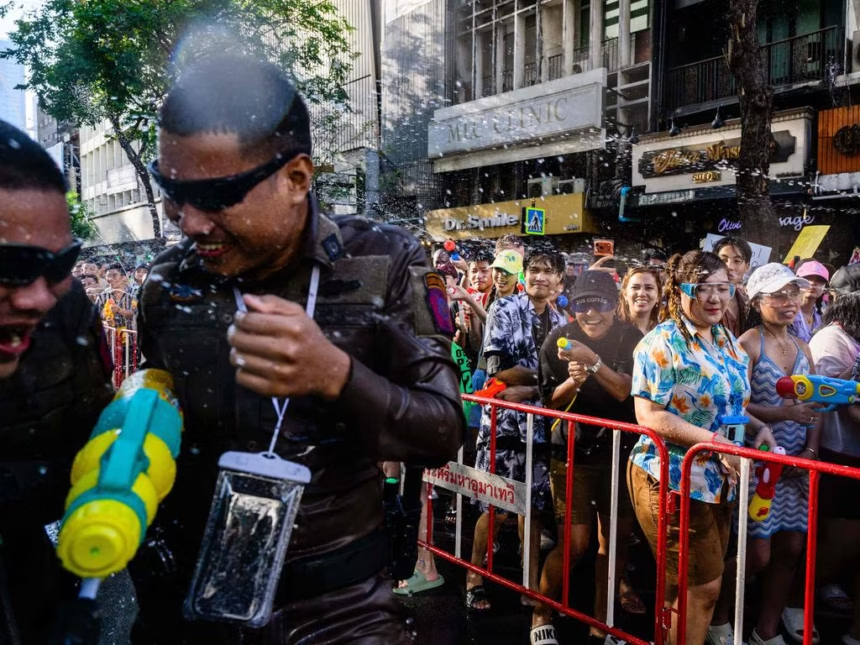
At the same time, Songkran has become famous for its public water fights. Streets fill with people carrying buckets, hoses, and water guns. Cities and tourism hotspots become large festival zones where locals and visitors join the celebration.
The festival brings joy, but it also brings traffic. Families travel long distances to reunite. Roads in Bangkok, Chiang Mai, Pattaya, and other major areas become crowded. Bus stations, highways, and provincial roads all see sharp increases in travel volume.

The Cultural Meaning Behind the Festival
Although the water fights get the most attention, the cultural side of Songkran remains important. Temple visits, merit-making, and family blessings are still central parts of the holiday. Many Thai families use the period to reconnect with parents, grandparents, and relatives living in other provinces.
That is one reason traffic spikes so sharply. Songkran is not just a public festival. It is also one of the busiest homecoming periods of the year. Long drives, tired drivers, and busy roads all raise the risk of crashes.
The celebration has also become a major part of Thailand’s tourism economy. Visitors come for the festival atmosphere, while local businesses benefit from the seasonal surge in travel and spending.
The Seven Dangerous Days and the 2026 Road Toll
The term “seven dangerous days” refers to the holiday travel period from April 10 to 16, when accident risk rises across Thailand. Authorities use the period to monitor crashes, injuries, and deaths on the roads, and the 2026 figures again showed why the warning matters.
During Songkran 2026, officials reported 1,242 accidents, 1,200 injuries, and 242 deaths across the seven-day period. The numbers were lower than in previous years, but the toll remained severe.
Phrae recorded the most accidents, with 48 cases, while Bangkok reported the highest death toll, with 21 fatalities. Officials also said that 10 provinces reported no deaths during the period, which gave some reason for cautious optimism.
According to the reports, straight roads accounted for most crashes, and highways carried a large share of the risk. Peak accident times were reported in the morning and late afternoon, when travel volume was especially heavy.

For more on the early numbers, see Chiang Rai Times covered the six-day toll exceeding 200 deaths.
How the Numbers Built Up During the Holiday
The casualty figures rose steadily through the holiday. By the first three days, authorities had already recorded hundreds of accidents and a growing number of deaths. By the middle of the period, the toll had climbed further as holiday travel continued.
That pattern is one reason the seven dangerous days are taken seriously every year. The risk does not come from one single event. It comes from several days of heavy traffic, festival drinking, long-distance travel, and fatigue.
What Causes So Many Songkran Accidents?
The reasons behind Songkran’s road toll are familiar, but they remain difficult to control. Speeding, drunk driving, dangerous overtaking, and motorcycle crashes are all major factors. Festival travel also creates more congestion and more pressure on drivers to move quickly.
According to the reported figures, speeding caused the largest share of crashes. Drunk driving also remained a major problem, especially during the evening and night hours when festival events and parties are in full swing. Motorcycles were involved in the majority of the accidents.
Wet roads can also worsen conditions. Even though the water fights are part of the festival fun, they add another layer of danger when they mix with traffic and crowded streets. Drivers and riders often face reduced visibility, slippery surfaces, and more distractions than usual.
Speeding Remains the Biggest Risk
Speeding is consistently one of the most dangerous behaviors during Songkran. Many drivers try to beat the traffic or make up time on long holiday journeys. Straight roads and highways can encourage faster driving, which increases the severity of crashes when something goes wrong.
Even if the total number of accidents falls, high speed can still make the results far worse. A single crash at a higher speed often leads to more serious injuries and more deaths.
Drunk Driving Adds to the Toll
Festival celebrations often continue late into the night. That means alcohol and travel can overlap in dangerous ways. Drunk driving remains one of the biggest safety threats during Songkran because it affects reaction time, judgment, and control.
Authorities have long warned drivers not to get behind the wheel after drinking. The 2026 figures show that the warning still matters.
Motorcycles Are Involved in Most Crashes
Motorcycles continue to play a major role in Songkran accidents. They are widely used across Thailand, especially for short trips and local travel, but they also offer far less protection than cars.
Helmet use, speed control, and responsible riding are especially important during the holiday. When motorcycles are overloaded or ridden carelessly, the chance of serious injury rises sharply.
How Authorities Are Responding
Thai authorities have continued to push road safety campaigns during Songkran, including checkpoints, sobriety checks, speed enforcement, and public awareness messages. These measures are meant to reduce the number of crashes and prevent avoidable deaths.
The 2026 campaign focused on safer driving and lower speeds. Officials also increased road monitoring in areas with heavy holiday traffic. The goal was to keep the festival alive while reducing the human cost on the roads.
For more on enforcement, see Chiang Rai Times on drunk driving arrests topping 2,600 day one.

These efforts have helped bring down the numbers compared with some previous years, but the holiday still carries a clear risk. The challenge is not only enforcement. It is also changing behavior.
What Travelers and Locals Should Know
Anyone traveling during Songkran should plan ahead. Leaving early, avoiding peak travel times, and choosing safer transport options can reduce risk. Drivers should avoid alcohol completely if they plan to drive. Riders should wear helmets. Passengers should also prioritize safety rather than assuming someone else is in control.
Rest matters too. Long journeys during the holiday often lead to fatigue, which slows reaction time and increases the chance of mistakes. Staying alert is one of the simplest ways to stay safe.
Tourists should also remember that Songkran is both a celebration and a busy travel period. It is smart to check road conditions, use trusted transport services, and stay aware of local safety advice.
Why Songkran Still Matters
Even with the danger on the roads, Songkran remains one of Thailand’s most important holidays. It connects family, faith, culture, and tourism in a way few other events do. For many people, it is a meaningful time of renewal and reunion.
The 2026 figures show that road safety is improving in some areas, but the festival still carries serious risks. That makes public awareness just as important as enforcement. The holiday can remain joyful, but only if drivers, riders, and passengers treat the roads with more care.
Songkran’s appeal is not going away. The challenge now is to ensure the celebration does not come at such a high cost.
Thailand’s “seven dangerous days” are a reminder that even the world’s biggest water fight has a serious side. The festival brings happiness, travel, and tradition, but it also demands responsibility from everyone on the road.