


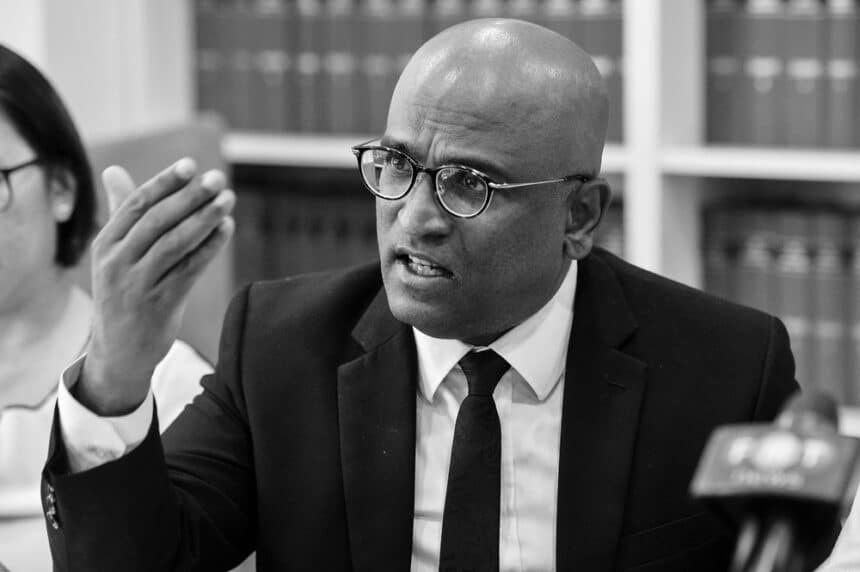
SINGAPORE – Suspended Singapore activist lawyer Ravi Madasamy, widely known as M Ravi, was found dead in the early hours of Wednesday (24 Dec). He was taken to Tan Tock Seng Hospital in an unconscious state and later pronounced dead. Police are treating the case as an unnatural death, with early signs suggesting a suspected drug-related incident.
The authorities were alerted to an urgent medical situation at a flat at about 5.40 am on 24 December. The Singapore Civil Defence Force (SCDF) attended the call, and paramedics brought the 56-year-old man, identified as M Ravi, to Tan Tock Seng Hospital. He arrived unconscious and died a short time later.
Police said the case has been classified as an unnatural death. In their statement, they added that initial findings do not point to foul play, though investigations are still ongoing. In later updates, officers said a man at the scene admitted to taking drugs with Mr Ravi hours earlier.
The man said Mr Ravi later showed worrying symptoms, and he tried to perform CPR. The Central Narcotics Bureau (CNB) arrested the man on suspicion of drug-related offences.
Mr Ravi’s cause of death has not been made public, pending further checks such as toxicology results.
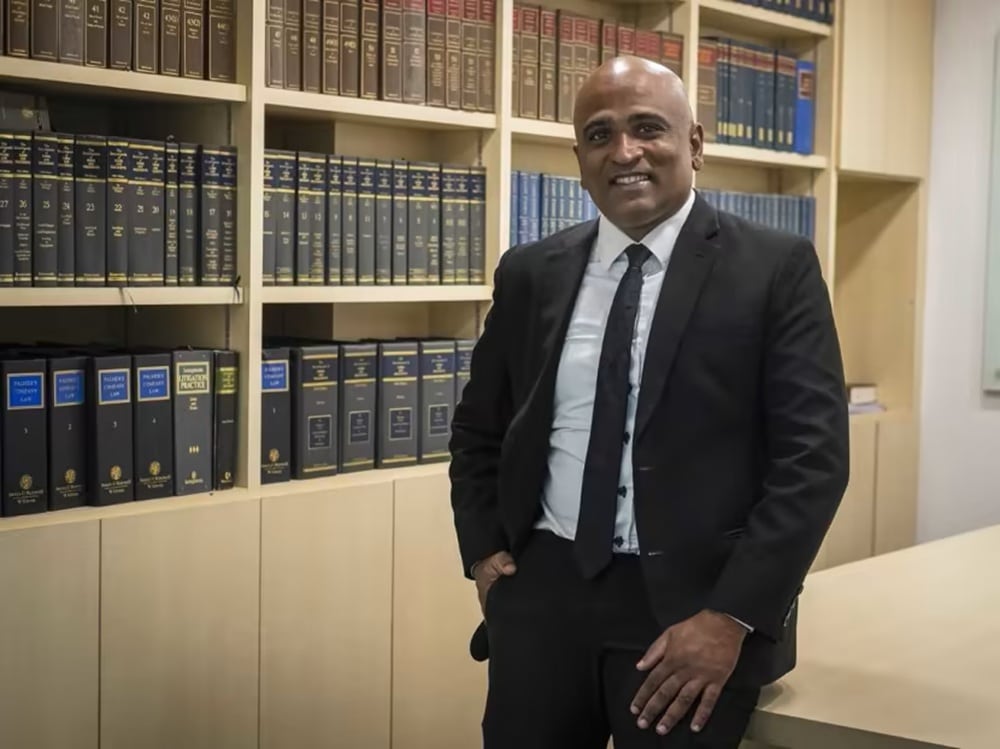
M Ravi A Divisive Name in Singapore’s Legal Scene
M Ravi, born Ravi Madasamy in 1969, was a long-running figure in Singapore’s human rights work, active for more than 25 years. He was called to the Bar in 1996 after studying at the National University of Singapore and Cardiff University. He later set up his own practice, M Ravi Law, in 2019.
He became best known for acting for death row inmates, often in drug trafficking cases, and for fighting Singapore’s mandatory death penalty. Among his most high-profile wins was the acquittal of Malaysian national Gobi Avedian in 2020, after the Court of Appeal overturned an earlier conviction.
He also secured commutations for clients such as Yong Vui Kong and Cheong Chun Yin. He spoke often against capital punishment and founded the Singapore Anti-Death Penalty Campaign.
His work also stretched beyond criminal cases. He brought constitutional challenges, including early attempts to strike down Section 377A, the law that criminalised sex between men (repealed in 2022). He also took on cases linked to political rights, including issues around by-election timing. He represented opposition figures, including Chee Soon Juan of the Singapore Democratic Party.
In 2023, the International Bar Association recognised him with an award for outstanding human rights work, linked to efforts around decriminalising homosexuality and ending the death penalty.
He also stepped into politics. He contested the 2015 General Election under the Reform Party in Ang Mo Kio GRC, taking more than 21 per cent of the vote against the team led by then-Prime Minister Lee Hsien Loong.
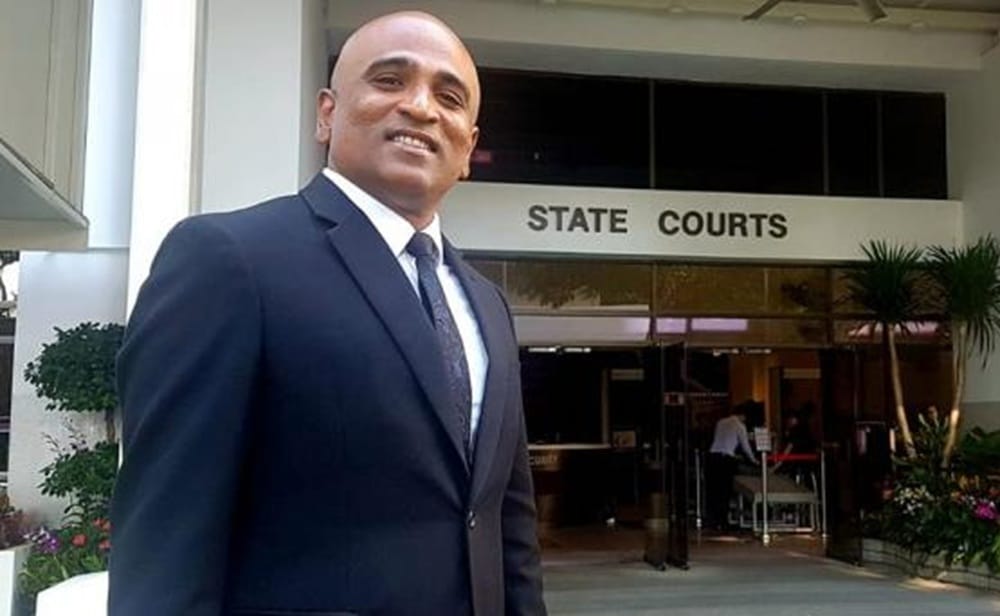
M Ravi’s Disciplinary Action and Past Controversy
M Ravi’s career also included repeated disputes and disciplinary action. He had spoken publicly about living with bipolar disorder, diagnosed in 2006. Court records described him as familiar with disciplinary proceedings.
In 2023, the High Court suspended him from legal practice for five years, the maximum penalty, after finding he made what the court called grave and baseless claims against the Attorney-General’s Chambers and the Law Society. The remarks related to the comments he made after the Gobi case.
There were further developments in 2024. He received a 14-week jail sentence for various offences. In May 2024, the Court of Three Judges struck him off the rolls, citing misconduct. This included attacks on former President Halimah Yacob that the court found unwarranted, disrespectful conduct in court, and dishonest statements.
Some international groups, including Front Line Defenders, criticised the actions and raised concerns about possible harassment of a human rights defender.
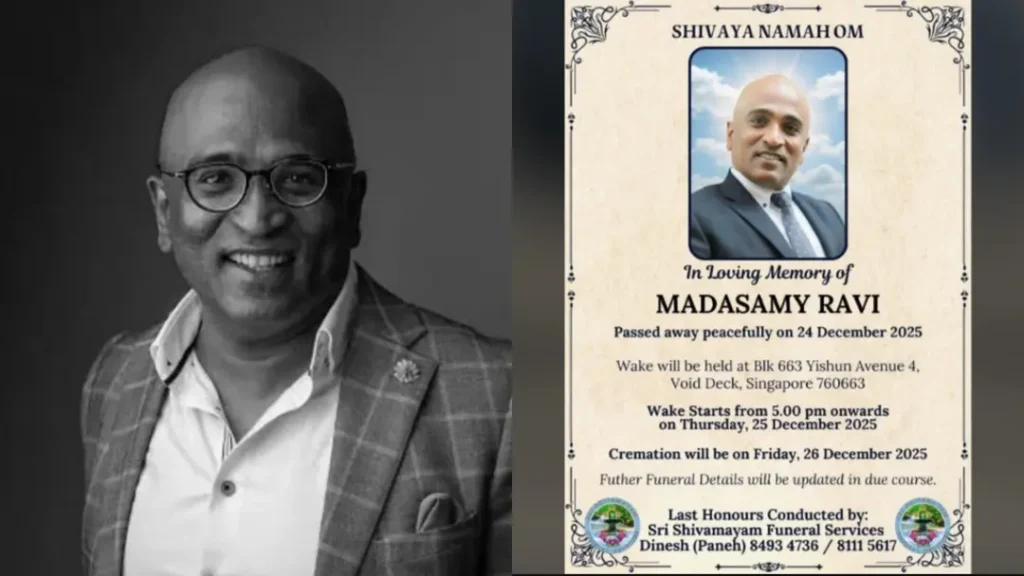
Tributes After His Death
After news broke, tributes came in from lawyers and activists who had worked with him or followed his cases. Lawyer Eugene Thuraisingam, a friend who had also represented him, said M Ravi faced personal struggles but stayed committed to the causes he believed in. He added that Mr Ravi’s arguments helped shape constitutional law in Singapore.
Lawyer Josephus Tan also recognised the controversies around him, while pointing to his influence on criminal and constitutional cases.
LGBTQ+ group Oogachaga praised his early court challenges to Section 377A, describing his approach as bold and unusual for its time, and said he remained committed to defending human rights.
Mr Ravi wrote about his upbringing in his 2013 autobiography Kampong Boy, which was shortlisted for the Singapore Literature Prize. He was one of seven children and described growing up in a home affected by poverty and alcoholism.
His death closes a chapter on a figure who drew strong opinions but left a clear mark on Singapore’s legal and human rights debates. A wake is set for 25 December at a block in Yishun.