



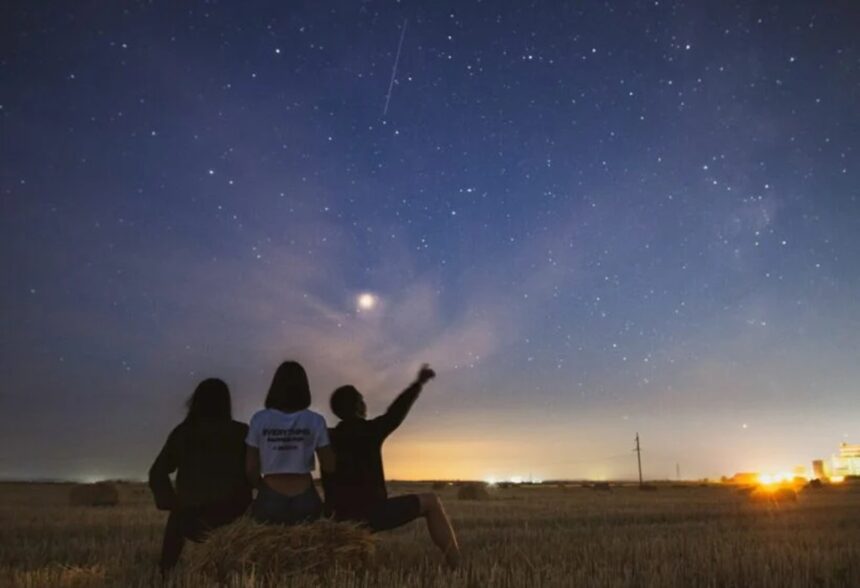
CHIANG RAI – Sky watchers across Northern Thailand, including the scenic province of Chiang Rai, are getting ready for a stunning natural light display. The annual Geminids meteor shower, often called the “King of Meteor Showers”, is now at its most active, with the brightest display expected around midnight tonight and continuing into the early hours of Monday, 15 December 2025.
The National Astronomical Research Institute of Thailand (NARIT) reports that viewing conditions this year are almost ideal. A thin waning crescent moon will rise late and stay faint, so the sky will remain dark. This gives viewers an excellent chance to see both the brightest fireballs and many of the fainter meteors from dark-sky locations.
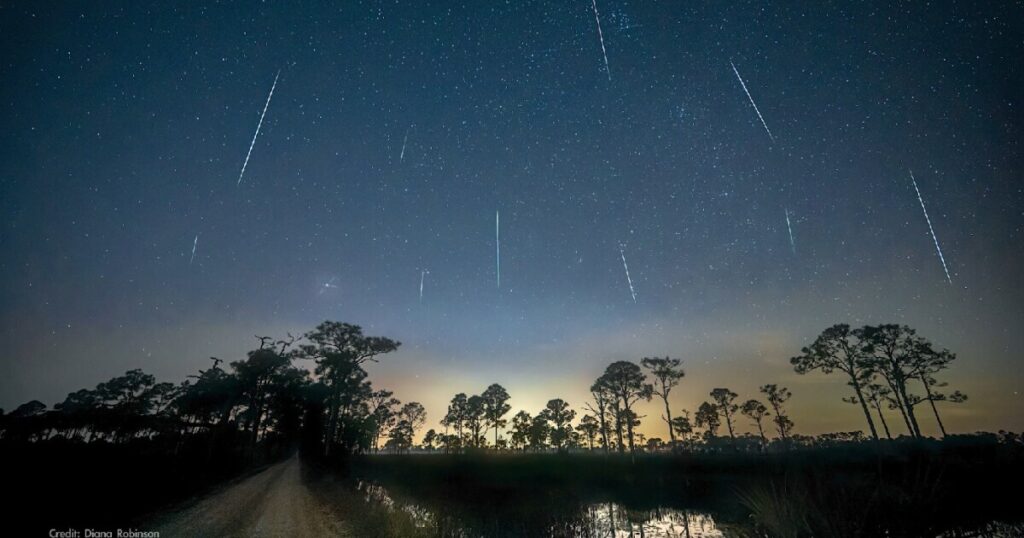
When and Where to Watch the Geminids
The technical peak of the Geminids took place on the night of 13 to 14 December, but this shower has a broad maximum that lasts for several nights. That means tonight, from 14 December into the morning of 15 December, will still offer a very impressive show.
- Best time to watch: The highest meteor rates are expected after midnight, up to around 2.30 a.m. (Thailand local time). At this time, the radiant point of the shower (the area of the sky where the meteors appear to come from) is high overhead, and the moon has not yet risen high enough to spoil the view. Meteors may still appear on and off until dawn.
- How many meteors to expect: Under perfect dark-sky conditions, astronomers estimate that the peak could reach 120 to 150 meteors per hour. On the night after the main peak, viewers can expect around half of that, which still makes it one of the most active showers of the year.
- Where to look in the sky: The meteors appear to spread out from the constellation Gemini, but there is no need to stare straight at it. It is better to look at a wide area of the sky, starting with the north-eastern sky in the evening, then shifting towards the highest part of the sky after midnight.
Top Geminids Viewing Conditions in Chiang Rai
Viewers in Chiang Rai and across Northern Thailand will get the best results if they leave bright city areas and head for darker, more open spots.
- Find dark skies: Avoid street lights and built-up areas. Light pollution is the biggest problem for meteor watching, as it hides the faint streaks. Rural areas, hills, and open fields are ideal for a clear, wide view.
- Stay comfortable: No telescope or binoculars are needed. The Geminids are best enjoyed with the naked eye. A blanket or reclining chair will make it easier to look up for long periods. Warm clothing is important on a cool December night, and viewers should allow 15 to 20 minutes for their eyes to adjust fully to the dark.
- Watch the whole sky: Lying down and looking up at as much of the sky as possible gives the best chance of seeing many meteors. The Geminids are known for their colourful streaks, often showing shades of yellow, green, or blue as they burn up high in the atmosphere.
The Geminid meteors come from debris left behind by the asteroid 3200 Phaethon. As Earth moves through this river of dust and rock, the tiny particles hit the atmosphere at high speed and burn up, creating the “shooting stars” that are seen from the ground.
This is one of the most reliable and dramatic annual meteor showers, and tonight offers an excellent chance to enjoy it from Northern Thailand.
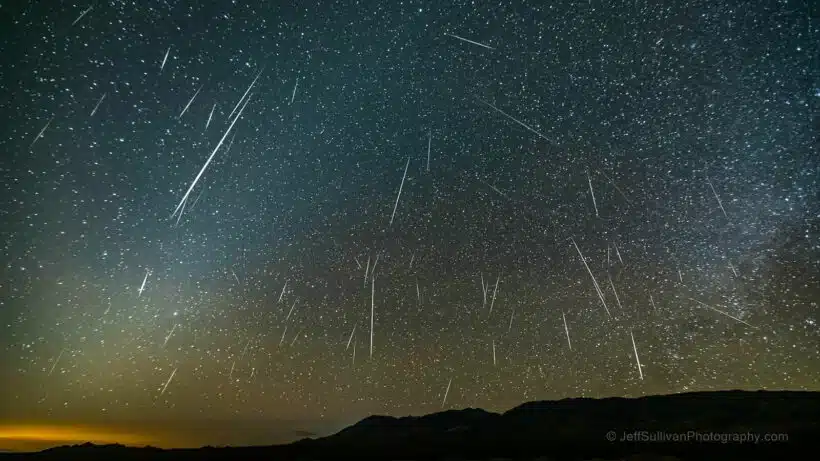
Best Geminids Viewing Spots Near Chiang Rai
Mae Fah Luang Garden (Doi Tung)
- Mae Fah Luang Garden on Doi Tung is an officially recognised Dark Sky Conservation Area in a Private Area, with lighting rules designed to cut light pollution and protect views of the night sky.
- The garden sits well away from the main city lights of Chiang Rai, so the sky is usually much darker than in town. For many people, this is one of the most convenient and reliable dark-sky locations near the city.
Doi Pha Tang
- Doi Pha Tang is a well-known mountain viewpoint in Chiang Rai province.
- The area offers wide panoramas and generally low levels of light pollution compared with urban zones. The higher elevation helps to rise above haze or smoke, which can improve the visibility of faint meteors. It takes a bit more effort to reach, but the clear, open skies make it a strong choice.
Rural Districts (Amphoe) Further from the City
- Dark-sky studies in the region show that the least light-polluted areas are those furthest from Mueang Chiang Rai, the main city district.
- Less populated parts of districts such as Mae Suai and Wiang Pa Pao, to the south and south-west of the city, often have much darker skies. High, open ground in these areas can provide excellent viewing conditions, especially if street lighting is sparse.
General Tips for Clear Geminids Viewing
- Face north and east: The Geminids appear to radiate from the constellation Gemini, which rises in the north-eastern sky in the evening and climbs high overhead after midnight. A location with an open view towards the north and east, away from the glow of Chiang Rai city, will help.
- Check air quality: December usually brings clear, dry air, but smoke, dust, or haze can still affect transparency. A quick look at the Air Quality Index (AQI) before heading out can help, as clear, clean air makes a big difference in how bright the meteors look.
- Give eyes time to adapt: After arriving at a chosen spot, it takes about 15 to 20 minutes for eyes to fully adjust to the darkness. Avoid bright phone screens and torches if possible, or use a dim red light, so that faint meteors remain easy to spot.
- Stay safe: Those travelling to rural or mountain areas in the late evening or early morning should check their vehicle, carry warm clothing, and tell a friend or family member where they are going. Respect local land owners and follow any national park or community rules.
Based on the forecast for Monday night, 15 December 2025, in Chiang Rai, conditions look excellent for stargazing.
Chiang Rai Night-time Weather Forecast
| Time Window | Estimated Temperature | Sky Conditions | Key for Stargazing |
|---|---|---|---|
| Evening (9 p.m. to 12 a.m) | 19°C to 18°C | Clear sky | Excellent visibility |
| After midnight (1 a.m. to 3 a.m) | 18°C to 17°C | Clear sky | Ideal for peak viewing |
| Early morning (4 a.m. to 6 a.m) | 17°C to 16°C | Clear sky | Very good, but the coldest period |
- Lowest temperature: The overnight low is expected to be around 16°C to 17°C, with the chilliest time just before sunrise.
- Cloud cover: Forecasts indicate a clear sky for the whole night, which is perfect for meteor watching.
- Rain: There is a 0% chance of rain.
- Wind: Winds should remain very light and calm, which helps keep the air steady and pleasant for viewers.
What to Wear and Bring
With temperatures dipping into the mid-teens, warm layers are important, especially for those staying out past midnight. A jacket, hat, and perhaps gloves or a blanket will help keep viewers comfortable while they wait for the brightest part of the shower.
For anyone in or near Chiang Rai, tonight offers a rare mix of clear skies, cool air, and one of the best meteor showers of the year. It is a perfect night to look up and enjoy the Geminids.