


TAIWAN – China’s People’s Liberation Army (PLA) has begun wide-ranging military drills around Taiwan, using live ammunition and practising port blockade scenarios. Beijing says the move is a firm response to forces backing “Taiwan independence” and to what it calls outside meddling.
The drills, named “Justice Mission 2025”, began without warning on Monday morning. Units from the army, navy, air force, and rocket force took part. The PLA Eastern Theatre Command sent warships, fighter aircraft, bombers, drones, and long-range artillery into joint operations across the Taiwan Strait and around the island’s north, south, east, and west.
Senior Colonel Shi Yi, the command’s spokesperson, said the programme covers sea and air readiness patrols, combined strikes on targets at sea and on land, and blockade practice aimed at major Taiwanese ports, including Keelung and Kaohsiung. Reports said live-fire activity took place on Monday. Wider exercises are set for Tuesday in seven marked zones, described as a record for both size and how close they are to Taiwan’s coast.
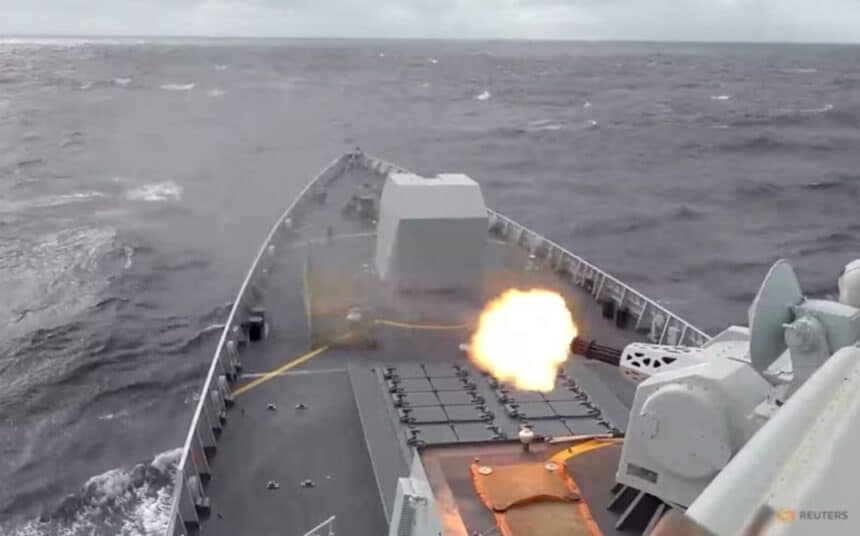
A PLA video shared online showed naval vessels firing east of Taiwan. State media highlighted accuracy and “all-direction deterrence” beyond the island chain, pointing to an ability to counter foreign involvement if a crisis grows.
Officials in Beijing called the drills a “stern warning” to separatists and outside forces. Statements did not name a country, but observers tied the timing to recent events, including a major US arms package for Taiwan and comments from leaders in Japan.
Beijing Repeats Its Hard Line on Taiwan
China’s leadership continues to treat Taiwan as part of its territory. Foreign Ministry spokesperson Lin Jian accused Taiwan’s governing Democratic Progressive Party of pushing independence by seeking backing from the United States. He warned such steps could turn the island into a “powder keg”.
State media and PLA commentators also said the military would take “timely, resolute, and forceful actions” against any attempt to formalise independence. The language matches President Xi Jinping’s long-held position that “reunification” will happen and separatist plans will fail.
This is the sixth large PLA action aimed at Taiwan since 2022. It stands out for its clear focus on blocking access from outside and cutting key shipping routes, steps many see as practice for a longer crisis.
Taiwan’s government reacted quickly, calling the exercises dangerous and disruptive. The Ministry of National Defence said it tracked 89 PLA aircraft on Monday, with 67 entering Taiwan’s air defence identification zone. It also reported 14 naval ships and 14 coast guard vessels operating nearby.
In a statement, the ministry said the Chinese Communist Party’s “targeted military exercises” showed it as an aggressor and a major threat to peace in the region. Taiwan placed forces on higher alert and ran rapid drills focused on stopping an attack.
President Lai Ching-te’s office urged Beijing to end what it called irresponsible actions that put regional stability at risk. The impact reached civilians, too. Taiwan’s transport ministry reported diversions affecting more than 100,000 international passengers and the cancellation of dozens of domestic flights because of airspace restrictions.
Taiwan has strengthened its defences in recent years. This includes purchases such as US-made HIMARS rocket systems and wider reservist training. Officials said defending a democracy is not provocation, rejecting Beijing’s claim that Taiwan is driving separatist conflict.
The United States and Japan Watch Closely
The drills come as Taiwan’s partners face fresh pressure from Beijing. Earlier this month, the US approved an $11.1 billion arms sale to Taiwan, described as the largest on record. The package includes advanced defensive and offensive systems. China’s defence ministry protested and promised “forceful measures” in response.
The Pentagon did not offer an immediate public comment on the latest drills. The Biden administration has repeatedly said it will keep meeting its obligations under the Taiwan Relations Act by providing defensive weapons. President-elect Donald Trump, speaking in Florida, played down concerns. He pointed to his relationship with Xi Jinping and said the manoeuvres looked routine.
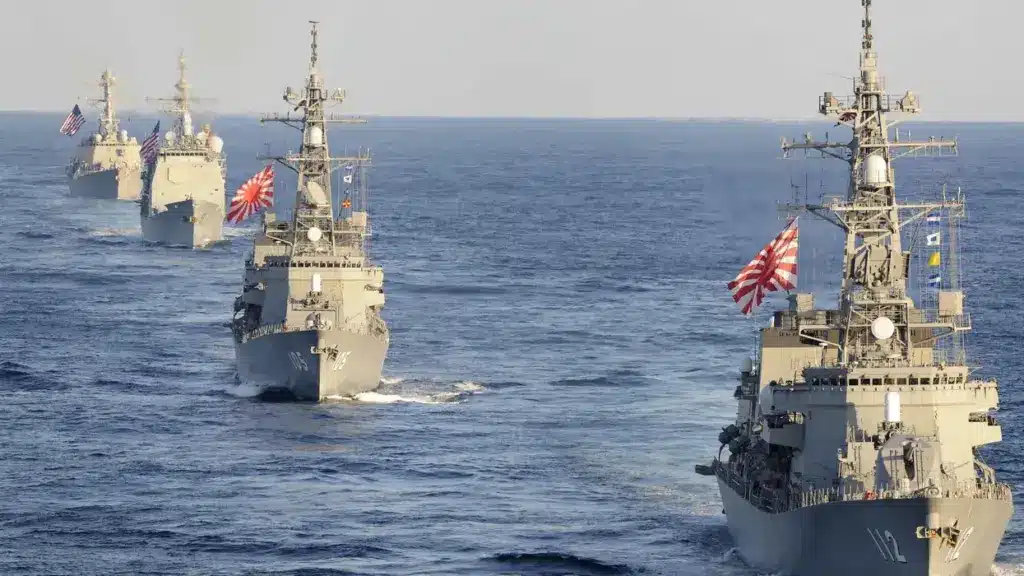
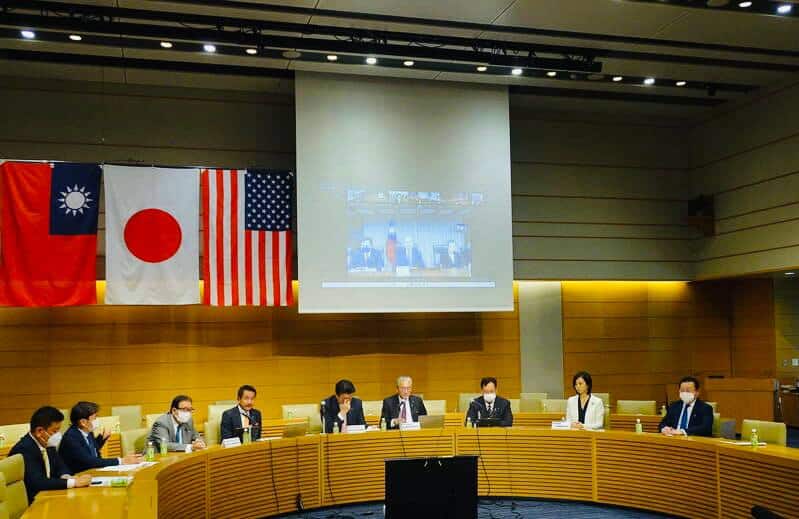
Japan has also drawn sharper criticism from Beijing as it speaks more openly about Taiwan’s security. Prime Minister Sanae Takaichi recently told parliament that a Chinese attack on Taiwan could become a “survival-threatening situation” for Japan, which could justify military involvement. The remarks have pushed relations to a new low.
Japanese officials issued no new public comments on the drills. Still, Japan’s shifting defence stance, along with closer links with the US and Taiwan, shows growing alignment against China’s use of pressure in the region.
What It Means for Regional Stability
Analysts see “Justice Mission 2025” as a clear display of the PLA’s stronger joint operations, including quick deployment and coordinated action across services. The focus on port blockades and blocking outside access points to a strategy aimed at isolating Taiwan during a crisis, making it harder for the US or allies to respond.
At the same time, the activity adds risk in an already tense Indo-Pacific. With flights disrupted and markets watching, the incident highlights how fragile the status quo remains across the Taiwan Strait.
As the live-fire phases continue into Tuesday, observers will watch for signs that Beijing extends the exercises or chooses to ease the pressure. For now, the PLA’s message reads as direct: any move towards Taiwan independence, or foreign support for it, will face strong resistance.
On the streets in Taiwan, people sounded both tired of the cycle and unwilling to back down. “We just want peace,” a Taipei resident told reporters, “but we won’t bow to threats.” Many abroad are watching closely, aware that a mistake in these waters could pull major powers into a wider conflict.