



Last Updated on May 28, 2026 by Jeff Tomas
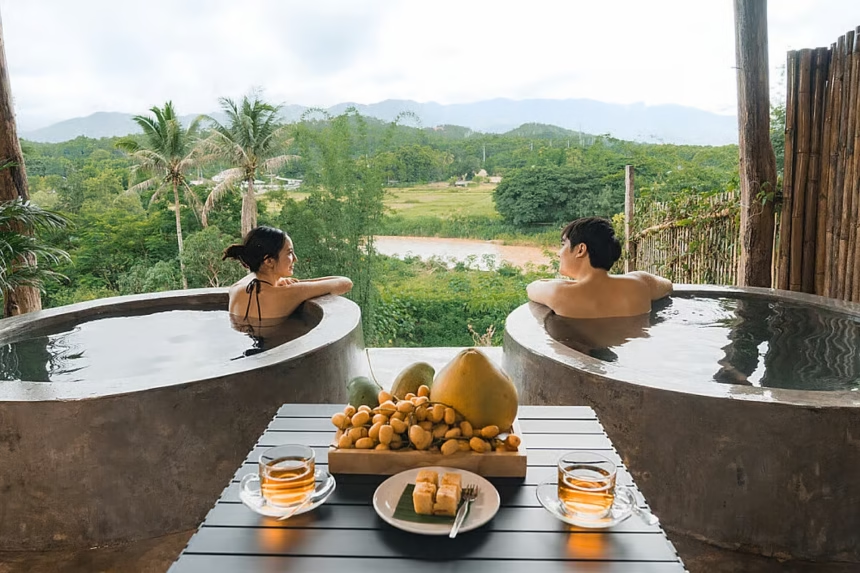
CHIANG RAI — The sun rises gently over the misty mountains of Mueang Phan in northern Thailand, casting a golden glow over a landscape dotted with organic tea farms and silent meditation retreats. Here, far from the bustling neon streets of Bangkok, a quiet revolution is taking place. It is a revolution not of industry, but of inner peace.
Thailand is currently undergoing a massive transformation. The country, long famous for its beautiful beaches, spicy street food, and vibrant nightlife, is shifting its focus. Today, the nation is making a highly strategic push to become the undisputed wellness hub of Asia.
The goal is clear: attract high-value tourists who want to spend their money on health, healing, and self-care. At the center of this ambition is the upcoming “Amazing Thailand Health & Wellness Trade Meet 2026,” a massive industry event designed to showcase the country’s world-class medical and holistic facilities to the global market.
But this is not just about feeling good. It is a very big business. According to recent data from the Global Wellness Institute, the global wellness tourism market is on a steep upward climb. Experts forecast that this sector will reach a staggering $1.35 trillion by the year 2028. Thailand wants a major piece of that pie.
The Shift from Backpackers to Big Spenders
For decades, Thailand was the ultimate backpacker destination. Young travelers flocked here for cheap hostels, budget bus rides, and full moon parties. While that demographic still exists, the Thai government and the Tourism Authority of Thailand (TAT) are looking in a different direction.
They are looking for the “high-value” tourist.
Who is the high-value wellness tourist?
- They stay longer: Instead of rushing through three cities in a week, they book two-week stays at a single health resort.
- They spend more: They are willing to pay premium prices for expert-led yoga retreats, personalized medical check-ups, and luxury spa treatments.
- They respect the local environment: Wellness tourists tend to care deeply about sustainability, organic farming, and eco-friendly practices.
- They travel year-round: Wellness is not seasonal. People seek stress relief and medical care in the rainy season just as much as in the dry season.
By targeting this demographic, Thailand hopes to boost its economy without putting extra strain on its natural resources. It is a model of sustainable growth that prioritizes quality over sheer quantity.
The Amazing Thailand Health & Wellness Trade Meet 2026
The centerpiece of this year’s strategy is the “Amazing Thailand Health & Wellness Trade Meet 2026.” This event is a highly coordinated business-to-business (B2B) gathering. It brings together Thai business owners and international travel buyers from across the globe.
The trade meet serves as a massive display window for everything Thailand has to offer. Buyers from Europe, North America, the Middle East, and neighboring Asian countries will fly in to inspect the goods.
At the event, attendees will find:
- Luxury Spa Operators: Showcasing high-end treatments using local herbs and ancient techniques.
- Medical Tourism Hospitals: Highlighting cutting-edge surgeries, anti-aging treatments, and comprehensive health check-ups.
- Holistic Retreat Centers: Offering immersive experiences in mindfulness, yoga, and digital detoxing.
- Wellness Real Estate Developers: Pitching long-term living solutions for retirees and remote workers who want health-focused community living.
The government hopes that by connecting local providers with global travel agents, it can fill the country’s resorts and hospitals with eager, high-spending visitors for years to come.
The Two Pillars: Medical Excellence and Ancient Healing
What makes Thailand unique in the crowded wellness market? The answer lies in its ability to combine two very different worlds: modern Western medicine and ancient Eastern healing.
1. World-Class Medical Tourism
Thailand is a pioneer in medical tourism. Hospitals in Bangkok and Phuket are designed to look and feel like five-star hotels. They feature grand lobbies, grand pianos, and concierges who speak multiple languages.
Patients fly in from all over the world for procedures ranging from complex heart surgeries to elective cosmetic work. The appeal is simple: the quality of care is on par with the United States or Europe, but the cost is only a fraction of the price. Furthermore, the waiting times are virtually zero.
Facilities like Bumrungrad International Hospital have set the gold standard. They employ doctors who are board-certified internationally and use the absolute latest medical technology. After a procedure, patients do not recover in a gloomy hospital room; they recover on a beautiful tropical island.
2. Traditional Thai Wisdom
On the other side of the spectrum is Thailand’s rich history of traditional medicine. This is deeply rooted in Buddhist philosophy and has a deep connection to nature.
The most famous example is Nuad Thai, or traditional Thai massage. In 2019, UNESCO officially recognized Thai massage as an Intangible Cultural Heritage of Humanity. This is not just a relaxing rubdown; it is a complex therapeutic art form that has been passed down through generations.
Beyond massage, wellness seekers are flocking to Thailand for herbal medicine therapies, mindfulness meditation taught by Buddhist monks, and deep detox programs. This blend of the spiritual and the physical offers a complete package that modern urbanites desperately crave.
Regional Focus: Spreading the Wealth
To become a true wellness hub, the movement cannot just live in Bangkok. The Thai government is actively promoting regional destinations, each with its own unique wellness flavor.
The North: Nature, Culture, and Slow Living
Up here in the north, in places like Chiang Rai and Chiang Mai, the focus is on “slow living.” The cool climate, dense forests, and high mountains create the perfect environment for reflection and nature-based healing.
In Mueang Phan, for example, local entrepreneurs are turning family-owned farms into wellness homestays. Visitors can pick their own organic vegetables, learn to cook healthy Thai food, and practice morning yoga overlooking the rice paddies. The north is also the center for traditional Thai herbalism, where healers use local roots and leaves to create natural remedies.
The South: Island Luxury and Detox
Down south, islands like Phuket and Koh Samui are dominating the luxury wellness market. Here, visitors will find massive, high-end resorts dedicated entirely to health.
These centers offer intense, week-long programs. Guests might engage in juice fasting, colon hydrotherapy, intense fitness boot camps, and daily massages. The backdrop of the crystal-clear Andaman Sea or the Gulf of Thailand adds a layer of natural beauty that accelerates the relaxation process.
The Northeast (Isan): The Untapped Frontier
Even the lesser-known Isan region is getting involved. Known for its rich culture and spicy cuisine, Isan is beginning to promote itself as an authentic, off-the-beaten-path destination for cultural wellness and traditional agricultural tours.
The Global Wellness Boom: Understanding the Numbers
To understand why Thailand is pushing so hard, you have to look at the global numbers. The $1.35 trillion forecast by the Global Wellness Institute is not just a random guess. It is based on a massive shift in human behavior.
Following the global events of the early 2020s, people around the world completely changed how they view their health. Health is no longer just about going to the doctor when you are sick. It is about preventing illness before it starts.
This has led to a boom in several specific sectors:
- Personal Care and Beauty: People want organic, natural skincare.
- Healthy Eating and Weight Loss: There is a massive demand for vegan, gluten-free, and farm-to-table food options.
- Mental Wellness: Burnout is a global epidemic. People are paying top dollar for meditation retreats, sleep therapy, and digital detoxes to escape their screens.
- Wellness Real Estate: People are buying homes in communities built around health clubs, nature trails, and clean air.
Thailand is perfectly positioned to serve every single one of these growing sectors.
The Role of Food in Thai Wellness
You cannot talk about wellness in Thailand without talking about food. Thai cuisine is naturally packed with health benefits. The fundamental ingredients of a standard Thai kitchen—lemongrass, galangal, turmeric, garlic, and chili—are essentially medicinal herbs.
However, the wellness push is taking Thai food to the next level. Across the country, there is a massive rise in organic farming. Restaurants are partnering directly with local farmers to ensure their ingredients are free from pesticides and harmful chemicals.
Furthermore, Thailand has embraced the plant-based diet revolution. Cities like Chiang Mai and Bangkok are now considered some of the most vegan-friendly cities in the world. Plant-based Thai food offers all the intense flavors of traditional dishes without the heavy use of animal fats, making it a major draw for health-conscious tourists.
Challenges on the Road to Trillion-Dollar Success
While the future looks incredibly bright, the path to becoming Asia’s premier wellness hub is not without its hurdles. Thailand faces real challenges that must be addressed to reach its goals.
1. Fierce Regional Competition
Thailand is not the only country that has noticed the wellness boom. Bali, Indonesia, has long been a haven for yoga and spiritual retreats. India remains the undisputed home of Ayurveda and traditional yoga. Vietnam is quickly developing its own luxury spa and wellness sector. To stay ahead, Thailand must constantly innovate and ensure its marketing reaches the right people.
2. Quality Control and Standardization
As the industry grows, so does the risk of low-quality operators trying to make a quick buck. To protect its reputation, the Thai government must strictly enforce health and safety standards. Every clinic, spa, and retreat must be properly licensed. Tourists need to know that when they book a wellness trip to Thailand, they are guaranteed a safe, professional, and high-quality experience.
3. Environmental Sustainability
Wellness tourism relies heavily on beautiful natural environments. Clean air, clear water, and green forests are essential. Unfortunately, Thailand has struggled with environmental issues, particularly the seasonal air pollution in the north (often referred to as the “burning season”). For Chiang Mai and Chiang Rai to truly thrive as year-round wellness hubs, local governments must solve these environmental challenges permanently.
4. The Talent Pipeline
Providing world-class service requires world-class staff. As hundreds of new wellness centers open, there is a massive need for trained professionals. Thailand must invest heavily in education. They need more certified yoga instructors, licensed physical therapists, expert nutritionists, and skilled massage therapists. The service standard must remain high to justify the premium prices.
Government Action: Visas and Incentives
The Thai government is not just sitting back and hoping tourists arrive. They are actively changing laws and policies to make it easier for people to visit.
One of the biggest game-changers has been the evolution of the visa system. Thailand has introduced specialized long-term visas designed specifically for medical tourists and digital nomads.
For medical tourists, the government allows extended stays so patients can recover fully without worrying about their paperwork expiring. This takes the stress out of complex medical procedures.
For digital nomads—who are a huge part of the wellness market—the newly structured destination visas allow remote workers to live in Thailand for months at a time. These are exactly the types of people who buy monthly yoga memberships, eat at organic cafes daily, and take weekend trips to meditation retreats.
Additionally, the Board of Investment (BOI) is offering serious tax incentives for businesses that open in the wellness sector. If a company wants to build a state-of-the-art rehabilitation center or a green-energy eco-resort, the government is willing to offer tax breaks to make it happen.
The Power of “Soft Power”
The wellness push is a core part of Thailand’s broader “soft power” strategy. Soft power is a country’s ability to influence the world through its culture, values, and lifestyle, rather than through military or economic force.
When people around the world think of Thailand, the government wants them to think of health, happiness, and harmony. They want Thai wellness to become a globally recognized brand, much like Italian fashion or Japanese technology.
By aggressively promoting events like the Amazing Thailand Health & Wellness Trade Meet 2026, the country is writing its own narrative. It is telling the world: “If you want to live a longer, healthier, and happier life, this is where you need to be.”
Looking Ahead: The Journey to 2028
As we look toward 2028 and the projected $1.35 trillion global market, Thailand’s position looks incredibly strong. The country has the infrastructure, the culture, the medical expertise, and the natural beauty to dominate this space.
But success will require teamwork. It will take cooperation between the national government, local municipalities, hospital administrators, hotel owners, and local farmers. Everyone must pull in the same direction.
Here in Mueang Phan, as the morning mist clears and the day begins, the potential is obvious. The air is clean, the pace of life is gentle, and the focus is on well-being. This small pocket of northern Thailand is a perfect example of what the entire country is striving to become.
The backpackers will still come, and the neon lights of the cities will still shine. But the future of Thai tourism is undeniably green, healthy, and deeply peaceful. By embracing this trillion-dollar trend, Thailand is not just securing its economic future; it is helping the world heal, one mindful breath at a time.
Trending Thailand News:
Best Wellness Retreats in Northern Thailand for 2026
Thailand’s Health Officials Sound Alarm on Nitrates in Processed Meats


