


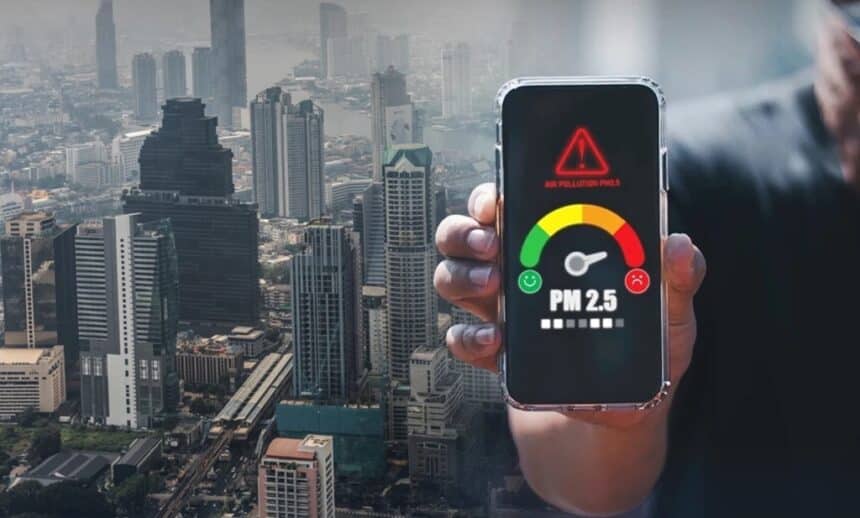
CHIANG RAI- 2026 has brought a mixed air quality picture across Thailand. Bangkok has an Air Quality Index (AQI) of 140, Chiang Mai is about 85, and Phuket is near 21, so the air can feel very different depending on where you are. In Bangkok, PM2.5 concentration has also been running above Thailand’s 37.5 µg/m3 limit, for example, a citywide average of 47.6 µg/m3 on Feb 12.
PM2.5 is fine particulate matter so small you can’t see it, yet it can travel deep into your lungs when you breathe. That matters because higher PM2.5 can trigger coughing, eye irritation, and breathing trouble, especially for kids, older adults, and anyone with asthma.
This post keeps things calm and practical. First, you’ll learn how to read Thailand air quality reports, including AQI, µg/m3, and the color zones (like orange). Then you’ll get a simple safety plan for bad-air days, from what to do outdoors to how to protect your home air.
What Thailand’s air quality report is really telling you (AQI, PM2.5, and the orange zone)
Thailand’s air updates can look simple at first glance, but then become confusing the moment you compare apps, colors, and numbers. The key is to read the report like a weather forecast; it is not one perfect number, it is a set of signals. AQI tells you how risky the air is in plain language, while PM2.5 in µg/m3 tells you how much fine dust is actually in the air.
Once you understand how those two work together, the color zones (especially orange) make more sense, and your next step becomes obvious.
AQI vs µg/m3: a quick translation you can use in daily decisions
Think of PM2.5 (µg/m3) as the measured amount of fine particles floating in the air around you. It is like the “speed” on a car dashboard, a direct reading. AQI, on the other hand, is the “driving conditions” score. It turns PM2.5, nitrogen dioxide, sulfur dioxide, carbon monoxide (and sometimes other pollutants) into a single scale that comes with health messages.
That difference matters because you might see a PM2.5 number that looks moderate, yet the AQI warning sounds stricter. Or you might see a decent AQI while the PM2.5 number is still above Thailand’s reference limit.
Here is a real example from Bangkok: on Feb 12, the citywide PM2.5 average was 47.6 µg/m3, which is over Thailand’s 37.5 µg/m3 limit. In daily life, “over the limit” means your body is taking in more fine dust than health agencies consider acceptable for general exposure. For many people, that lines up with messaging like Unhealthy for sensitive groups, even if the exact AQI category can vary by system, location, and hour.
A simple rule that keeps you safe without getting lost in the math:
- If either the AQI warning looks high or the PM2.5 concentration is above 37.5 µg/m3, treat it like a bad-air day and adjust your plans.
If you want to compare what different AQI numbers usually mean, this AQI category guide is a helpful reference.
Why the “orange zone” matters, and who should treat it seriously
In Thailand, the orange zone is basically the report saying, “effects can start now.” It is not panic time, but it is not normal air either. When air quality hits orange, your body can react even if you cannot see haze.
People who should take orange warnings seriously right away include:
- Kids and teens, because their lungs are still developing.
- Older adults, because the heart and lungs handle stress less easily.
- Pregnant people, because cleaner air matters for both parent and baby.
- Anyone with asthma, COPD, or heart disease, because PM2.5 can trigger flare-ups.
During spikes, the most common complaints are pretty ordinary but still important: eye irritation, a scratchy throat, coughing, chest tightness, and breathing discomfort during exercise. Some people also notice headaches or worse sleep, especially after hours outdoors.
Even if you’re healthy, longer exposure can catch up with you. A one-hour walk might feel fine, yet a full day running errands in orange air can leave you tired and short of breath. For local examples of orange alerts across Bangkok districts, see this report on Bangkok PM2.5 reaching the orange level.
Where the air is worst right now, and why some places stay cleaner
Looking at February 2026 comparisons, the pattern is clear: big, busy cities often carry the worst load. Bangkok is the worst (AQI about 140), with Hua Hin around 135 and Pattaya near 129. Meanwhile, Chiang Mai sits around 85 with moderate air quality, Nakhon Ratchasima is similar, and Phuket is near 21, which is a completely different experience for your lungs.
Why the gap?
Bangkok gets hit by a mix of traffic pollution and trapped air. When winds are light and the air sits still, emissions build up close to the ground. In addition, seasonal smoke can move in from outside the city, which makes the baseline pollution problem harder to shake.
Chiang Rai can spike during the burning season, yet a reading around 85 suggests a day when you can function normally with smart choices. Phuket often stays cleaner because coastal winds help push polluted air away, and the open geography makes it harder for pollution to linger.
Still, citywide averages can hide the real story. Air quality often shifts by neighborhood, street traffic, and time of day (early mornings can be worse). So check your local reading before you head out, especially if you live near main roads or construction.
Why PM2.5 spikes happen in Thailand during this season (and what February 2026 trends show)
Thailand’s February PM2.5 spikes are rarely caused by one thing. Most days, it is a mix of regional smoke, local emissions, and weather patterns that keep dirty air close to where you breathe. February 2026 is a good example: Bangkok hit the orange zone on Feb 12, even while other areas looked much better, because the air simply did not move enough to clear out the buildup.
Smoke and hotspots: how burning in the region can raise Thailand’s readings
When you hear officials talk about “hotspots,” they mean satellite fire detections. In plain terms, these are places where satellites pick up heat signatures that often match crop burning in the agricultural sector (for example, field clearing or brush fires). Hotspots do not measure PM2.5 or PM10 at street level, but they are a strong clue that smoke is being produced somewhere nearby.
This season, that matters because smoke does not respect borders. Even if your neighborhood has no visible fires, haze laden with black carbon can still drift in and raise your PM2.5.
In the current February 2026 pattern, the regional picture has been loud. Reports flagged Cambodia with 4,462 hotspots, and that kind of hazardous pollution can feed a wider smoke plume across the region.
With easterly winds in the mix, polluted air can get pushed toward Thailand, adding to what Bangkok and other central areas already produce from traffic, industrial factories, and daily activity. The result feels unfair: you look around, see no flames, yet the air reads orange.
If you want a quick sense of how hotspot reporting works in Thailand news and public updates, see GISTDA hotspot reporting coverage.
Weather that traps pollution near the ground (why it feels worse on still mornings)
PM2.5 spikes often come down to one simple problem: bad ventilation. If the air above you does not mix, pollution acts like smoke in a closed room. It stacks up near the ground, right where people walk, commute, and exercise.
On Feb 12, weak ventilation was part of the official context for why Bangkok readings stayed high, as vehicle emissions from diesel engines contributed to the local buildup. Temperature inversions can make this worse. An inversion is like putting a lid on the city; warmer air sits above cooler air near the ground, so the dirty air cannot rise and disperse. That is why mornings can feel sharp in your throat, even if midday looks slightly better on the graph.
A few practical takeaways help you stay in control:
- Still, hazy mornings often mean higher exposure, so keep outdoor time short if you can.
- Wind helps because it mixes and moves air instead of letting it pool.
- Rain can help, because it knocks particles out of the air (even light showers can make a difference, unlike dry conditions before the rainy season).
For background on recent warnings tied to weather and PM2.5 risk windows, check Bangkok and East PM2.5 alert details.
The short-term outlook for mid-February 2026, and how to plan around it
The near-term forecast note for February 2026 points to improvement from Feb 13 to 18 as ventilation strengthens. That is good news, but it does not mean every hour will be clean. Orange-zone impacts may continue in the short term, especially in traffic-heavy districts and during calm periods.
Treat air forecasts like you treat rain chances. They help you plan, but you still check before leaving. A smart approach is to:
- Schedule outdoor exercise for the cleanest window (often later morning or after a breezier period).
- Keep kids’ plans flexible, especially sports days and long playground time.
- Re-check readings the same day, because “tomorrow looks better” can change fast when winds slow down.
For a public-facing PM2.5 prediction view many locals use, see Chulalongkorn University’s Sensor for All forecast.
Your simple safety plan for a bad-air day, from checking readings to changing routines
Bad air is like a sunburn you do not feel right away. A short walk might seem fine, but then you wonder why your throat feels rough later. The goal is not to hide indoors for weeks. It is to cut the biggest exposure spikes, the ones that do the most damage, while keeping work, school, and travel moving.
Use these four steps as your simple routine. Once it becomes a habit, it takes minutes, not hours.
Step 1: Check the right source at the right time (and don’t rely on one number)
Start with Air4Thai, the free app from Thailand’s Pollution Control Department (PCD). It is built for Thailand, and it helps you see PM2.5 and real-time AQI by district, not just a city headline. That detail matters because one side of Bangkok can be orange while another is only moderate.
When you check, look for three things:
- Your district reading, not the overall city number.
- The trend line, because rising fast is often worse than steady.
- Both the Air Quality Index and PM2.5, because one number can hide the story.
Also, keep one backup source. Your phone’s weather app can be enough, or any well-known Air Quality Index platform you already trust. Use it as a second opinion, especially when you feel symptoms, but the main number looks “okay.” Different networks use different sensors and averaging, so small gaps are normal. Big gaps are a reason to act cautiously.
Timing helps as much as the tool. Build three quick check-ins into your day:
- Before leaving home (so you can change plans early).
- Mid-day (because conditions often shift with traffic and weather).
- Early evening (so you can decide on dinner plans, workouts, and kids’ activities).
Finally, turn on notifications for spikes if your app offers them. Spikes are the surprise storms of air pollution. A quick alert can save you an hour outside at the worst time.
Step 2: Reduce exposure without stopping your life (smart swaps that actually help)
You do not need perfection; you need smart swaps. Think of PM2.5 like smoke in a room. The longer you sit in it, and the harder you breathe, the more you take in.
On days with higher air pollution levels, make a few changes that actually move the needle:
- Move workouts indoors (hotel gym, home, mall walking). Hard breathing outdoors can multiply your dose.
- Shorten outdoor errands, then batch them into one trip instead of three.
- Pick routes away from main roads and exhaust fumes. Even one block back can feel different.
- In traffic, keep car windows closed. Use recirculation when congestion is heavy, then switch back to fresh air when roads clear to prevent cabin stuffiness.
- After long exposure, shower and change clothes. Dust clings to hair, skin, and fabric, then follows you onto pillows and couches.
- If your eyes sting, rinse with clean water and avoid rubbing. Rubbing can make irritation worse.
For families, the key is to keep kids active without loading their lungs.
- Schools can switch to indoor recess when readings climb, especially for younger grades.
- Parents should watch for coughing, wheezing, unusual fatigue, or chest tightness, particularly after sports.
- If a child has diagnosed with asthma, keep rescue inhalers easy to reach (not in the bottom of a backpack). Make sure caregivers know where it is and how it is used.
If you are visiting Thailand, the same logic applies. On bad-air afternoons, choose indoor attractions, then save outdoor markets or temple walks for a cleaner window. For practical reminders that match what locals do during Bangkok spikes, see 2026 protection tips for Bangkok PM2.5.
Step 3: Face masks that work for PM2.5, and the fit mistakes that make them useless
PM2.5 is so small that cloth masks and loose surgical masks often fail where it counts. They may help with droplets and dust, but they are not reliable filters for fine particles, especially when air quality is orange or worse.
For outdoor time during high PM2.5, choose a well-fitted respirator, such as:
- N95
- KN95
- KF94
Fit matters more than brand. A great filter with air leaking around your cheeks is like a screen door on a submarine.
Do a simple fit check every time you put it on:
- Press the nose wire so it sits tight across the bridge of your nose.
- Check your cheeks and jaw. You want a snug seal, not a floating edge.
- Take a sharp breath in. If the mask pulls in slightly and you feel no leaks, that is a good sign.
- Avoid gaps from facial hair. Even short stubble can break the seal.
Replace your respirator when it is dirty, stretched out, wet, or hard to breathe through. If it smells smoky or feels clogged, your lungs will thank you for swapping it.
Step 4: Make your indoor air cleaner (low-cost options and what to avoid)
Indoor air can be your safe zone that aligns with WHO exposure recommendations, but only if you keep pollution from drifting in. During peak smoke hours, close windows and doors. Then seal obvious leaks, such as gaps under doors or loose window frames. You are not trying to make a lab, just reducing the easy paths.
If you can, run an air purifier with a HEPA filter in the room where you sleep. That is where you spend the most time breathing steadily. No purifier? A fan plus a high-rated filter can help as a budget option, as long as you use a setup that is stable and does not overheat. Keep it away from curtains, and do not leave DIY setups running unattended if you are unsure about safety.
A few things make indoor air worse fast, so avoid them on bad-air days:
- Do not use ozone-generating “air cleaners.” Ozone irritates the lungs and does not belong indoors. For plain guidance on why ozone is a problem, see the EPA warning on ozone generators.
- Do not burn incense or candles, and do not smoke indoors.
- When cooking, use ventilation if possible. If outdoor air is terrible, keep the exhaust on low and avoid smoky high-heat frying.
In hotels and condos, you can still improve your odds quickly. Ask if the building has central filtration, then run the AC on recirculation when outdoor air is worst. If you brought a small purifier, place it near the bed, not across the room, because clean air works best where you breathe.
When to get medical help, plus special advice for kids, seniors, and people with asthma
On high PM2.5 days, most health effects are mild and improve once you get indoors. Still, fine particles can irritate the airways quickly, and their health effects can also strain the heart and lungs. The goal is simple: know the signs that mean “rest and reduce exposure” versus “get help now.”
Warning signs you should not ignore during high PM2.5 days
If symptoms feel severe, treat it like a fire alarm, not a suggestion. Call local emergency services or go to urgent care now if you notice any of these red flags:
- Trouble breathing at rest, gasping, or speaking in short phrases.
- Chest pain or tightness, especially if it does not ease with rest.
- Lips or face turning blue or gray, or cold, clammy skin.
- Fainting, near-fainting, or severe dizziness.
- Severe wheeze that does not improve after usual rescue medicine.
- Confusion, unusual sleepiness, or trouble staying awake.
Other signs are not always an emergency, but they still matter because they can signal your body is not coping well with the air:
- A persistent cough that lasts through the day, even indoors.
- Worsening asthma control, such as needing your reliever more often.
- Headaches that keep coming back during haze periods.
- Eye burning or gritty eyes that do not settle after washing and staying inside.
If you are unsure, err on the safe side. It is better to get checked early than to wait until breathing becomes a struggle.
If you have asthma, heart disease, or are pregnant, plan before the air turns bad
Bad air rewards preparation, especially for sensitive groups. If you have asthma, chronic obstructive pulmonary disease, heart disease, or are pregnant, ask your clinician for a simple action plan you can follow when PM2.5 rises. Keep it written down so you are not making choices while you feel lousy.
A practical setup helps most people:
- Keep prescriptions filled and avoid running low during smoke weeks.
- Carry a reliever inhaler (or other rescue meds) every time you leave home.
- If you use a controller inhaler, take it exactly as directed, even when you feel fine.
- Avoid outdoor exertion when readings climb. “Push through it” is not a plan, because PM2.5 can stress the lungs and the heart at the same time.
During heavy haze stretches, keep a quick symptom diary in your notes app. Track cough, chest tightness, sleep, how often you use rescue meds, and local PM2.5 concentration. Patterns make it easier for a clinician to adjust treatment safely. For a clear overview of common PM2.5 health effects seen in Thailand, review Bangkok Hospital’s PM2.5 health guidance.
Helping children and older adults stay safe, even when they must go out
Kids and older adults often show effects sooner. Children breathe faster and spend more time being active. Seniors may have reduced lung function and less reserve in the heart and lungs. So when they must go out, think “shorter, calmer, cleaner.”
Start with the basics at home. Prioritize cleaner air in the bedroom, because sleep is when the body recovers. In addition, keep hydrated and rest steady, since dry airways can feel more irritated.
When going outside is unavoidable, keep exposure low:
- Limit outdoor play and choose low-effort activities.
- Consider a properly sized respirator only if recommended and tolerated (fit and comfort matter).
- Pick less polluted times for commuting, and avoid idling near traffic.
Watch for changes that should prompt quicker action in kids and seniors: faster breathing, unusual fatigue, new or worsening cough, or reduced appetite. For schools and caregivers, check air reports daily, adjust outdoor schedules, and keep indoor games ready so kids still move without loading their lungs.
Conclusion
Thailand’s air quality can change fast, even from one morning to the next. For example, Bangkok dropped from Feb 12 orange-zone levels (over the 37.5 µg/m3 limit in many areas) to mostly moderate air quality on Feb 13, with forecasts pointing to moderate air quality holding steady through Feb 18, yet daily swings still happen in the dry season.
Because you can’t see PM2.5 clearly, your best move is to trust the numbers, then adjust early. Thank you for reading. If you have your own tips for haze days, share them and help others stay safe.
Checklist you can repeat on any day:
Check local PM2.5 and AQI (district-level if you can).
Treat high PM2.5 concentration (over the limit, 37.5 µg/m3) as an action time.
Reduce time outdoors, especially for exercise and long errands.
Wear a well-fitted respirator (N95, KN95, or KF94) when you must go out.
Clean indoor air, close windows, and run HEPA filtration if possible.
Watch for health effects through symptoms, especially for kids, seniors, and asthma or heart patients.
Follow official guidance, including Air4Thai updates.
Small steps add up; they lower your dose and protect your lungs over time.