




Chiang Rai has transformed from a quiet northern province into a major hub for Thailand’s specialty coffee scene. This rise is not just hype, as it is the result of high elevations, cool mountain air, dedicated Arabica farming, and a farm-to-cup culture that keeps quality front and center. By embracing the global third wave of coffee, local producers have elevated their output to meet international standards.
If you have wondered why beans from this part of Thailand taste so distinct, the answer starts with the land and ends with the people. A growing network of growers, processors, and local coffee events has helped shape a stronger market for registered Geographical Indication coffee in Thailand, while renowned regions like Doi Chang and Pangkhon continue to push the boundaries of quality.
Below, you will see why Chiang Rai stands out, how the local coffee industry operates, what makes these beans unique, and where the market is headed in 2026.
Key Takeaways
- Ideal Geography: Chiang Rai’s high-altitude mountain climate provides the cool air and slow maturation necessary to produce premium Arabica with complex, layered flavors.
- Commitment to Quality: Through meticulous hand-picking, expert processing, and small-batch farming, the region consistently meets international specialty coffee standards.
- Farm-to-Cup Transparency: The rise of direct trade and local roasting allows consumers to trace their coffee back to specific farms, fostering a deeper connection to the origin.
- Growth in Coffee Tourism: Beyond the beans, the region has become a destination for immersive coffee experiences, blending scenic mountain landscapes with expert-led brewing education.

What makes Chiang Rai perfect for specialty coffee
Chiang Rai offers the ideal growing conditions that Arabica beans love. The mountains, cool air, and slower ripening cycle provide farmers with a distinct advantage, and the result is evident in the cup. You get high-grade coffee with more clarity, better aroma, and a cleaner finish, which is exactly what buyers look for when selecting premium Arabica.
Much of the region’s strength comes from meticulous farming practices. Small plots, selective hand-picking, and careful processing all help maintain top-tier quality. When geography and farming skills work together, the beans easily meet the Specialty Coffee Association standards of scoring at least 80 points. For a broader look at the region, the Pangkhon coffee festival illustrates how local growers and enthusiasts continue to build momentum around high-quality harvests.
The mountain climate and high elevation give Arabica an edge.
Chiang Rai’s higher elevations are a significant part of the story. In areas like Doi Chang, Arabica coffee thrives on steep slopes where temperatures remain much cooler than in low-lying, Robusta-focused regions like Chumphon in Southern Thailand. This slower maturation process allows cherries to ripen evenly, often leading to more complex, layered flavors.
The region also benefits from distinct microclimates found in mountainous hubs like Doi Chang and Pangkhon. Cool nights and mild days reduce stress on the plant, giving the bean more time to develop natural sweetness and fragrance. Put simply, a bean that ripens slowly usually tastes more complete than one pushed too quickly by tropical heat.
Higher altitude does not just help coffee grow, it helps flavor build.
You can taste that difference in the cup. Chiang Rai beans often feature floral notes, bright fruit, and a smooth body. That refined profile is one reason the region consistently draws attention in Thailand’s high-altitude Arabica scene.
Why small farms often produce better care and more consistent beans
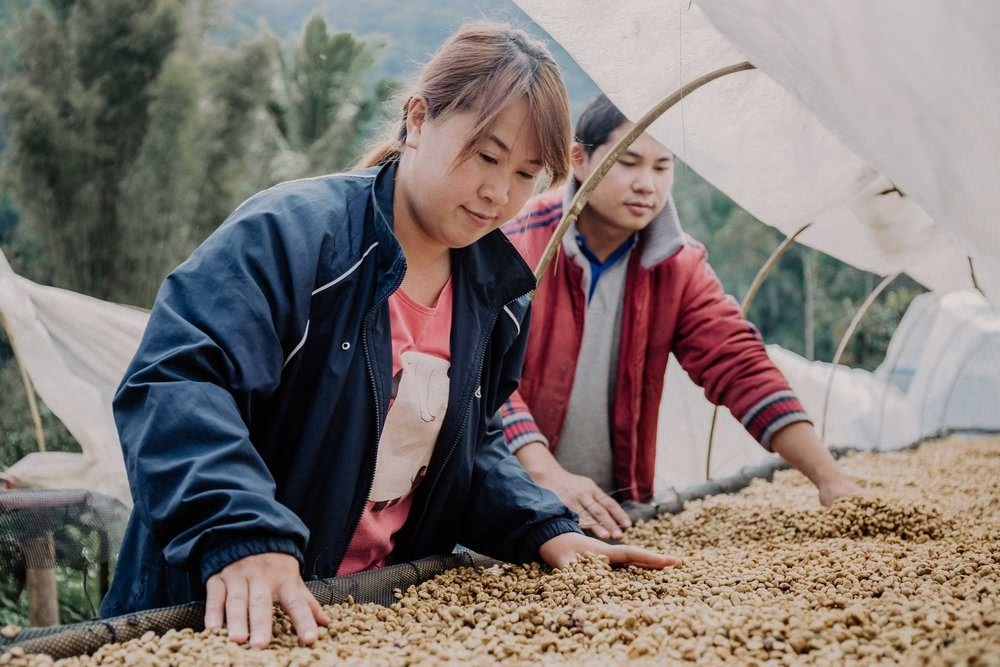
Many Chiang Rai coffee farms are family-run and relatively small. This scale makes a functional difference; growers can pick cherries by hand, select only ripe fruit, and sort more carefully before processing. Those small steps add up quickly.
Success depends on consistency. A farm that picks too early or mixes ripe and unripe cherries can lose quality before roasting ever begins. Smaller operations often remain closer to every stage, allowing them to address issues early and ensure only the best beans move forward.
That hands-on approach prioritizes quality over volume. A few careful passes through the trees often yield better results than a large harvest handled in a rush. In practical terms, that means:
- Ripe cherry selection keeps sour or flat flavors out of the batch.
- Better sorting removes damaged beans and lowers defect counts.
- Close processing control helps preserve inherent sweetness and balance.
How local soil and farming traditions shape flavor
Chiang Rai’s soil also plays a role. The mountain terrain drains well, which suits Arabica roots and helps plants stay healthy. Combined with regular rainfall and shade from surrounding forest areas, the environment provides the crop with a steady, balanced start.
Long-standing farming traditions matter as well. Local growers have spent years learning which slopes work best, when to harvest, and how to handle coffee after picking. That experience gives Chiang Rai coffee a distinct identity rather than a generic taste.
The flavor profile often reflects that mix of land and skill. You might find a cup that leans floral and sweet, while another shows caramel, spice, or dark chocolate notes. Either way, the coffee feels recognizable. It tastes as if it comes from a place with a strong heritage, not an assembly line.
That is why Chiang Rai continues to climb in the specialty coffee world. The region offers the right climate, the right altitude, and the right farming habits. Put them together, and you get beans with a genuine sense of place.
How Chiang Rai became a serious coffee region in Thailand
Chiang Rai did not become a coffee hotspot by accident. The region grew into a serious Arabica producer because farmers, land, and long-term support all lined up at the right time. Over the years, the north moved away from low-value upland crops and built a stronger path through coffee.
That shift matters because specialty coffee needs more than good weather. It also needs skill, patience, and a professional coffee supply chain that can handle quality from farm to cup. Chiang Rai now has all three, and that is why its name carries real weight in Thailand’s coffee market.
From small-scale farming to a known Arabica region
Coffee in Chiang Rai started with small growers in the northern hills, where cool air and higher elevation gave Arabica a natural advantage. Nearby areas in the north followed a similar path, and together they became some of Thailand’s main Arabica-growing zones.
What began as scattered farm plots gradually turned into a more focused coffee belt. Farmers learned how to pick ripe cherries, manage shade, and process beans with more care.
As a result, the region built both experience and a reliable output of green coffee beans, which is exactly what a real specialty scene needs. By embracing direct trade models, farmers have also managed to connect more closely with international buyers, ensuring that the quality of their harvest is matched by fair compensation.
Today, Chiang Rai coffee is no longer just local produce. It feeds roasters, cafes, and buyers who care about traceability and cup quality. That kind of growth comes from years of practice, not a quick trend.
| Roast Profile | Acidity | Body | Flavor Clarity |
|---|---|---|---|
| Light | High | Light | High |
| Medium | Balanced | Medium | Moderate |
The 1983 Royal initiative that helped change coffee farming
A major turning point came in 1983, when a Royal initiative supported Arabica farming in the north. For many growers, that opened a better path forward. Instead of relying on crops with weak returns, they could move toward coffee that had a stronger market value and better long-term potential.
This support gave farmers a reason to invest in a new crop and learn how to grow it well. It also helped shape the foundation for today’s market, where quality and origin matter more than ever. In simple terms, the program helped turn coffee into a serious livelihood rather than a side crop.
That early support still shows up in the region’s coffee identity. Many of the farms that matter today grew out of that same shift in the 1980s, when northern farmers began building a new future with Arabica. For a broader look at that history, Doi Chang’s coffee story shows how the change took root on the ground.
Why Doi Chang became a famous name for quality beans
Doi Chang is one of the clearest examples of Chiang Rai’s coffee rise. The area became widely known for high-quality, single-origin coffee, and that reputation helped put the whole region on the map for coffee lovers.
Its success came from a mix of altitude, careful farming, and a strong focus on consistency. Roasters and buyers started to notice that Doi Chang beans could deliver a clean, distinctive cup with enough character to stand apart. That kind of recognition matters because it gives the region a name people remember.
Doi Chang did not just grow coffee; it gave Chiang Rai a signature.
As the area’s reputation grew, more people began associating Chiang Rai with specialty-grade Arabica, not just domestic coffee supply. That shift helped local farmers aim higher and gave Thailand’s coffee scene a stronger northern anchor. It also showed that a small mountain area can become a trusted source when quality stays front and center.

The Chiang Rai coffee scene is now bigger than great beans
Chiang Rai’s coffee appeal now reaches far beyond the harvest itself. Yes, the beans matter, but so does the full experience, from hillside farms and small roasteries to calm cafés that treat each cup with care.
That shift matters for visitors and locals alike. In 2026, people are coming for farm-to-café experiences, pour-over menus, and the presence of skilled baristas who know how to extract the best from every roast. The coffee tastes better when you know where it came from, and the trip feels richer when the whole process is part of the story.
Farm-to-cup experiences are changing how people drink coffee
More visitors can now follow coffee through each stage, and that makes the drink feel personal. You can see cherries picked in the hills, visit a processing station, then sit down at a café that serves the same origin in the cup.
That connection changes how people think about coffee. A pour-over stops being just a drink and starts feeling like a direct line to the farm, the roast, and the hands behind it. Some farms in northern Thailand also tie coffee to broader land care and community work, emphasizing fair trade practices that ensure quality, ethics, and local livelihoods sit at the same table.
When you can trace a cup back to the hill where it grew, coffee feels less ordinary and more like a place you remember.
Why local roasting and specialty cafés are growing fast
Chiang Rai now boasts a vibrant collection of specialty coffee shops that focus on bean origin, roast style, and meticulous brew methods. These establishments treat coffee as a finished craft, utilizing a high-end espresso machine to pull perfect shots or slowing down the pace to highlight floral notes through manual brewing.
If you are looking to experience this evolution firsthand, these local landmarks define the scene:
- Akha Ama Coffee: A pioneer in connecting indigenous farmers with the global market.
- YAYO Coffee: Famous for its integration of high-altitude production and serene mountain views.
- Abonzo Coffee: Highly regarded for experimental processing and a deep commitment to the craft.
- Ceresia Coffee Roasters: A hub for those who appreciate precise roast profiles and modern cafe culture.
Whether you are seeking hand-crafted drinks or a simple, perfectly balanced pour-over, these venues show a market that cares about detail, not just volume. A few things now stand out in these spaces:
- Bean origin is part of the menu, not a side note.
- Roast profiles are getting more specific and more refined.
- Brew methods are treated as distinct experiences, not quick defaults.
Coffee tourism is becoming part of the appeal.
Travelers are not coming to Chiang Rai only for caffeine. They want the quiet roads, the green hills, and the chance to slow down over a well-made cup. That makes the region feel different from a bigger city coffee stop, where the pace is often faster and the setting less connected to the source.
A visit to places like Doi Chang already shows how strong that draw can be. Mountain views, local cafés, and a relaxed drinking culture give the area a charm that fits coffee tourism well. As a result, Chiang Rai is becoming a destination where the journey matters as much as the drink.
The city and its hills are also gaining more attention for coffee events and tastings, which helps the region feel current in Thailand’s specialty coffee scene. Visiting Doi Chang coffee country makes that connection easy to see, because the landscape and the cup are part of the same experience. For many visitors, that is the point. Chiang Rai offers coffee that tastes good, but it also gives you a reason to stay, look around, and drink more slowly.

What coffee drinkers can expect from Chiang Rai beans today
Chiang Rai coffee has a clear style now, and that matters for anyone shopping for beans or ordering a cup. Most drinkers can expect a clean, sweet profile with enough brightness to keep it lively, plus enough body to feel smooth and complete.
The exact taste changes with roast and process, but the best beans from Chiang Rai often feel easy to enjoy and easy to recognize. That is a big reason the region has earned more attention in Thailand’s specialty coffee market.
Flavor profiles that make Chiang Rai coffee stand out
Chiang Rai beans usually taste balanced rather than loud. When exploring these coffee flavor profiles, a cup may open with bright citrus, move into honey or caramel sweetness, and finish with chocolate, nuts, or soft floral notes.
That mix gives the coffee a friendly, approachable taste. Light roasts often bring out more fruit and sparkle, while medium roasts lean into cocoa, almond, and brown sugar. In simple terms, the coffee is often sweet, clean, and a little lively at the same time.
For readers who want a deeper flavor reference, understanding Chiang Rai Arabica notes can help connect the tasting profile to the region’s growing style.
If you see words like “bright,” “honeyed,” or “chocolatey” on a bag, you are usually in the right zone.
Why single-origin coffee matters to today’s buyers
A lot of Chiang Rai coffee is sold as single-origin coffee, which means the beans come from one region, farm, or lot. Buyers like that because it tells them where the coffee grew and how it was handled.
That detail also makes the cup feel more honest. When you know the origin, altitude, and process, you can better judge freshness and flavor. It also gives Chiang Rai a stronger identity, because the coffee is no longer just Thai coffee in a general sense. It is coffee with a clear home and a clear story that remains fully traceable to the farm.
As the industry matures, farmers are increasingly focusing on the cupping process to grade their harvests, with some high-scoring lots even aiming for a cup of excellence status. For people who care about what they drink, that level of detail and quality control is a major part of the appeal.
How to choose a good Chiang Rai coffee when shopping or ordering
A good selection of roasted coffee beans from Chiang Rai is usually easy to spot if you know what to look for. Start with the roast date, since fresher beans tend to taste clearer and more alive. Then check the origin, the processing style, and any tasting notes on the bag.
A few quick signs can help you choose well:
- The recent roast date gives you a better chance at fresh flavor.
- Transparent labeling usually means better traceability.
- Processing style tells you a lot; natural lots may taste fruitier, while washed lots often taste cleaner.
- Taste notes like citrus, caramel, chocolate, or honey are common and usually fit the region well.
If you are ordering in a café, ask how the barista brews it. Pour-over often shows the brighter side of Chiang Rai beans, while espresso can bring out more chocolate and body. A fresh bag with a clear origin is usually the safest bet if you want the region at its best.

Where is Chiang Rai’s specialty coffee heading in 2026
Chiang Rai is heading into 2026 with growing confidence and higher expectations. Demand is rising, which pushes farmers, roasters, and café owners to refine their craft with every harvest.
The next phase focuses less on volume and more on superior beans, advanced processing, and elevated service. This shift is critical because Thailand’s coffee drinkers are becoming increasingly discerning, and Chiang Rai is meeting this demand with cleaner cups and stronger origin stories.
Better beans, better processing, better consistency
Farmers in Chiang Rai are prioritizing lot selection and precise post-harvest care. There is a significant move toward sustainable practices, ensuring that high-quality organic coffee remains the standard for the region. By utilizing controlled fermentation methods, producers can add a unique character to the cup while maintaining clarity.
As Thailand’s specialty coffee market grows, producers are finding success by selling premium yields locally. For Chiang Rai, this creates a sustainable path forward that prioritizes quality above all else.
Local roasting and brew methods will keep expanding.
Local coffee roasting is becoming a major economic driver, allowing the region to control its own narrative. Cafés are shifting their focus toward specialized menus that highlight the bean rather than masking it. Customers can expect a wider variety of experiences, from a delicate pour over that highlights floral notes to a consistent batch brew for those on the go.
While light and transparent roasts remain the gold standard for filter coffee, shops are also perfecting the classic flat white to cater to local preferences. These venues are proving that when local farms and cafés work together as a cohesive supply chain, the quality of the final product improves significantly.
Coffee tourism will stay tied to the hills.
Travel will play a larger role in 2026. Visitors are no longer just looking to buy a bag of beans; they want to hike the hills, meet the farmers, and experience coffee with a clear sense of place.
This gives Chiang Rai a competitive edge. The landscape and the farms work in harmony to make coffee tourism feel authentic and immersive. As Pang Khon coffee’s premium push shows, the region is not only keeping up with Thailand’s coffee growth, but it is also helping to lead it. The next chapter looks bright, defined by precise brewing, local expertise, and a steady stream of visitors heading into the hills for the full coffee story.

Frequently Asked Questions
Why does Chiang Rai coffee taste different from other regions?
The cool, high-elevation climate allows the coffee cherries to ripen more slowly, which leads to a more complex and balanced flavor profile. This environment often produces a cup characterized by bright floral notes, natural sweetness, and a clean, smooth finish.
What makes a coffee bean ‘specialty’ grade?
Specialty coffee must score at least 80 points on a 100-point scale by the Specialty Coffee Association, based on professional sensory evaluation. In Chiang Rai, this is achieved through strict quality control, including selective hand-picking of only the ripest cherries and precise post-harvest processing.
How can I identify high-quality Chiang Rai coffee?
Look for bags that provide transparent information, such as the specific farm or micro-lot, the altitude, and the processing method used. Additionally, checking for a recent roast date ensures you are enjoying the beans when their aroma and flavor clarity are at their peak.
Is Chiang Rai coffee sustainable?
Yes, many farms in the region prioritize sustainable and organic practices to protect the mountain environment while maintaining long-term yield quality. By focusing on direct trade and fair compensation, the local industry supports the livelihoods of smallholder families while ensuring the land remains productive for future harvests.
Conclusion
Chiang Rai has earned its place at the top of Thailand’s specialty coffee scene because the foundations are strong, the climate is ideal for high-quality crops, and the farmers have mastered the art of production. The result is a vibrant culture that feels deeply rooted and authentic.
What began with remote mountain farms and meticulous local work has transformed into a lasting shift in how the world views Thai beans. Chiang Rai is no longer just a footnote, as it has become a primary driver of this industry evolution.
Today, the region is home to an increasing number of specialty coffee roasters who are dedicated to highlighting the unique characteristics of the local harvest. As more enthusiasts discover the potential of these mountains, it is clear that Chiang Rai will remain the heart of the national industry for years to come.
Trending News:
Chiang Rai Pushes to Elevate Pang Khon Coffee into the Global Premium Market
Travel in Asia Has Never Been Easier: 7 Countries You Can Visit Without a VISA in 2026


