


CHIANG RAI – Soldiers from the cavalry unit of Task Force Thap Chao Tak clashed with a drug caravan along the Mae Sai border. They seized more than 250 kilograms of crystal meth, with an approximate street value of 250 million baht (US$7.58 million).
At about 12.30 am yesterday, soldiers from Cavalry Company 3, Task Force Thap Chao Tak, under the Pha Muang Task Force, carried out a patrol along the Thai-Myanmar border in Ko Chang sub-district, Mae Sai district, Chiang Rai. The Ruak River forms the boundary line in this area, so patrols are stepped up to stop drug trafficking and other offences under the Narcotics Control Act.
When the soldiers reached the area near Sang Ngam village, Moo 6, Ko Chang sub-district, they spotted a group of around 8 to 12 people. Each person carried a backpack made from modified fertiliser sacks and walked along the Ruak River heading onto the Thai side.
The soldiers moved in and identified themselves, intending to search the group. The suspects responded by opening fire with weapons of unknown type and calibre, which led to an exchange of gunfire that lasted about three minutes.
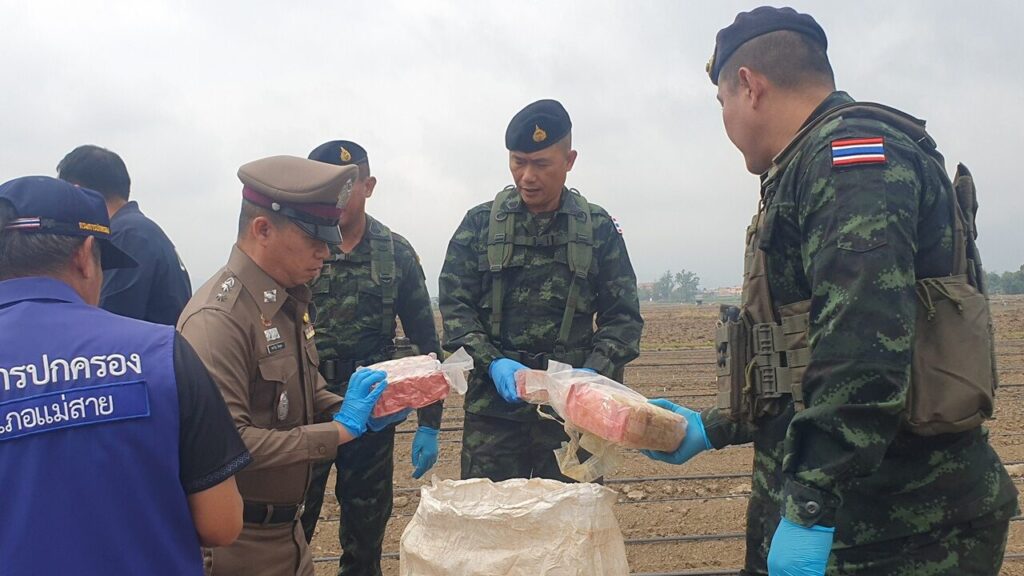
When the shooting stopped, all the soldiers were safe. The unit then secured the area and waited until daylight. At around 6.30 am, they moved in to inspect the scene. No bodies or injured suspects were found. Officers believe the traffickers fled across the Ruak River back into the neighbouring country during the night.
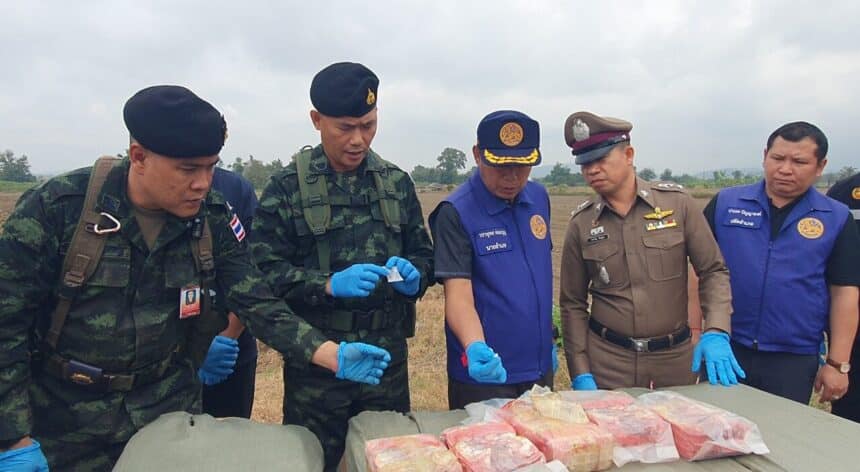
A search of the clash site turned up 10 abandoned modified fertiliser sacks. Each sack contained 25 packets of a type 1 narcotic (crystal meth or “ice”), with each packet weighing about 1 kilogram. The total weight came to roughly 250 kilograms.
The soldiers seized all the drugs as evidence and contacted relevant agencies to conduct a detailed inspection. Security forces have also tightened patrols and interception efforts along the border in this sector.
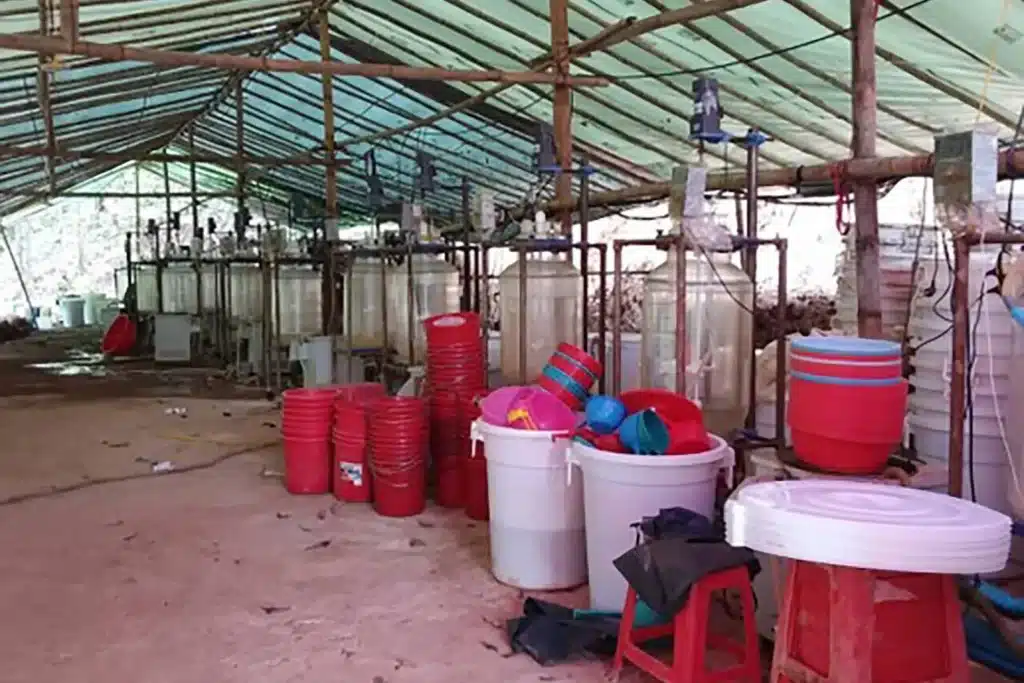
Crystal Meth Production in Myanmar’s Shan State
Shan State, in the rugged eastern highlands of Myanmar, has grown into the main centre of the world’s fastest-expanding crystal methamphetamine trade. Since the mid‑2010s, large‑scale production of high‑purity “ice” (d‑methamphetamine hydrochloride) has taken off in areas with little or no state control, run by ethnic armed groups and militia networks.
This is especially true in zones near the borders with Thailand, inside the Golden Triangle.
The boom took shape after 2012, when the United Wa State Army (UWSA) and allied militias in eastern Shan State began moving away from heroin and turning to synthetic drugs. Precursor chemicals such as ephedrine and pseudoephedrine, and, from 2019, more and more methyl‑fentanyl intermediates, are trafficked in bulk from China’s Yunnan and Guangdong provinces.
Smugglers move them across porous mountain borders into militia‑controlled areas. A 2023 UNODC report estimated that in 2022, authorities in the region seized more than 1.2 billion methamphetamine pills (“yaba”) and 151 tonnes of crystal meth, with most shipments traced back to laboratories in Shan State.
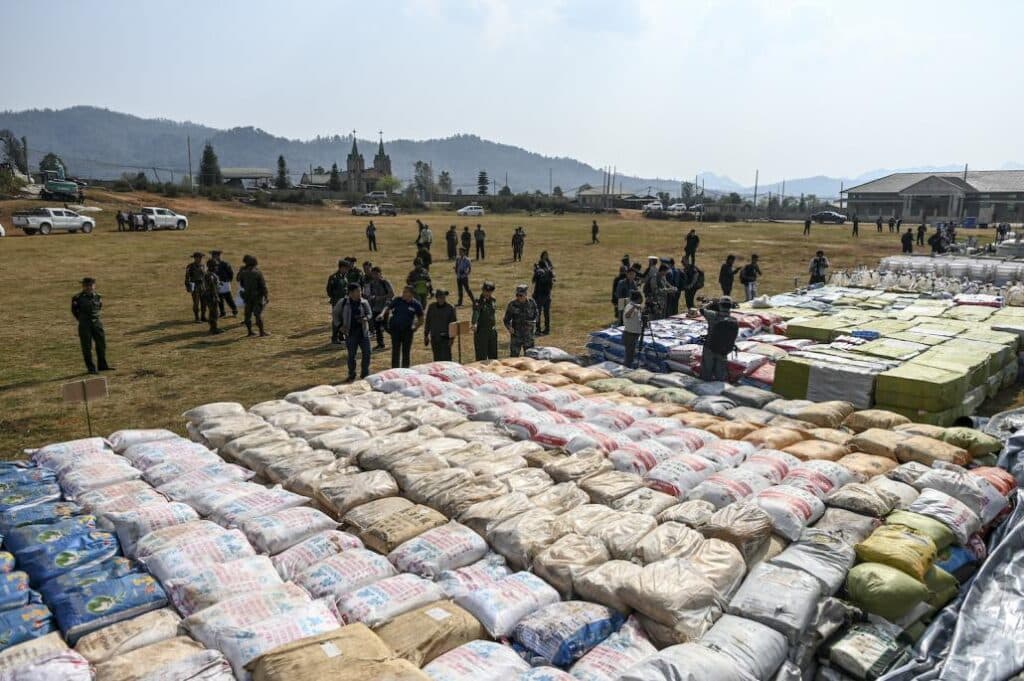
Production sites are no longer simple jungle shacks. They are now advanced factories hidden in rubber plantations and remote valleys, often guarded by armed groups such as the UWSA, the National Democratic Alliance Army, and several Border Guard Forces loosely tied to Myanmar’s military.
Satellite images and DEA reports describe facilities with industrial‑scale ventilators, stainless‑steel reactors, and their own power generators, capable of turning out tonnes of meth each week. In 2022, a single major laboratory raid in Kutkai township held 18 tonnes of finished crystal meth, with an estimated street value of about US$400 million.
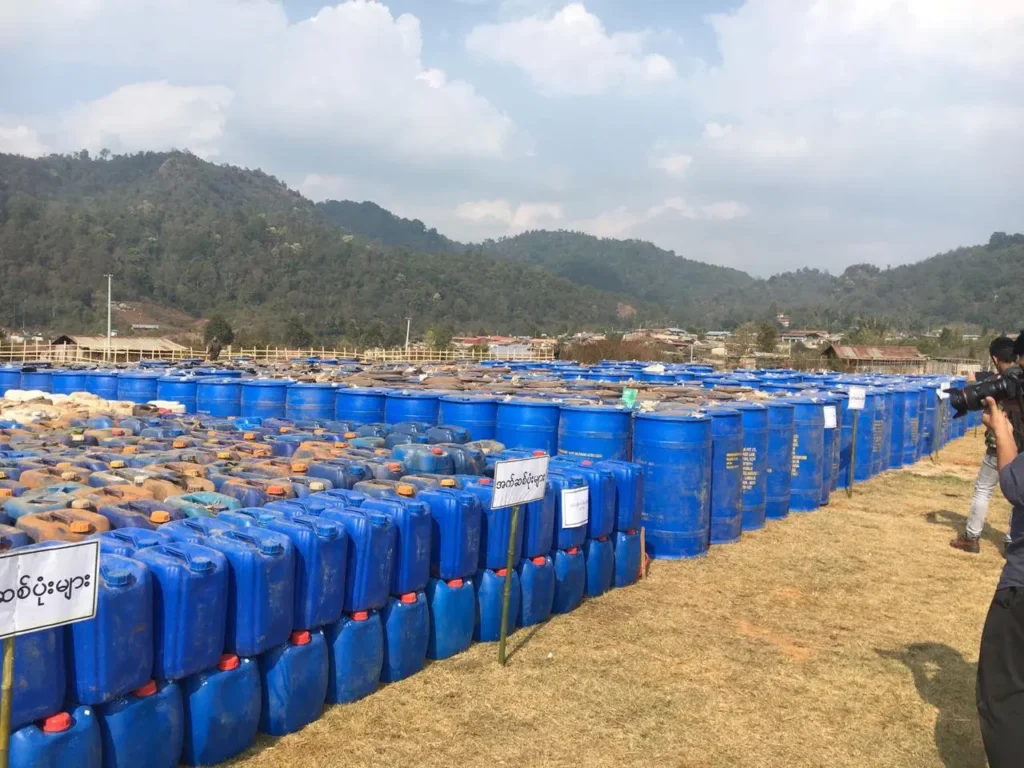
The 2021 military coup weakened what was left of central control and allowed production to surge, with output thought to have tripled. Armed groups use meth profits to pay for their operations and buy weapons, while corrupt Tatmadaw units are widely reported to collect informal taxes or take part directly.
Crystal meth manufactured in Shan State now dominates markets in Australia (where wholesale prices exceed US$200,000 per kilogram), Japan, and South Korea. It is gaining ground in Europe and North America through West African and Mexican cartel networks.
Despite some high‑profile seizures and raids, most production carries on with little real disruption. In the 2020s, Shan State has become a clear global hub for crystal methamphetamine manufacturing.