



BANGKOK – Police arrested a mother on Tuesday over claims she forced her 12-year-old daughter into prostitution in Japan. She was extradited from Taiwan.
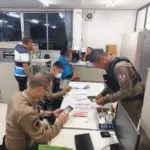
The 29-year-old mother, identified only as Luck, was detained after landing at Suvarnabhumi Airport in Samut Prakan at around 5 pm. She arrived on a flight from Taiwan, where she had been arrested and then handed over to Thai authorities.
Officers took her to the Central Investigation Bureau in Bangkok for questioning. Police said they will give more details at a press briefing on Wednesday afternoon.
Investigators say the woman left her daughter in Tokyo with a massage parlour owner, who then forced the child into prostitution. The woman is said to have fled to Taiwan in September.
The girl is still in the care of Japanese authorities. They have said she is being treated as a victim of human trafficking.
Police believe that from June to September this year, the woman, who reportedly used to work as a prostitute, arranged sex for her daughter in Phetchabun province, at Suvarnabhumi Airport, and at a massage parlour in Tokyo.
Police said she faces serious charges, including arranging prostitution involving a minor and human trafficking. These offences can carry a prison term of up to 20 years and a fine of up to 2 million baht.
Child Trafficking in Thailand
Child sex trafficking and sexual exploitation in Thailand have, in the past, included cases where very poor families sold daughters into prostitution. This was reported most often in the 1990s and early 2000s.
It was linked to severe poverty, debt, and the need to send money home, especially in rural areas in the north and in some ethnic minority hill tribe communities (including Akha).
Hill tribe communities and migrants from nearby countries (such as Myanmar, Laos, and Cambodia) have faced a higher risk. Many people in these groups do not have Thai citizenship. That can limit access to school, health care, and legal work, and it can trap families in poverty. Traffickers often approached families with promises of real jobs, then forced girls into brothels in Bangkok, Chiang Mai, or tourist hubs.
The situation has changed a lot. There are still occasional cases where mothers or other relatives force girls into prostitution, including cases reported in the 2010s and 2020s involving children aged roughly 9 to 13. Authorities treat these as human trafficking and prosecute them.
Child sex trafficking in Thailand still happens, but it more often involves migrants, online abuse, and coercion by organised traffickers rather than direct sales by parents. Poverty still plays a major role. Expanded access to education, including free schooling up to Grade 12, has helped reduce risk for many Thai nationals. Risk has shifted more towards children who are stateless, undocumented, or newly arrived migrants.
Legal protections in Thailand
Thailand has strong laws against child sexual exploitation and trafficking, including:
- Prevention and Suppression of Prostitution Act (1996): bans procuring, organising, or profiting from prostitution, with tougher penalties when minors are involved.
- Age of consent and child protection rules: sex with anyone under 15 is treated as statutory rape. Using anyone under 18 in prostitution venues is illegal, even if they appear to agree.
- Anti-Trafficking in Persons Act (2008): covers sexual exploitation and supports enforcement work, including units such as TICAC (Thailand Internet Crimes Against Children) that focus on online cases.
Government agencies and NGOs, including ECPAT, Destiny Rescue, and World Vision, continue to report problems such as online grooming and tourism-linked abuse. They also report fewer open, street-level cases than in past decades, linked to better enforcement and public awareness.
Work to prevent exploitation
Many NGOs focus on prevention in high-risk areas through schooling support, shelters, and community programmes. Recent U.S. Trafficking in Persons Reports describe moderate progress, including more investigations, victim support, and prosecutions. At the same time, gaps remain, especially around labour trafficking and protections for migrant communities.
This remains a serious human rights issue tied to inequality and lack of options, not something that reflects a broad cultural norm in Thailand today. Most credible reporting now points to deception, coercion, and organised trafficking as the main drivers, rather than widespread family sales seen in earlier decades.