


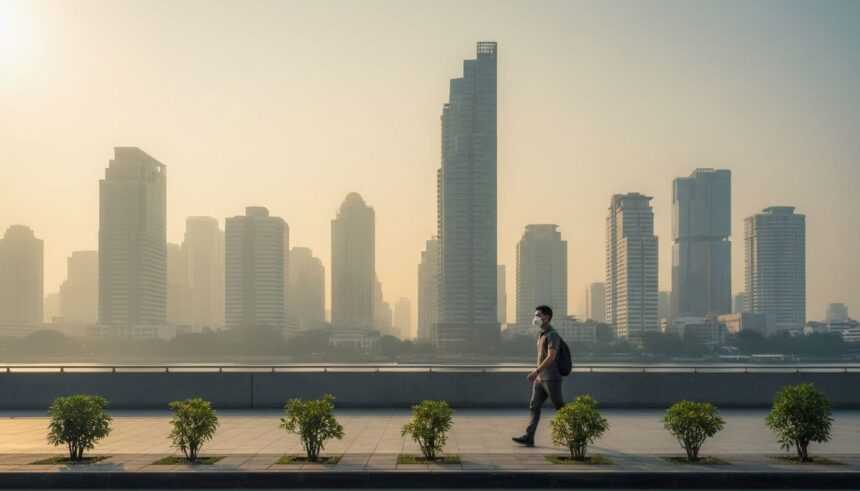
New Year in Bangkok should be about fireworks, food, and time with friends, not checking the air every five minutes. But when the wind drops, pollution can sit over the city and build up overnight.
That is why the latest Bangkok PM2.5 forecast matters for both residents and visitors. The risk is not constant throughout the day. It often gets worse from evening into early morning, especially in busy inner-city areas. If you are planning outdoor countdown events or travelling across town, a small shift in timing can make a big difference. Here’s what the forecast says, the riskiest hours, and simple ways to protect yourself without panic.
What PM2.5 Is (And Why It Matters in Bangkok)
PM2.5 is made of tiny particles in the air, so small that you can’t see them. They are about 2.5 microns wide (much thinner than a human hair). Because they’re so small, they can go deep into the lungs when you breathe.
Bangkok gets PM2.5 for familiar reasons. Traffic exhaust is a significant source, and so are construction dust, small-scale burning, and smoke that can drift in from outside the city. On a breezy day, that pollution spreads out. On a still day, it can hang around at street level, like smoke in a room with the windows shut.
Health effects vary, and this isn’t a diagnosis. On higher PM2.5 days, symptoms can include eye and throat irritation, coughing, headaches, and asthma flare-ups. People with heart or lung problems may have a harder time, especially if they spend long hours outdoors.
For a wider picture of how smoke and fine dust can spike during Thailand’s haze season, see this Chiang Mai wildfire-driven PM2.5 crisis.
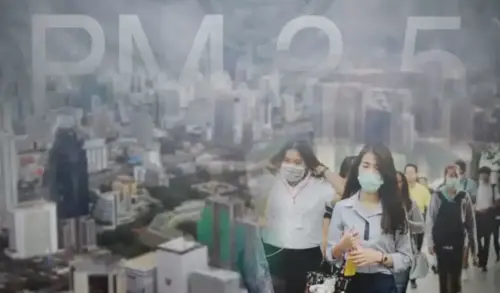
Common signs you may notice on higher PM2.5 days
Some people notice changes fast, others don’t notice much at all.
- Scratchy throat or dry mouth
- Watery or itchy eyes
- More coughing than usual
- Shortness of breath during exercise
Symptoms vary a lot. Some people feel nothing even when levels are high, which is why checking the air reading still matters.
What “Poor Ventilation” Means (In Simple Terms)
Ventilation is just how well the air moves and mixes. When winds are light and the air doesn’t mix much, pollution stays close to where it was produced, near roads, buildings, and neighbourhoods with heavy traffic.
Think of it like stirring a pot. If you stir, everything spreads out. If you don’t stir, the strong stuff stays in one spot. Poor ventilation means the city’s air isn’t being “stirred,” so PM2.5 can accumulate over several hours.
This is also why the Bangkok PM2.5 forecast talks about ventilation. The forecast is not only about how much pollution is produced, it’s also about whether the atmosphere helps clear it away.
Why pollution often gets worse from 6:00 pm to 9:00 am
At night, the winds often calm down. The ground cools, and cooler air can sit low, like a lid that keeps pollutants near street level. Emissions also don’t stop, traffic continues, restaurants run, and late-night travel adds more exhaust.
By morning, commutes can push levels higher before the sun warms things up and mixing improves later in the day.
Bangkok PM2.5 Forecast for New Year (Dec 26 to Jan 3)
| Date range | Ventilation | What it means | Best planning tips |
|---|---|---|---|
| Dec 26 to 27 | Fair to good | PM2.5 is not expected to be high | Great days for outdoor walks, river views, and open-air markets |
| Dec 28 to 30 | Weakening | Higher risk, worst from evening to morning | Shift outdoor plans to midday, keep a mask handy at night |
| Dec 31 to Jan 1 | Poor | Traffic and outdoor activity may raise PM2.5 in some areas | Choose fewer roadside spots, take indoor breaks, and check readings before heading out |
| Jan 2 to 3 | Improving | PM2.5 should ease | Good time to do outdoor sightseeing again, still confirm in the app |
Day-by-day outlook, you can plan around
Dec 26 to 27: Ventilation is expected to be fair to good, so PM2.5 is not likely to be high. If you want to do outdoor photos, temple visits, or time on the riverfront, these are your best days.
Dec 28 to 30: Ventilation weakens, raising the risk of higher PM2.5 levels, especially from the evening through the morning. This is the window where small choices matter, like taking the BTS instead of a long motorbike ride in traffic, or swapping a late run for a lunchtime walk.
Dec 31 to Jan 1: Ventilation remains poor. Add in more traffic, more movement between events, and more time outdoors, and PM2.5 may rise in some areas. Inner-city zones and places downwind can be more affected.
Jan 2 to 3: Ventilation improves, so PM2.5 should ease. It’s a good time to return to outdoor routines, while still checking district readings.
High-risk hours and places to watch (quick checklist)
- 6:00 pm to 9:00 pm
- Inner-city and downwind areas
- Worse when poor ventilation plus heavy traffic
Conditions can vary by district, so real-time readings are still the best guide.
Who Should Take Extra Care and What to Do
Some groups are more sensitive to dirty air. This includes young children, older adults, pregnant people, and those with asthma, COPD, or heart disease. Outdoor workers also face higher exposure simply because they are outside longer.
On days when readings rise, keep it simple: spend less time outdoors, avoid strenuous exercise during the worst hours, and move activities indoors when possible. The goal is not to hide from the city; it’s to reduce total exposure.
What To Do If You Have New Year Plans Outside (Safer Timing and Mask Tips)
Try to plan outdoor time for midday or early afternoon when possible. If you like running or cycling, avoid late-night and early-morning workouts during the higher-risk stretch (Dec 28 to Jan 1), especially near busy roads.
If you must be outside when levels are high, a well-fitting N95, KN95, or FFP2 mask can help filter fine particles. Fit matters more than brand. If air leaks around the nose or cheeks, protection drops.
Tourist-friendly habits that help:
- Carry a mask in your day bag.
- Pick routes that reduce long waits beside traffic.
- Take short indoor breaks (malls, cafés, museums) during the evening peak.
How to Protect Your Home or Hotel Room (Fast Steps)
You don’t need a perfect setup. A few quick moves can make indoor air cleaner during bad hours.
- Keep windows closed when PM2.5 is high.
- Run a HEPA air purifier if you have one.
- Set up a “clean room”: one room with the door closed and the purifier running.
- Avoid indoor smoke sources like incense, candles, and smoking during bad hours.
- Cooking smoke can add particles, too, so use ventilation wisely when outdoor air is worse.
For a reminder that burning controls matter across Thailand, here’s how one province approaches it: Chiang Rai bans open burning to curb PM2.5.
How to Check Air Quality in Real Time (AirBKK and simple habits)
Forecasts help you plan, but real-time readings help you decide. Use the AirBKK app to monitor your district and nearby areas. Look at the PM2.5 number, whether it is rising or falling, and how your location compares with other districts.
Easy check-in times:
- Before leaving home or the hotel
- Before outdoor exercise
- Before taking the kids outside
- Before evening plans
This is where the Bangkok PM2.5 forecast becomes practical: you match the general outlook with what your area shows right now.
What we know vs what can change (a quick reality check)
Quick reality check
- The outlook is guidance, not a promise.
- Local spikes can happen with traffic, fireworks, and still air.
- Real-time monitoring matters most, especially by district.
When Things Should Improve (Jan 2 to Jan 3)
The outlook says ventilation should improve on Jan 2 to Jan 3, and PM2.5 should ease. That usually means more mixing and less pollution stuck at street level.
Still, Bangkok is a city of micro-areas. A calm pocket near a major road can look worse than a breezy area by the river. Keep checking the app, even on “better” days.
FAQs
Q: When are the riskiest hours for PM2.5 in Bangkok during the New Year?
A: The highest risk is usually from 6:00 pm to 9:00 am, especially on calm nights.
Q: Which dates have the highest PM2.5 risk in this outlook?
A: Dec 28 to Jan 1 has a higher risk because ventilation weakens and stays poor.
Q: Are fireworks guaranteed to cause high PM2.5 everywhere?
A: Not guaranteed, but fireworks can cause local spikes, mainly when the air is still.
Q: What mask works best for PM2.5?
A: A well-fitting N95, KN95, or FFP2 is a practical choice when levels are high.
Q: Should I keep hotel windows open for fresh air?
A: If PM2.5 is high outside, keeping windows closed and using a HEPA purifier is often better.
Q: What is the best way to check my area right now?
Conclusion
You can still enjoy Bangkok’s New Year events without turning the holiday into a health project. The main thing to remember is timing: Dec 28 to Jan 1 has the higher risk, especially from 6:00 pm to 9:00 am. Plan outdoor time earlier in the day, take indoor breaks at night, and use a well-fitting mask when readings rise. The outlook also points to improvement from Jan 2 to Jan 3, which should bring some relief. Keep one habit steady, check real-time district readings, then act calmly. That is the simplest way to use the Bangkok PM2.5 forecast well.
Based on an outlook shared by the Bangkok Air Quality Information Centre and reported by The Nation Thailand.