






One week, Chelsea looks calm, sharp, and in control. Next, the same team looks rushed, loose, and short on answers. That swing is exhausting. It causes more confusion than anger, because it is hard to tell what is real progress and what is just a good day.
This season’s Premier League story has had that exact feel, a win that lifts the mood, then a flat performance that resets it. So it makes sense that fans keep searching one question: why is chelsea so inconsistent this season in the premier league, and what is actually driving the ups and downs?
This is a simple breakdown of the main reasons, along with a few clear signals to watch for in the next matches. I will keep it fan-first, calm, and practical.
Chelsea’s inconsistency can feel personal to supporters because the emotional swings happen every week.
The short answer (for stressed fans)
- Chelsea’s level changes because the team’s best habits are not repeatable yet (the “good version” does not show up every week).
- Chance creation is often decent, but finishing swings make results feel random.
- Small defensive mistakes keep turning manageable games into messy ones.
- Injuries and rotation keep breaking up key partnerships, especially in defense and midfield.
- The tactical plan is still being settled, and the team can feel stuck between control and chaos.
- Away matches magnify everything, slower starts, noisier mistakes, less composure.
Note on timing: Form, table position, and results change quickly. If you are reading this later, treat match examples as “patterns,” not a permanent verdict. For official fixture and match info, use the Premier League site: premierleague.com.
Reason #1: Game-to-game patterns (what keeps changing?)

Inconsistency often looks like “effort,” but it is usually about rhythm. Chelsea’s rhythm changes from match to match, and fans can see it even without a tactics board.
1) Start fast, then fade
Chelsea sometimes begins with purpose, quick passing, and energy off the ball, then loses control after one setback (a missed chance, a conceded goal, a bad call). When confidence drops, the passes get safer and the press gets slower.
2) Control at home, hesitation away
Away games punish teams that are not settled. The crowd lifts the opponent, and Chelsea’s first touch and decision speed can dip. When that happens, the team stops moving as one unit, and the gaps appear.
3) One change causes three problems
A single lineup tweak can ripple. A different fullback changes the angles in buildup. A different winger changes the press. A different striker changes how the team plays in the final third. It is not an excuse. It is how football works when chemistry is still forming.
For extra context from the league itself, these Premier League analysis pieces are worth reading alongside this fan breakdown:
Five key questions for Maresca at Chelsea and what’s behind Chelsea’s slump in form. They underline the same theme: it is not one flaw. It is a stack of smaller ones.
Reason #2: Chance creation vs finishing (why good play does not become goals)
Chelsea can play well for long spells and still not score. That is one of the quickest ways to create “up and down results,” because performance and outcome stop matching.
Here is the plain version: creating chances is not the same as taking them.
- A team can have good attacking structure, get into the box, and still miss the final action (shot, final pass, first touch).
- A team can look “bad” for 70 minutes, score one low-quality chance, and suddenly look “clinical.”
If xG comes up in conversations, define it simply: expected goals (xG) estimates how likely a shot is to become a goal based on factors like distance and angle. It does not predict the future. It helps judge whether chances are being created.
For fans who want to check numbers without guesswork, two clear public sources are Chelsea’s Premier League stats on FBref and Chelsea’s chance quality on Understat.
What tends to drive finishing swings?
Shot selection: When confidence is high, players shoot early and clean. When it is low, they take an extra touch, and the window closes.
Box presence: If the striker is not connecting, the wingers and midfielders end up taking rushed shots.
Pressure moments: Chelsea have had spells where one miss turns into five minutes of panic, and the opponent senses it.

In the Premier League, a good performance can still end in dropped points if finishing swings from match to match.
Reason #3: Defensive mistakes and concentration swings
Chelsea does not need to be terrible defensively to drop points. They just need to be sloppy at the wrong time. That has been a recurring theme.
Transitions (getting caught right after losing the ball):
A transition is the moment the ball changes teams. If Chelsea lose it with players spread out, the opponent can attack into space. This is one of the fastest ways to concede without the defense being “outplayed.”
Set pieces (corners and free kicks):
Set pieces test focus and communication. Marking slips by half a step, and it is a free header. Many goals come from simple errors: losing a runner, switching off, not winning the first ball.
Errors under pressure:
When the opponent presses (meaning they push up and try to win the ball high), Chelsea’s buildup can look calm one week and shaky the next. A single poor touch near the box becomes a shot, then a goal, then a collapse.
This is also where the emotional side kicks in. The frustrating part as a fan is how quickly one mistake can change the whole mood. When a team is still building its identity, it can struggle to reset after a blow.
Reason #4: Injuries, rotation, and chemistry (the human side)
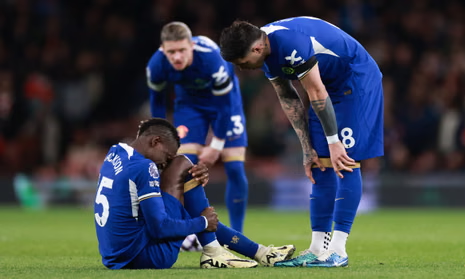
Chemistry is real, and it shows most in the boring stuff: who covers which space, who steps up, who drops, who talks. When lineups keep changing, that “automatic” understanding does not form.
Chelsea have dealt with availability issues and frequent rotation, and that affects:
- Center-back partnerships (timing on stepping out, passing lanes, set-piece roles)
- Midfield balance (who sits, who presses, who supports the back line)
- Front-three connections (when to run, when to check short, who attacks the near post)
For a public overview of squad absences and availability patterns, many fans use trackers like Chelsea absences on Transfermarkt. It is not an official club feed, but it helps show how often the “first-choice” group gets interrupted.
Rotation also changes confidence. Players who feel one bad game could drop them might play it safe. Players who just come back might avoid risk. That does not make them weak. It makes them human.
A side note for global fans: Chelsea’s fan base is massive, and that community matters when the season feels chaotic. Events like Chelsea’s The Famous CFC event in Bangkok with Gianfranco Zola are a reminder that the club’s identity is not just the league table.
Reason #5: Tactics and identity (what are we trying to be?)
Tactics do not have to be complicated. For most supporters, the question is simpler: what is Chelsea trying to look like every week?
Right now, the “identity” can shift depending on the opponent and the lineup. That is a key reason fans keep asking why is chelsea so inconsistent this season in the Premier League.
Easy things to watch:
Pressing intensity:
A press is when the team tries to win the ball back quickly after losing it. When Chelsea press together, they pin teams in. When the press is half-speed, opponents play through it, and Chelsea end up chasing.
Buildup speed:
Slow buildup can be fine if it moves the opponent and creates space. But if it is slow because players hesitate, the opponent gets set, and Chelsea end up passing in a U-shape around the box.
Fullback roles:
When fullbacks push high, they help attacks but can leave space behind. If the team loses the ball, that space becomes a highway for counterattacks.
Low block struggles:
A low block is when the opponent defends deep with many players behind the ball. Chelsea can dominate possession against it but still struggle to find clear shots. That is often where creativity and fast movement matter more than “control.”
Analysts have pointed out the same tension between control and threat in Chelsea’s season narrative, including broader season framing like
Opta Analyst’s Chelsea 2025-26 preview.
What should Chelsea fans watch over the next 5 matches?
Instead of tracking “vibes,” these five signals give a clearer read on whether the team is settling.
- Shots on target trend
Not total shots, but shots that test the keeper. It is a quick marker of a real threat. - Chances conceded right after losing the ball
If Chelsea keeps giving up counters within 5 to 10 seconds of losing possession, the structure still is not stable. - Set-piece defending
Watch the first contact on corners and whether runners get free at the back post. - First 15 minutes of intensity
Strong starts travel well. Slow starts usually mean another long afternoon. - Away game composure
Composure shows in simple actions: first touch, clear decisions, fewer cheap fouls, fewer rushed clearances.
If those improve, the table often follows, even if it does not show immediately.
FAQ (quick answers)
Why Chelsea are inconsistent away from home
Away matches punish small mistakes. Communication is harder, momentum swings faster, and one bad five-minute spell can decide the result. If Chelsea do not start well away, the rest of the plan gets tougher.
Why Chelsea struggle to score goals consistently
Finishing runs hot and cold. When confidence is high, shots look clean and early. When it drops, players take extra touches and the best chance disappears. Chance quality matters too, and that is where xG models can help explain the gap (see FBref’s Chelsea shooting and xG data).
Are Chelsea improving this season or getting worse?
The honest answer is: it depends on what is measured. Results can swing even when the underlying play improves. Tracking shots on target, chances conceded on transitions, and set pieces over a month give a steadier picture than a single headline result.
Is it the manager, the players, or both?
Usually both. Coaches build habits and structure. Players execute under pressure. If the habits are not stable yet, players look inconsistent. If players make repeated errors, tactics cannot save every match.
Why do Chelsea concede “soft” goals?
“Soft” often means preventable. It is usually a marking slip on a set piece, a turnover in a dangerous area, or poor spacing when the ball is lost. Those are issues of concentration and structure, not pure talent gaps.
Do young squads tend to be more inconsistent?
Often, yes. Younger teams can play fearless one week and feel the pressure the next. The fix is repetition, trust in roles, and clearer leadership on the pitch.
What’s one quick sign Chelsea are settling?
Fewer chaotic stretches after scoring or conceding. When a team can reset and play well for the next five minutes, results usually become steadier.
Conclusion
Chelsea’s inconsistent form this season does not come from one single flaw. It is a mix of finishing swings, avoidable defensive moments, changing lineups, and a style that still needs time to become automatic. The good news is that most of these issues can improve with repetition, better concentration, and clearer decision-making. The harder truth is that it may not fix itself overnight, especially away from home.
If you found this helpful, please share it with another Chelsea supporter who has asked (or shouted) why is chelsea so inconsistent this season in the premier league. A simple share in your group chat or on social media helps more fans find calmer answers.
When results swing week to week, it is not just points. It hits confidence and mood too.
Author note: This Premier League article is written by Salman Ahmad from a fan perspective. I watch Chelsea and the Premier League weekly, and I support key points with reputable public sources (Premier League, FBref, Understat) linked in the article.
Sources and further reading
Where I reference stats (shots, xG, chance quality), I link the original source so you can verify it.
- Premier League (official site)
- FBref: Chelsea stats
- Understat: Chelsea chance quality
- Transfermarkt: Chelsea injuries/absences (fan reference)
- Opta Analyst: Chelsea season preview


