





Thailand has released 18 Cambodian soldiers who were captured during earlier border clashes, officials said, as part of a ceasefire agreement reached over the weekend. The handover took place at a border checkpoint and was delayed for a short period after Thailand raised concerns about alleged ceasefire violations.
The release matters because it is an early test of whether the ceasefire holds and whether displaced civilians can start returning home safely after weeks of fighting.
Thailand releases 18 Cambodian soldiers, what happened and why it matters
Thai officials said Thailand handed over 18 Cambodian soldiers who had been held since July, after the two sides agreed to a ceasefire. Cambodia’s defense officials also confirmed the soldiers’ return and described it as a step that could help rebuild trust.
Both governments have framed the release as a goodwill move, but it also reflects a hard reality: the ceasefire had a clear deadline tied to the prisoners. Cambodian officials had made the soldiers’ return a key demand in the latest talks, and the agreement included a 72-hour requirement to complete the handover.
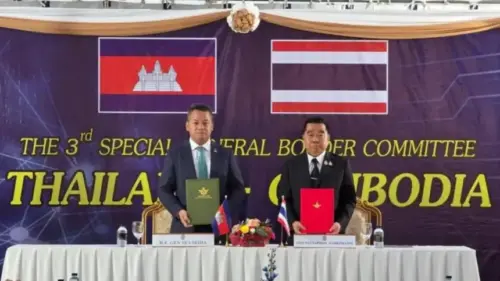
In other words, this was not only symbolic. It was a practical checkpoint for the truce. If the first major promise slipped, confidence in the deal could follow. A successful handover, even after a one-day delay, gives both sides a concrete action they can point to as proof that the agreement still has traction.
For a broader context on why this border issue keeps flaring up, and how it ties to older disputes, reporting and explainers from outlets such as Reuters’ overview of why Thailand and Cambodia have fought along the border have noted the long-running nature of contested border areas.
What we know (confirmed by officials)
- Thailand released 18 Cambodian soldiers.
- Officials said the soldiers were captured during the July clashes.
- The handover took place after a ceasefire deal was agreed over the weekend.
- Thai officials described the release as a goodwill step.
- Cambodia’s defense officials confirmed the soldiers returned and said they hope it helps build trust.
- The ceasefire has been reported as holding so far.
What’s unconfirmed or disputed
- Thailand alleged ceasefire violations involving unmanned aerial vehicles (drones) entering Thailand.
- Cambodia has not publicly confirmed the drone allegation in the details available.
- There is no publicly presented proof in the provided details showing who operated the drones or why they entered, beyond Thailand’s accusation.
Timeline: how the Thailand-Cambodia border crisis escalated to a ceasefire and release
The latest round of tension did not begin with the prisoner handover. It was built over months, with separate spikes in violence that raised pressure on both governments and increased the human cost for people living near the border.
Reports described a May clash that left one Cambodian soldier dead, followed by a July escalation that led to the capture of the 18 soldiers and several days of fighting. Early this month, the conflict intensified again and lasted for weeks, with reports saying nearly one million people were displaced.
Then came the ceasefire on Saturday, with a 72-hour deadline set for handing over the captured soldiers by Tuesday. Thailand released the soldiers on Wednesday, one day after the deadline, after raising concerns tied to alleged drone activity.
Quick timeline box (May to Wednesday)
- May: A clash was reported, and one Cambodian soldier was killed.
- July: The 18 Cambodian soldiers were captured during clashes, and fighting continued for five days.
- Early this month: Fighting escalated and lasted for weeks, reports said nearly one million people were displaced.
- Saturday: Thailand and Cambodia agreed to a ceasefire.
- Tuesday: The agreement’s 72-hour window set a deadline for the handover.
- Wednesday: Thailand handed over the 18 soldiers at a border checkpoint.
Ceasefire terms explained: what Thailand and Cambodia agreed to do
The ceasefire terms reported as part of Saturday’s deal are designed to stop the conflict from restarting by accident, by misreading, or by a small incident that spirals.
Four reported elements stand out:
- Freeze front lines where they are, so neither side pushes forward.
- Ban reinforcements, meaning no extra troops or weapons moved into the area.
- Allow civilians to return as soon as possible.
- Complete the handover of the 18 soldiers within 72 hours.
Each term is meant to remove a common trigger. If positions don’t shift, there is less reason for either side to claim the other is taking territory. If reinforcements don’t arrive, there is less fear of a surprise buildup. If civilians can return, it reduces pressure from the humanitarian fallout. And the 72-hour handover requirement gave both sides a near-term promise to keep.
For readers following related Thailand-Cambodia tensions beyond the battlefield, including security measures along the border, see Thailand cuts internet links to Cambodia over cybercrime, which highlights other friction points that can affect trust between the two neighbors.
Freeze positions and stop reinforcements, what this looks like on the ground.
“Freeze the front lines” means forces stay where they are. It is a pause button. The goal is to stop small moves, like taking a hilltop or shifting a checkpoint, that can quickly turn into gunfire.
A ban on reinforcements is just as necessary. It means no fresh units moved closer, and no extra weapons deployed into the contested area. Even if nobody intends to attack, adding manpower can look like preparation, and that perception can trigger a reaction.
These terms also make monitoring simpler. If positions and force levels stay steady, any major change stands out.
Civilian returns and safety, why the deal matters for families
The ceasefire is also supposed to let civilians return as soon as possible. That matters after weeks of fighting and the reported mass displacement.
When families consider returning, they are not focused on diplomatic language. They look for basic signs:
- Is the area quiet at night and during the day?
- Are routes open, and are checkpoints predictable?
- Are schools, clinics, and local services reopening?
A ceasefire can look solid on paper but still feel unsafe if people hear sporadic shooting, see new troop movements, or face unclear restrictions. That is why the first days matter, and why the prisoner handover became a public marker of compliance.
Why the handover was delayed and who pushed for it to happen
The ceasefire deal reportedly required Thailand to hand over the 18 soldiers within 72 hours. The handover was delayed by a day.
Thai officials linked the delay to concerns about alleged ceasefire violations. Thailand accused the other side of drone-related activity after the ceasefire began, and the accusation became part of the reason Thailand said it did not move ahead immediately on the original schedule.
Reports also said Chinese diplomatic pressure helped keep the ceasefire on track and supported efforts to move the agreement forward, including completing the handover. That outside push mattered because both sides were already under domestic pressure, and the dispute is closely watched across the region.
For additional reporting around the ceasefire holding and the release itself, see Thailand releases 18 Cambodian soldiers as ceasefire holds.
The drone allegation: what was claimed and what was not confirmed
Thailand accused Cambodia of sending more than 250 unmanned aerial vehicles into Thailand on Sunday, describing it as a ceasefire violation.
In the details available here, Cambodia has not publicly confirmed the allegation. There is also no public confirmation in the provided information about who operated the drones, what their purpose was, or whether any findings from the investigation were shared.
The allegation still matters because drone claims can quickly raise the temperature. Airspace complaints are often complex to verify publicly in real time, and they can lead to delays or suspensions of confidence-building steps.
Diplomacy behind the scenes: China’s reported role in keeping the truce on track
China was reported to have applied diplomatic pressure to keep the ceasefire holding. That kind of pressure can include direct contact with both governments, messages urging restraint, and support for continued talks.
The key point is not the format of the diplomacy. The result: both sides proceeded with the handover after a brief delay, keeping the ceasefire terms largely intact in the first test window.
Why the Thailand-Cambodia border dispute keeps resurfacing, and what to watch next
The border dispute between Thailand and Cambodia has deep roots. The disagreement goes back more than a century, and contested sites can become flashpoints even when daily life is calm.
Tensions also tend to rise when symbolic actions occur at disputed locations. In this dispute, an incident involving a patriotic song at a disputed temple has been cited as a trigger that helped raise emotions. Once nationalist sentiment builds, it can harden positions and make compromise harder.
The capture of the 18 soldiers also fed that pressure, especially in Cambodia, where their return became a significant public demand during the latest ceasefire talks. The release helps lower that specific pressure, but it does not settle the underlying border arguments.
Background coverage from international outlets has also pointed to these older drivers, including reports such as “The new fighting between Thailand and Cambodia is rooted in old enmity.”
Old border lines, disputed sites, and nationalist pressure
Old border lines are often more than lines on a map. They can decide control of a road, a ridge, or a religious site. When those places matter to national identity, minor incidents can carry oversized weight.
Nationalist pressure can also rise quickly after deaths, detentions, or footage of troops at the frontier. That is part of why the prisoner issue became central. Bringing soldiers home can reduce a rallying point, even if it does not change the border itself.
What happens next: signs the ceasefire is holding or failing
The next phase is less about speeches and more about patterns on the ground. Here are practical indicators to watch:
- Reports of reinforcements moving toward the border area.
- New incidents at checkpoints, including detentions or standoffs.
- Claims of airspace violations, including drones, and whether they are matched by public evidence.
- Progress on civilian returns, including whether people can travel back safely and services reopen.
- Continued diplomatic talks, including whether both sides will keep meeting and restating the same terms.
A ceasefire is like a traffic light at a busy junction. It works best when everyone follows it, and when the rules are easy to see and hard to misread.
FAQs
Why did Thailand hold the Cambodian soldiers?
Officials said they were captured during the July border clashes and held until the ceasefire deal required their return.
Where did the handover happen?
Officials said it happened at a border checkpoint. No further location details were confirmed here.
What does the ceasefire require Thailand and Cambodia to do?
Reported terms include freezing front lines, banning reinforcements, allowing civilians to return as soon as possible, and completing the prisoner handover within 72 hours.
Why was the handover delayed by a day?
Thailand delayed it after raising concerns about alleged ceasefire violations, including a claim about drones entering Thailand.
Did Cambodia confirm the drone allegation?
Cambodia has not publicly confirmed the allegation, based on the details available.
Is the ceasefire holding right now?
As reported so far, the ceasefire appears to be holding, including through the period when the handover was completed.
What caused the latest flare-up in fighting?
Officials and reports pointed to renewed border clashes that escalated early this month after earlier incidents in May and July.
Why do Thailand-Cambodia border disputes keep returning?
The disagreement goes back more than a century, and contested sites can quickly become political flashpoints when incidents occur.
What can civilians near the border expect next?
If the ceasefire holds, the focus should shift to safe returns, reopening services, and more explicit rules at checkpoints, while talks continue between both sides.
Conclusion
Officials presented Thailand’s release of the 18 Cambodian soldiers as a goodwill step tied directly to the weekend ceasefire. The deal’s reported terms include freezing positions, stopping reinforcements, enabling civilian returns, and meeting a 72-hour deadline for the handover. The handover slipped by a day after Thailand cited concerns about alleged drone incursions, which Cambodia has not publicly confirmed in the details available. The dispute remains hard to resolve because it is rooted in long-standing border disputes and repeated nationalist pressure over contested sites.


