



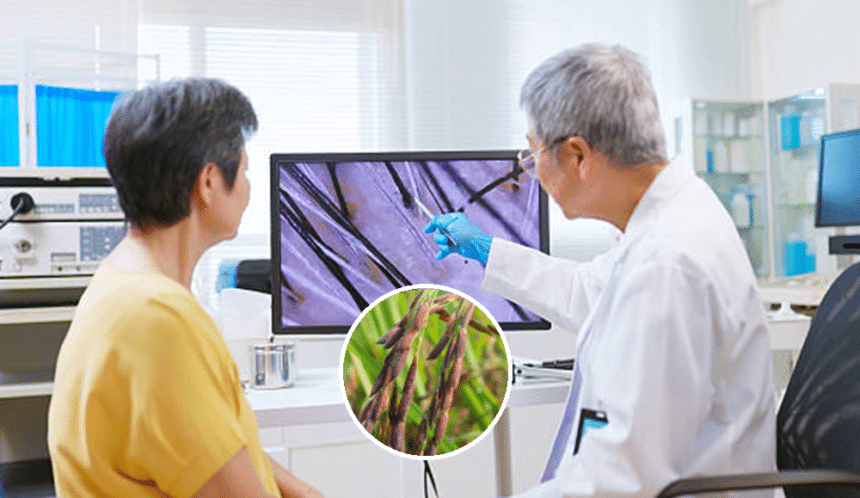
BANGKOK – Thailand’s cosmetic science field is stepping into the spotlight as researchers from two leading universities, Chulalongkorn University and Mahidol University, expand a joint project that could reshape how thinning and greying hair are treated worldwide.
Their shared research centers on a powerful active ingredient derived from Riceberry, a deep-purple Thai rice variety. Long valued for its nutrition, this special grain is now emerging as a promising source for hair follicle renewal and natural pigment support.
Inside the “AnthoRice” Complex
Heading the scientific development is Assoc. Prof. Pithi Chanvorachote from Chulalongkorn University’s Faculty of Pharmaceutical Sciences. His team has created the AnthoRice Complex, a concentrated extract rich in anthocyanins, the natural color compounds that give Riceberry its dark purple hue.
Unlike typical shampoos and conditioners that stay on the surface, this complex is designed to work within the cells. In lab studies, the extract has been shown to activate melanocytes, the pigment-producing cells that give hair its color. By targeting these cells at the hair root, the team hopes to slow or even reverse early greying.
Prof. Pithi describes Riceberry as a rich source of active substances. His group found anthocyanin levels ranging from 16 to over 270 milligrams per 100 grams of rice. When combined with their delivery system, the complex appears to do more than simply feed the hair. It helps signal the body to restart its own pigment production.
A Five-Herb Ally for Hair Growth
Color is only part of the story. To tackle hair loss, the researchers are pairing the Riceberry extract with StemAktive, a technology platform developed at Chulalongkorn. This system blends five well-known Thai botanicals:
- Butterfly Pea (Anchan)
- Indian Gooseberry (Makhampom)
- Kaffir Lime (Magrood)
- Blue Trumpet Vine (Rang Chuet)
- Soybean
In cell-based lab tests, this herbal blend, used together with the Riceberry complex, boosted stem cell growth by five to six times. The formula supports the removal of damaged cells and protects hair roots from stress in the environment. As a result, it helps lengthen the active “growth phase” of the hair cycle and fights alopecia, or hair loss.
How Mahidol Helps Close the Loop
While Chulalongkorn handles product design and formulation, experts from Mahidol University’s Department of Pathobiology focus on what happens inside the scalp, especially the role of oxidative stress in hair aging.
Mahidol’s research on germinated Riceberry shows that controlled sprouting can raise levels of phenolic acids, including protocatechuic and vanillic acid. These compounds act like a natural barrier that helps guard the scalp from UV radiation and chemical exposure, two common triggers for thinning and damage.
Together, the two universities form a strong partnership in Thai science. Mahidol contributes deep biological insight, while Chulalongkorn translates that knowledge into real products that people can use.
From Riceberry Fields to Beauty Counters
Outside the lab, the project is attracting attention for its positive effect on local farming communities. The Riceberry used in this research comes from an organic grower group in Phichit Province.
By turning an affordable grain into a high-value cosmetic ingredient, the team supports a model of “circular economy,” where agriculture and advanced products grow together.
“We are not only searching for a way to help with baldness,” one researcher shared. “We also want to raise the value of our national heritage, our rice.”
What This Could Mean for Everyday Users
People who are tired of harsh dyes and pricey chemical treatments may soon have another choice. After successful lab work and early safety checks, a full clinical trial with human volunteers is planned for early 2026.
If those results are positive, products featuring AnthoRice and StemAktive could reach the market as tonics and serums within about two years.
Home remedies like “rice water” have been popular across Asia for generations. This project is different because it isolates the unique strengths of Riceberry and pairs them with modern biotechnology. For many, a “Made in Thailand” answer to global hair problems feels both practical and meaningful.
Thai Herbs as a “Natural Guard”
While the AnthoRice Complex acts like an engine for pigment and hair growth, the StemAktive system works more like a shield. It uses five classic Thai herbs, each with a clear role in protecting and supporting healthy hair.
| Herb | Key Benefit for Hair | How it Works |
|---|---|---|
| Butterfly Pea (Anchan) | Boosts circulation | High in anthocyanins, it supports blood flow to the scalp so follicles receive more oxygen and nutrients. |
| Indian Gooseberry (Makhampom) | Strong antioxidant support | Rich in vitamin C, it fights “oxidative stress,” meaning it helps block damage from the sun and pollution. |
| Kaffir Lime (Magrood) | Cleans and balances the scalp | Its natural oils act as a gentle cleanser, removing excess sebum and buildup so new hairs can grow in a healthier environment. |
| Blue Trumpet Vine (Rang Chuet) | Helps detox the scalp | Traditionally used against poisoning, it can help clear chemical residues from dyes, sprays, and styling products. |
| Soybean | Strengthens hair fibers | Supplies plant-based proteins that support the inner structure of each strand, so hair is less likely to snap or break. |
Stepping Into Human Trials
For people who live with thinning hair, the next phase is especially important. After seeing the formula boost cell growth up to six times faster in lab dishes, the research team is moving into Human Clinical Trials.
Planned structure of the trials:
- Safety as the first step
Volunteers will use the Riceberry-based serum under close supervision. Researchers will watch for any skin reactions, redness, or irritation. - The “split-head” study design
In many cases, participants will apply the real product to one side of the scalp and a neutral placebo to the other side. This side-by-side comparison shows how much change is due to the Riceberry formula alone. - Tracking real results
Over several months, specialists will use high-magnification cameras to count new hairs, check hair thickness, and see whether grey strands shift back toward their natural, darker shade.
A New Chapter for Thai Science and Innovation
For years, Thailand has been widely known for exporting raw rice. Now, with research from Chulalongkorn and Mahidol, the country is starting to show how that same rice can support high-tech medicine and advanced cosmetic products.
By drawing on a humble purple grain that many people already eat, Thai scientists are working toward a natural and gentle way to help users feel better about their hair.
If the coming clinical trials deliver the results the team expects, people may no longer feel forced to choose between strong chemicals and hair loss. Instead, they could reach for a solution created from Riceberry grown in Thai soil, refined with modern science, and designed to support healthy, fuller, and more vibrant hair.