


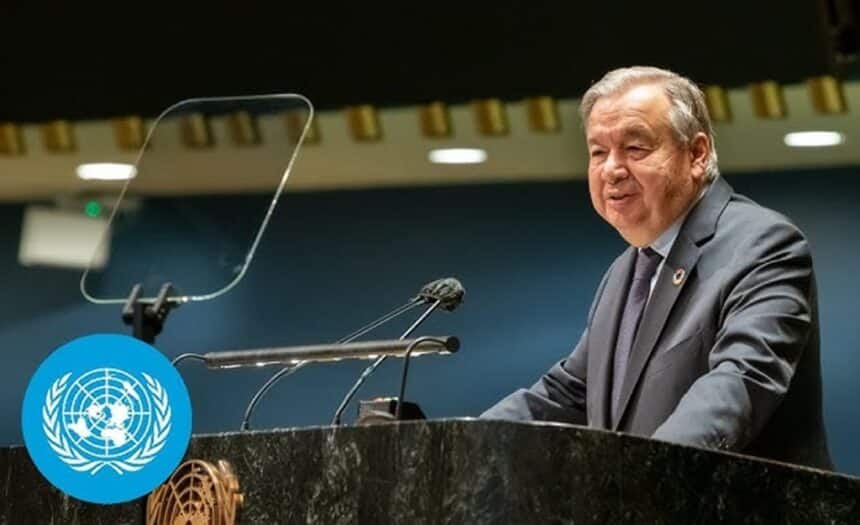
NEW YORK – Speaking to a largely empty General Assembly chamber, United Nations Secretary-General António Guterres delivered a stark message. The United Nations is close to a full-blown financial breakdown.
The United Nations is facing pressure from two sides at once: political pullbacks and a surge in unpaid dues. By the end of 2025, the organization closed its books with about $1.6 billion still unpaid.
Guterres says the UN is now in a “race to bankruptcy,” a situation that could stall humanitarian relief, disrupt peacekeeping, and even affect day-to-day work at UN headquarters in New York.
The numbers are hard to ignore. The UN has dealt with cash shortages before, but internal papers say the problem heading into 2026 is on a different level.
By late December 2025, unpaid assessments to the UN’s regular budget totaled $1.586 billion. That figure is more than twice what it was a year earlier. Add in almost $2 billion in overdue peacekeeping payments, and the shortfall climbs even higher.
Guterres told member states the United Nations is stuck in a system that doesn’t match reality. He said the organization is expected to issue year-end “credits” back to countries, even when the money never arrived in the first place.
UN budget rules require returning leftover funds at the end of the year. But when many nations pay late, the UN can look like it has unspent funds only because it couldn’t hire staff, sign contracts, or buy supplies. Guterres is urging countries to change the rules so the UN can hold onto some cash as a basic liquidity cushion.
US Support Drops for the United Nations
A major reason the United Nations is nearing the edge is the policy turn in the United States, long the UN’s largest financial backer. Throughout 2025, Washington cut support sharply, saying it needed to focus on domestic priorities and reduce spending on what it described as an oversized international system.
The reductions have been broad and deep:
- Agency pullbacks: The US has moved to withdraw from or stop funding the World Health Organization (WHO) and UNESCO.
- Peacekeeping funding cut to zero: Recent US budget plans removed funding lines for UN peacekeeping, creating about a $1.4 billion gap in those operations.
- Voluntary funding slashed: The US ended funding for the UN Population Fund (UNFPA) and cut voluntary support for UNICEF and the World Food Program, in some areas by as much as 90%.
By January 2026, the US accounted for the largest share of unpaid United Nations bills. Reports say the US owed more than $2 billion to the regular budget and close to $1.8 billion for peacekeeping. China and Russia have also paid late at times, but China covered its full 2025 assessment later in the year. That shift left the US as the main problem in the eyes of UN budget officials.
Countries Behind on Payments, and the Risk of Losing a Vote
The United States leads the list, but it isn’t the only member state behind. The United Nations tracks countries that fall more than two years behind on required dues. Those nations can lose their right to vote in the General Assembly.
Based on the latest 2025 and 2026 records, these countries have major arrears or have already faced voting limits:
- United States: about $1.5 billion (by far the largest, including regular budget and peacekeeping gaps)
- China: about $192 million to $597 million (reports vary, delays appear across some assessments)
- Russia: about $72 million
- Venezuela: about $38 million (triggering loss of voting rights under Article 19)
- Mexico: about $20 million to $38 million
- Argentina: about $16 million
- Saudi Arabia: about $42 million (based on earlier figures)
Other arrears have been tied to countries such as Iran, Libya, Brazil, and several smaller states. By late 2025, only about 145 to 148 of the UN’s 193 member states had fully paid their 2025 dues. Some faced Article 19 pressure that can suspend voting rights, including Afghanistan, Bolivia, São Tomé and Príncipe, and Venezuela.
Trust, Waste, and Credibility
This funding emergency isn’t only about accounting. It also reflects a wider drop in confidence in the United Nations.
Critics say the United Nations has become too focused on process and staffing, with too many conferences and too little progress. In the US and parts of Europe, right-leaning political movements have gained support by calling the United Nations corrupt, wasteful, and ineffective.
Polling and internal reviews from 2025 point to growing skepticism:
- Lower support: In the US, favorability toward the UN has slipped to around 50%, down from above 60% a few years ago.
- Ongoing corruption concerns: UN reviews tied to the “Convention against Corruption” have raised concerns about transparency, including hiring practices and the handling of special political missions.
- A Security Council seen as stuck: From Europe to the Middle East, many see the Security Council as unable to act, which makes the UN look out of step with today’s crises.
Guterres has pushed back with the “UN80” reform plan. It calls for cutting more than 2,600 jobs and reducing the budget by 15% in 2026. Critics say it won’t fix the core problems. Supporters worry it could weaken programs that serve the world’s poorest communities.
The United Nations says it could run out of cash for basic operations by July 2026 if overdue payments don’t arrive.
The fallout would spread well beyond New York. Without steady funding, the United Nations may struggle to pay health workers in Africa, support refugee operations in the Middle East, or cover the costs of blue helmet peacekeepers who help keep fragile ceasefires in place.
Guterres closed with a blunt choice for member states. Pay what they owe, or accept the real risk of an institutional collapse. He warned the UN can’t keep trying to meet global needs without the funds to do the work.
As 2026 moves forward, attention is on the US and other countries in arrears, and on whether the world’s biggest international body can pull back from the brink.