



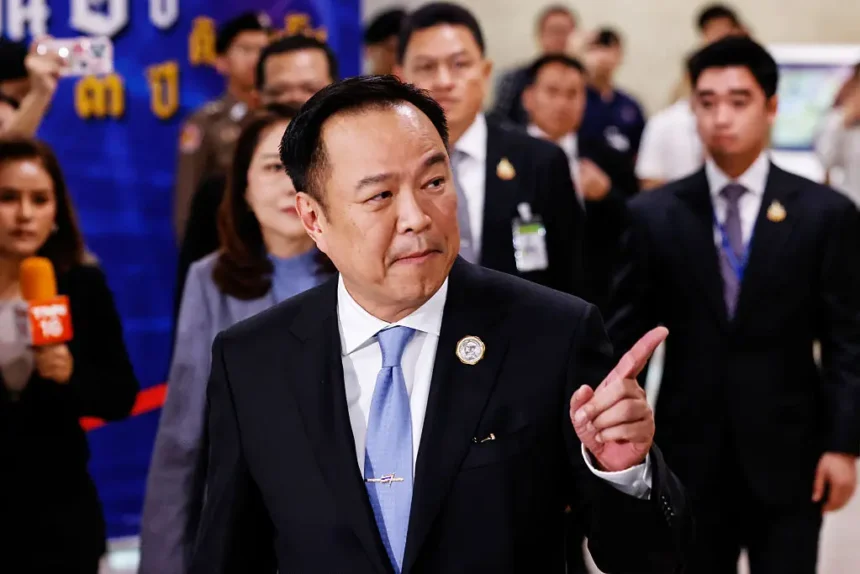
BANGKOK – In a late-night move on Thursday, Prime Minister Anutin Charnvirakul submitted a request for a royal decree to dissolve Thailand’s House of Representatives. This sets up a snap general election that must take place within the next 45 to 60 days.
Anutin, who leads a minority government, announced the decision on Facebook with the phrase, “I am returning the power to the people.” The move comes only three months after his government took office, during a period of growing political tension, a fierce dispute over constitutional changes, and rising strains along the Thai-Cambodian border.
The dissolution appears designed to block an incoming no-confidence debate from the opposition. The political crisis escalated during a joint parliamentary session on a constitutional amendment bill. Bhumjaithai Party (BJT), which heads the government, had earlier agreed to back the amendment as part of its minority coalition deal with the opposition People’s Party (PP).
However, BJT later voted to keep the appointed Senate’s power in the amendment process, a position that clashed with PP’s stance. The People’s Party quickly responded by threatening a full censure motion against the entire cabinet. With his key partner pulling away and defeat in parliament almost certain, Anutin, as BJT leader, chose to dissolve the House rather than face a damaging loss.
What Comes Next for Thailand: Key Parties and Election Prospects
With a likely election date in early 2026 (most likely late January or February), all eyes now turn to the contest for the 500 House seats and the push to form a stable majority government. No party has managed to do that since the 2023 election.
Recent polls and political forecasts point to two main contenders at the top of the race.
1. The People’s Party (PP)
The People’s Party, led by Natthaphong Ruengpanyawut, appears to have the strongest momentum heading into the vote. The party, which won the popular vote in 2023 under its previous name, still draws strong backing from urban voters, younger generations, and those who favor reform.
- Odds: Surveys conducted even before the dissolution consistently placed PP as the leading party, often well ahead of its nearest rival. Its focus on structural change, anti-corruption policies, and the popular “With us, no grey” slogan gives it a clear edge with many voters.
- The Challenge: Despite likely gains in seats, PP still faces a major hurdle in forming a government. Many conservative and elite groups strongly oppose parts of its reform platform, especially its position on the lèse-majesté law.
2. The Bhumjaithai Party (BJT)
Bhumjaithai, the party of outgoing Prime Minister Anutin, is relying on its deep local networks and reputation as a skilled broker that can work with almost any political group. BJT hopes to hold the balance of power, or even lead the next coalition.
- Odds: BJT is unlikely to win the most seats nationwide, but its skill in dealmaking and its central position in current politics make it hard to ignore in any coalition talks. The party is expected to do well in its home areas, especially in the Northeast (Isaan) and parts of the central region.
3. The Pheu Thai Party
Though it still has an extensive political base and the Shinawatra name behind it, it has seen its support weaken. Two failed premierships in 2024 and 2025 have hurt its image, and it now seems locked in a tougher fight with BJT for second place.
Pheu Thai, the Shinawatra family’s populist powerhouse, scraped into power with 141 seats by allying with pro-junta parties—a betrayal that alienated its base.
Srettha Thavisin lasted a year before an ethics probe felled him in 2024; his successor, Paetongtarn—the 38-year-old daughter of exiled tycoon Thaksin Shinawatra—faced her own downfall in August 2025 over a leaked phone call with Cambodia’s Hun Sen, deemed an ethical lapse.
Thaksin’s jail sentence and pending court case have also deepened Pheu Thai’s woes, with polls showing its support cratering to single digits.
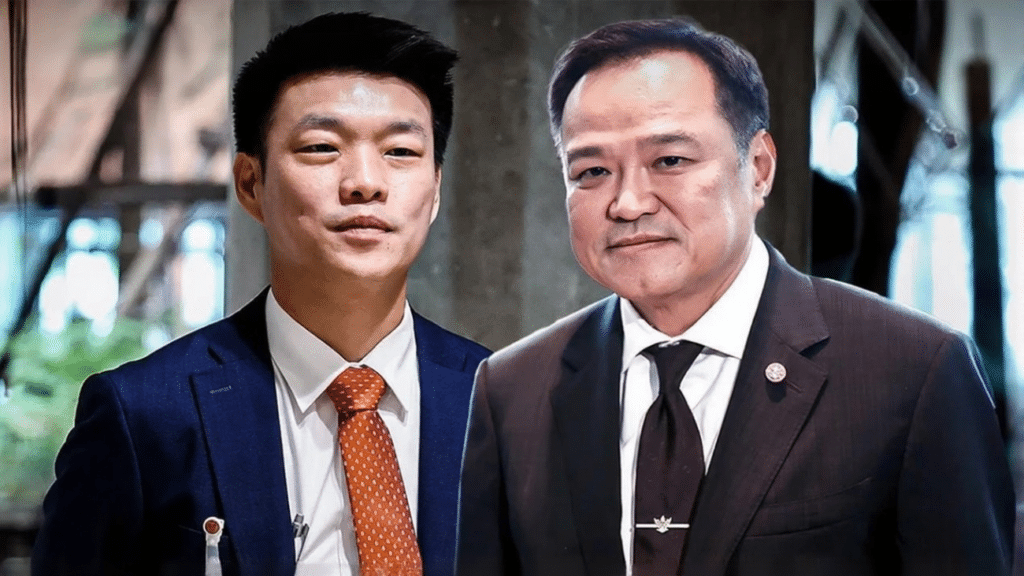
Who Is Ahead in the Race for Prime Minister?
To form a government, a party or coalition needs at least 251 of the 500 seats in the House of Representatives. This election is the first since the Senate’s authority to vote for the prime minister expired, so the House result alone will decide who becomes Thailand’s next leader.
Two names clearly stand out in the race for prime minister:
| Candidate | Party | Key Strength |
|---|---|---|
| Natthaphong Ruengpanyawut | People’s Party (PP) | Broad public backing, clean-government message, strong support from youth and city voters. |
| Anutin Charnvirakul | Bhumjaithai Party (BJT) | Skilled coalition builder, strong ties with the establishment, well-organized party network. |
Current analysis points to Natthaphong Ruengpanyawut as the leading favorite, since his party is widely expected to win the largest share of seats. The People’s Party has already named three official prime ministerial candidates, with Natthaphong at the top of the list, and has promised to govern on a platform centered on competence and systemic change.
The situation, however, remains fluid. If the People’s Party falls short of an outright majority of 251 seats, Anutin Charnvirakul could quickly re-emerge as a serious contender. He could head a coalition of parties that oppose PP’s reform plans, using his long-standing relationships with parts of Pheu Thai and other pro-establishment groups.
Thailand now moves into a period of intense campaigning, back-room talks, and shifting alliances. For voters in Chiang Rai and across the country, this snap election offers another chance to push for a more stable government that can deal with urgent issues, from economic pressures to the ongoing tensions with Cambodia.
Related News:
Over 500,000 Civilians Flee Thailand-Cambodia Border Conflict