


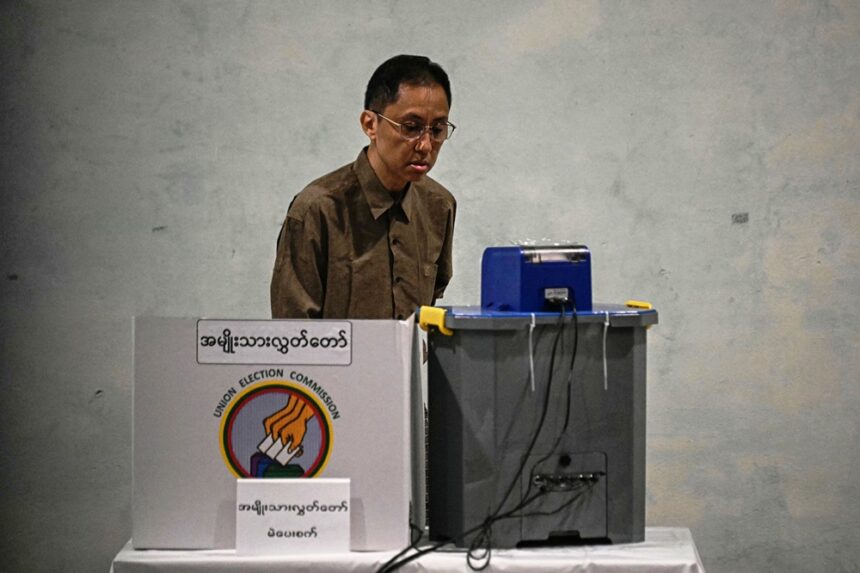
CHIANG RAI – Almost five years after the military coup that threw Myanmar into turmoil, the junta has started a staggered general election. The first round began on December 28, 2025. Senior General Min Aung Hlaing says the process will lead to multi-party democracy, but critics say it’s built to lock in military power behind a civilian front.
The election runs in three phases. The first covers 102 townships, with more voting set for January 11 and January 25, 2026. Large parts of the country are left out, including areas held by ethnic armed groups or places where fighting is intense. Aung San Suu Kyi is still in detention. Her National League for Democracy (NLD) has been dissolved, and many opposition parties have been blocked from taking part.
The month-long election plan has drawn sharp criticism from Western diplomats, human rights organisations, and UN officials. UN human rights chief Volker Türk said the polls are taking place in an “environment of violence and repression”.
He urged the military to stop using force to push people to take part and to end arrests linked to dissent.
UN Special Rapporteur Tom Andrews described the process as “theatre of the absurd performed at gunpoint”, warning it could tighten the junta’s control. Rights groups and analysts point to the same issues: a ballot led by military-aligned parties, major parties shut out, and a new Election Protection Law that makes criticism a crime. More than 200 people have been prosecuted under these rules, including for posts on social media.
Drone Attacks in Myawaddy
China and Russia have backed or watched the vote, with India taking a more limited role. Many Western governments say they won’t recognise the results, calling the election an attempt to claim legitimacy while abuses continue.
As polling stations opened in junta-held cities such as Yangon, Mandalay, and Naypyidaw, the war continued. Reports suggested turnout was low, with many people staying away out of fear. The campaign looked nothing like earlier elections, with no mass rallies and no red NLD flags.
Tensions showed clearly in Myawaddy, a border town in Karen State, late on December 27. Unidentified attackers carried out drone strikes, with five bombs reported across several locations.
One woman was killed, and around 10 others were injured. More than 10 houses were damaged, and the blasts caused heavy destruction. Reports said the drones hit homes, vehicles, and sites linked to the election, adding to signs that resistance groups plan to disrupt the vote.
Other attacks, including rocket strikes in Mandalay that injured civilians, underlined how the conflict has not eased. Since 2021, the war has displaced millions and killed tens of thousands.
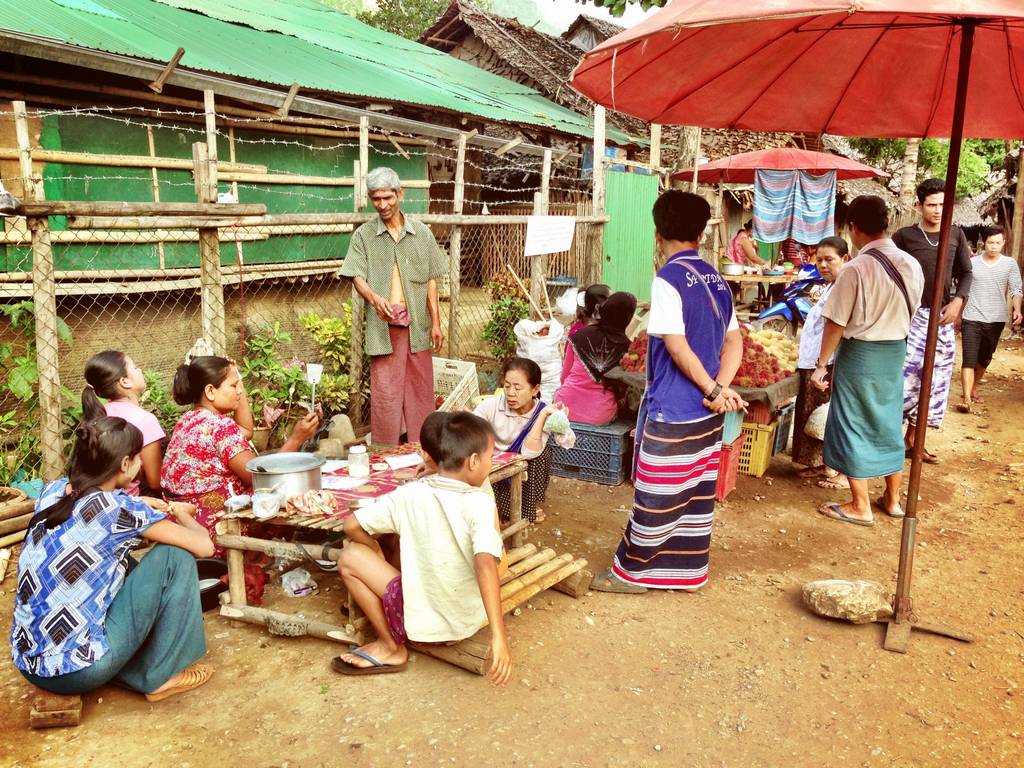
Myanmar Refugees in Exile
The Union Solidarity and Development Party (USDP), long seen as the military’s political vehicle and led by retired generals, has put forward the most candidates. Many expect it to win the biggest share of seats, as the opposition has been weakened and several parties were dissolved for failing to meet strict new registration rules.
Analysts say the USDP could secure a clear win and form a government with allied parties. The military already holds 25% of seats by law. Critics say the result would simply repackage military rule, keeping the junta in charge while presenting a civilian-style administration.
Junta spokesperson Zaw Min Tun says the election is “for the people”. In areas under military control, some residents describe pressure to vote, with fears of consequences if they refuse.
In Mae Sot, just across the Thai border, many Myanmar refugees follow the election from a distance. Exiles and activists are calling on the international community to reject the outcome. One displaced activist said, “This isn’t democracy; it’s a trap to legitimise slaughter.”
As voting continues into 2026, Myanmar remains split and unstable. Airstrikes and drone attacks are increasing, resistance forces say they will keep fighting, and the junta is holding tight. For people exhausted by years of war, these elections look less like a path to peace and more like a scripted extension of control.