



LAMPANG – A fire tore through an old wooden monk’s quarters built in Burmese style at Wat Mon Pu Yak (also known as Wat Mon Santhan) in central Lampang, Thailand.
The building burned to the ground, leaving locals heartbroken because of its age and cultural value. Residents said they heard a loud noise before the flames spread quickly, helped by the dry, aged timber.
The fire was reported around 6:30 a.m. on February 2. It started inside the temple grounds in Phra Bat Subdistrict, Mueang Lampang District, Lampang Province. People living near the temple rushed in and tried to slow the blaze with water, but thick smoke and intense flames made it hard to control.
Municipal disaster prevention teams from Lampang City, along with soldiers from the 32nd Military Circle and local rescue groups, sent multiple fire engines to the scene.
Crews sprayed water for about an hour before bringing the fire under control. The flames did not spread to nearby buildings, but the wooden quarters collapsed and were destroyed.
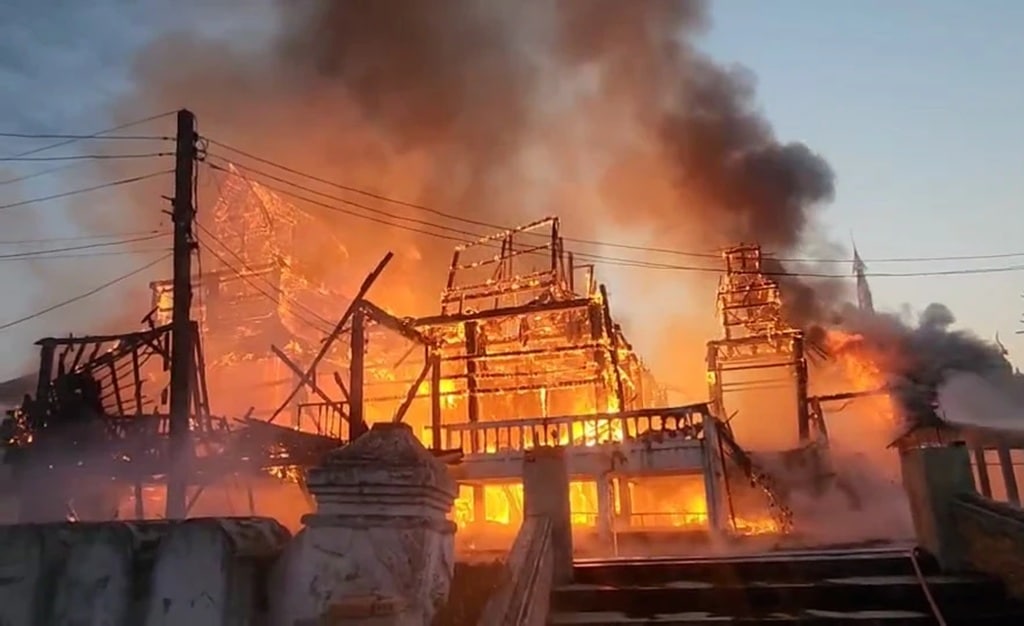
Neighbors report a loud bang before the flames
Residents whose homes sit next to the temple said they heard a sound like an explosion around 5:00 a.m. They woke up, stepped outside, and saw the quarters already on fire. Neighbors called for help and tried to put it out, but the old wooden structure burned fast.
Police and other agencies later entered the area to inspect the scene and collect evidence. Officials are still working to confirm the cause of the fire.
The destroyed building was a Burmese-style wooden quarter believed to be more than 144 years old. Locals viewed it as an important piece of Lampang’s history, art, and culture because of its distinct design and long-standing presence at the temple.
At the time of the fire, the abbot, the only monk residing at the temple, was traveling to Thoen District in Lampang for religious duties.
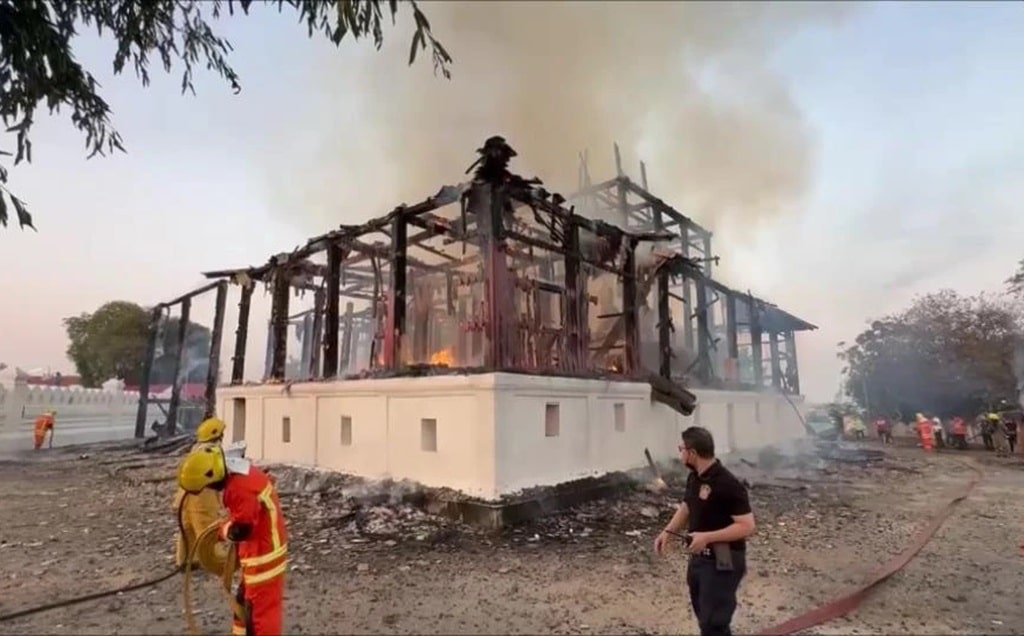
Fire Completely Destroyed the Building
Wat Mon Pu Yak is thought to date back to the mid-24th Buddhist century, around 1882, through the era of King Rama VI.
The temple traditionally included three main structures: the Burmese-style wooden quarters, a viharn (assembly hall), and a Burmese-style ordination hall influenced by Western design.
The wooden quarters stood on the west side, facing south. It was a timber building with layered gabled roofs. The entrance featured a square pavilion-like form with a spired top.
A concrete staircase led up to the structure, with carved wooden decorations in Burmese style. Inside, the layout included a central hall, an area for Buddha images, and side spaces used as living quarters for monks.
Related News:
Phrae Hospital Evacuates 124 Patients Over Second Floor Fire