


MAE HONG SON – A group of academics and civil society organisations visited communities along the Salween River on the Thai-Myanmar border, sharing clear, practical information about chemical and heavy metal contamination linked to upstream mining.
A concern residents say feels similar to problems seen in other major rivers in Chiang Rai and Chiang Mai. Researchers reported signs of toxins in prawns and fish taken from the Salween. The Salween River Basin Recovery and Development Association travelled to sections of the river in Mae Sariang and Sop Moei districts.
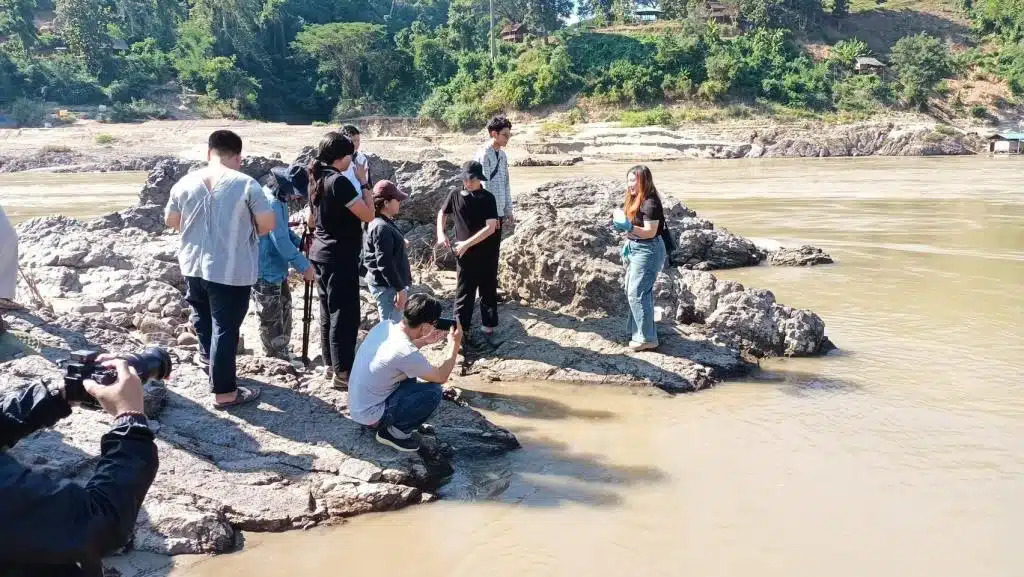
The team collected local observations, reviewed current concerns, and held community sessions for people living along the river on both the Thai side and in Karen State, Myanmar. Environmental networks, researchers, and several media outlets followed the work closely.
Piamporn Deetes, a board member of Rivers & Rights, told the Manager Online that the Salween links the daily life, food, and culture of Karen communities on both sides of the border. Yet many residents receive only limited updates about water quality. She added that results reported by different agencies have not always matched, which leaves communities unsure what to trust.
University team reports heavy metals above standards
Researchers from Chiang Mai University tested the Salween River during the rainy season in September and found heavy metal levels above accepted standards at several points. Field checks in upstream areas also pointed to both small and large mining operations. When heavy rain falls, sediments and pollutants can wash into the river, lowering water quality and creating long-term health risks.
Local people may not use Salween water for drinking directly, but researchers said clear public communication still matters. Communities need straightforward guidance, especially for water use, fishing, and food safety.
Niwat Roykaew, chair of the Rak Chiang Khong group and director of the local knowledge institute Hong Hian, said the Mekong and Salween share similar origins in the Himalayas. He noted that the Mekong has faced years of dam building, which has reduced fish stocks and weakened food security for river communities.
He warned that toxic pollution linked to mining can be even more damaging, as it often crosses borders and ties into global supply chains. Without stronger co-operation across the whole basin and the wider region, the impacts could return to harm livelihoods and health.
Assistant Professor Dr Waan Wiriya of the Faculty of Science at Chiang Mai University said her team tested Salween water four times and found heavy metals above standards in several locations. Arsenic stood out as a key concern.
She said the pattern may connect to upstream mining processes that use harsh chemicals to extract minerals. Waste chemicals and disturbed soil can end up in waterways, adding metals to water, sediments, and the wider ecosystem.
She explained that heavy metals may not cause obvious symptoms right away. They can build up through the food chain, moving from smaller organisms into fish and prawns, and then into people. Those who eat river fish often face a higher risk.
Tests found contaminants in prawn heads and in fish heads, bellies, and internal organs. No samples of river snails had been collected for testing at the time of the visit.
Health risks build over time
Somporn Pengkham, an independent researcher and director of the community-based health impact assessment institute, said arsenic was the main toxin found in the Salween. It can appear in both water and sediments, with a higher risk during muddy water conditions or flooding.
He said arsenic can enter the body through food and water, and it can also pass through skin or soft tissue, especially in young children or people with wounds. Symptoms may not show at once. Long-term exposure can raise the risk of chronic illness and several cancers, including skin, liver, kidney, lung, and bladder cancer. He said reducing exposure early is the safest approach, both through water use and food choices.
With contamination reported above standard levels, many families on both sides of the river have become anxious about eating fish and growing riverside plants, which are common daily foods.
Dr Waan said people do not need to stop eating fish entirely, but they can reduce short-term risk. Suggestions included filtering water before use and avoiding parts of aquatic animals where metals tend to concentrate.
Practical steps to lower risk at home
For fish, that means limiting the head, belly, and internal organs while eating the flesh. For prawns, it means avoiding the head. She also advised pausing consumption of vegetables grown right beside the river, or watered with Salween river water, until more test results confirm safety.
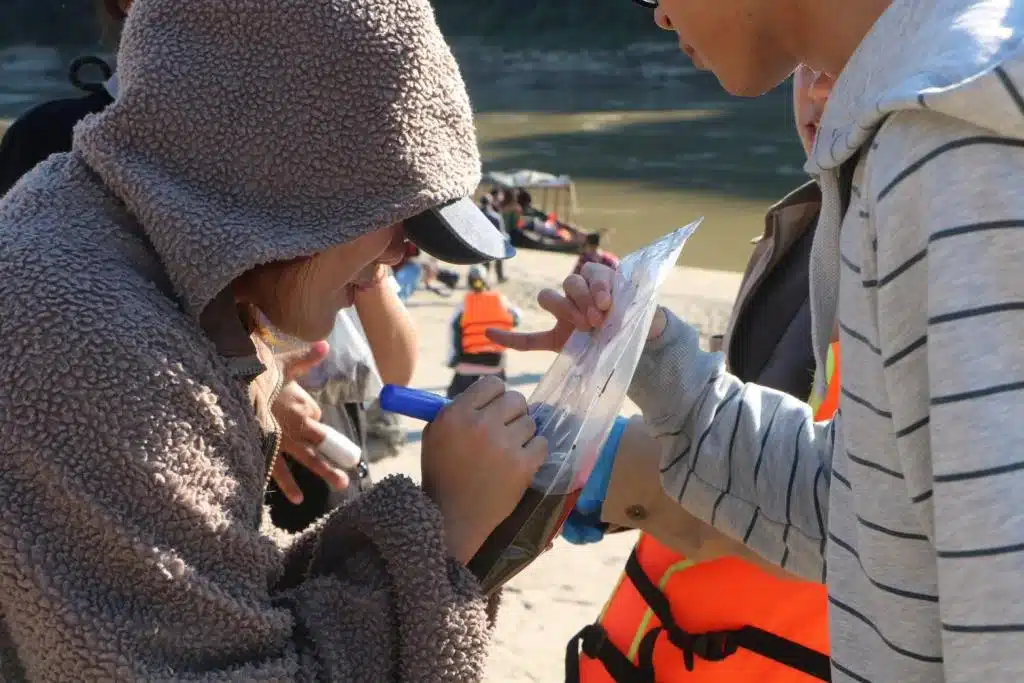
The team also collected plant samples, vegetables, soil, and river mud for further lab analysis to give communities clearer answers.
During the visit, organisers demonstrated basic water screening using a quick test kit. Two samples were checked, one from clean drinking water and one collected from the Salween. After about 20 minutes, the Salween test strip changed from white to a pale yellow, while the clean water strip stayed white.
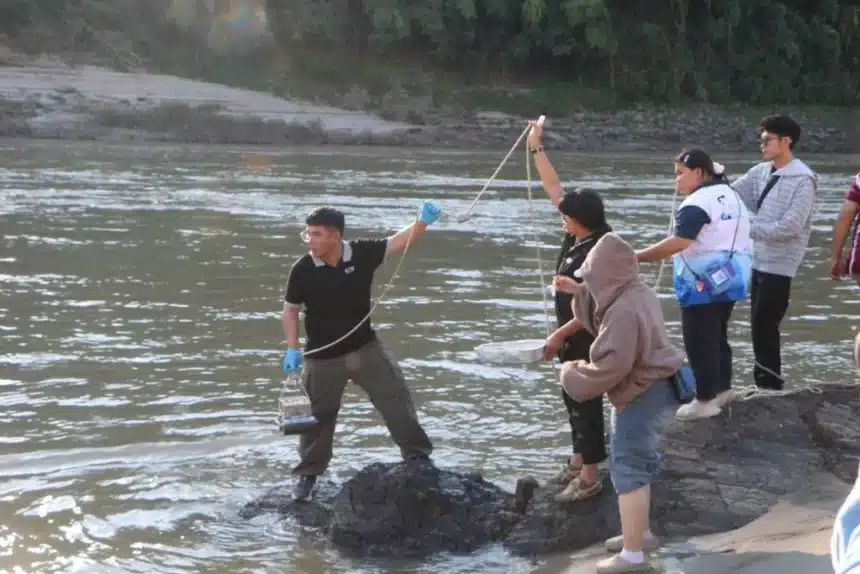
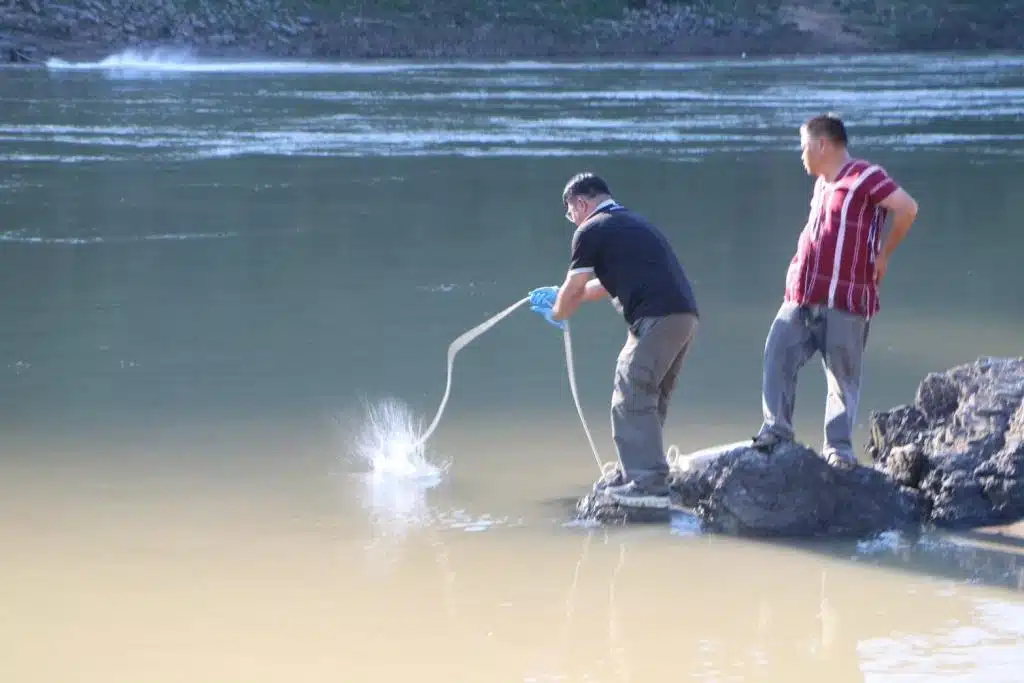
Academics, researchers, environmental groups, and journalists also travelled by boat along parts of the Salween to collect more samples of water, sand, and sediment from several points, with an overnight stay in Sop Moei to continue field work.