


Hearing the words scrutiny and “cash withdrawals” can make people tense. Nobody wants to stand at a bank counter and feel like they’re being treated as suspicious for doing something normal.
In Thailand, cash still has real, everyday uses. People pay contractors in stages, settle wedding or funeral costs, top up rural business float, or cover short-term payroll when customers pay in cash. So when headlines suggest banks will “watch withdrawals,” the first worry is simple: will the bank block my money?
The practical answer is calmer than the headline. Most routine withdrawals should stay routine. What’s drawing attention is very large cash requests, especially when people ask for unusually large stacks of ฿100 and ฿500 notes. Those are the cases that can trigger more questions and slower processing.
What happened
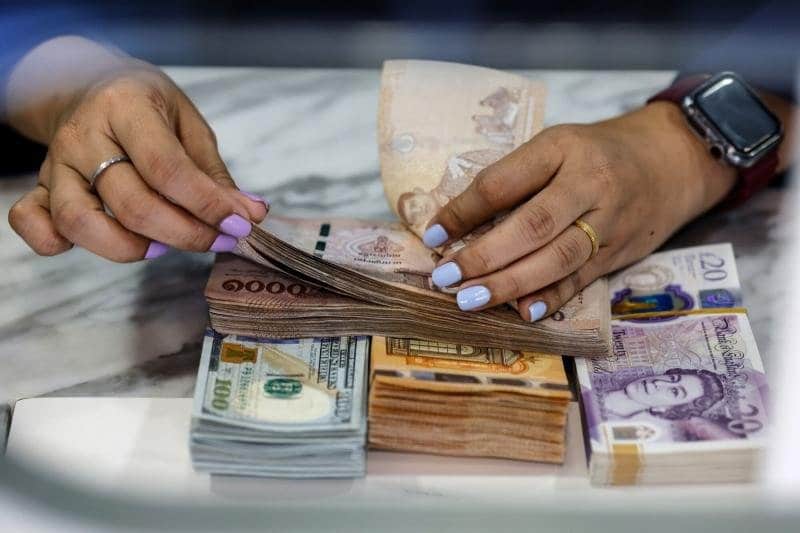
Recent reporting says Thailand’s central bank noticed unusually large cash withdrawals, said to be more than US$6 million each (roughly ฿200 million), and that the money was requested in small banknotes such as ฿100 and ฿500. The story drew attention because it described not one, but two withdrawals of that scale, close together.
Even without alleging wrongdoing, that kind of pattern stands out. Banks and regulators watch for behavior that looks unlike normal business activity. A huge cash request in small notes is unusual because it takes time to prepare, it’s hard to justify for most legitimate transactions, and once cash leaves the system it becomes difficult to track.
This is why the response has focused on monitoring and documentation, not on banning cash. In daily life, that often means banks may ask more questions for high-value withdrawals, or ask customers to schedule ahead so the branch can prepare the cash and complete compliance checks.
Why did this show up right before the Feb. 8 election
Large cash movements tend to get extra attention during election season. The reason is not complicated: cash can be used for legal expenses (events, transport, campaign materials), but it can also be used for improper payments because it leaves fewer records.
That’s why “election timing” matters. Authorities often tighten their focus when the risk of cash-based misuse is higher. It doesn’t mean every large withdrawal is linked to politics. It does mean regulators are more alert to patterns that could fit with concerns about vote-buying raised in public debate.
For readers who want background on how political finance can be abused in many countries, International IDEA’s work on political finance and anti-corruption trends explains why cash is a recurring issue.
What’s confirmed vs what’s reported
There’s been a lot of chatter, and not all of it has the same weight. The clearest way to read this story is to separate what has been stated by official channels from what has been reported in the media.
- Confirmed (from central bank messaging as described in recent coverage): The Bank of Thailand (BOT) has signaled tighter monitoring of large cash withdrawals, with a focus on transactions that look unusual for the customer, and closer cooperation with banks on reporting and purpose checks.
- Reported (from media coverage): Two withdrawals said to exceed US$6 million each, requests said to focus on ฿100 and ฿500 notes, and “threshold” figures that appear in different forms across outlets and explanations.
This distinction matters because customers don’t experience “policy” as a headline. They experience it at the branch counter, where staff follow internal rules that can vary by bank, region, and customer profile.
Confirmed: what the Bank of Thailand says banks should watch for
Based on recent reporting, the practical direction has been clear: banks should pay closer attention to very large cash withdrawals, especially when customers request high volumes of small notes, and when the activity doesn’t match a customer’s usual pattern.
In plain terms, that can mean:
Banks may record the purpose of a large withdrawal. Staff may ask how the cash will be used, who will receive it, and why a transfer or cashier’s check isn’t suitable.
Banks may check whether the transaction aligns with the customer’s profile. A long-time SME customer paying seasonal wages might look normal. A sudden, massive cash request from an account that rarely moves might trigger more review.
Banks may escalate unusual cases to compliance teams. This is standard bank practice under anti-money laundering frameworks. It’s not the same as an accusation, but it can add time.
One example of how this issue has been described in local coverage is the Thai Examiner report on monitoring cash withdrawals, which frames the focus on small notes and election-season concerns.
Thailand has also been discussing greater visibility into “grey capital” and unusual flows, which adds context for why the BOT would want better reporting trails. For related reporting, see Nation Thailand’s coverage on grey capital and reporting of unusual transactions.
Reported: the large withdrawals, the small-banknote focus, and threshold numbers
Media reports describe two cash withdrawals of more than US$6 million each, with requests said to concentrate on ฿100 and ฿500 denominations. That combination, scale plus denomination choice, is the core of the story.
Some coverage also mentions “thresholds” at which extra reporting or checks may begin. These figures are often described in ranges, such as 1 to 3 million baht in certain contexts, and in other mentions 3 to 5 million baht for higher-level reporting or documentation. These numbers should be treated as reported, not as a single, hard nationwide limit that applies the same way at every branch.
Why the confusion? Because banks can have:
Different internal risk rules
Different customer tiers
Different branch cash capacity and handling processes
So the safer expectation is this: the larger the amount, and the more unusual the note mix, the more likely extra checks will appear.
Why small banknotes matter, and what banks may do differently now
A big pile of ฿100 and ฿500 notes is portable. It can be split up fast. It’s also easier to distribute to many people than ฿1,000 notes, and it’s harder to trace once it moves hand to hand.
That’s the basic reason small notes get attention in compliance work. The goal is to reduce the risk that cash is used for illegal payments, corruption, or money laundering. It’s also about building an audit trail. If the purpose is legitimate, a clear paper trail usually helps the customer as much as the bank.
This fits a wider push in Thailand to spot suspicious money flows. For a broader view of the “grey money” discussion in late 2025, see The Business Times reporting on Thailand’s efforts to track gray money and unusual fund movements.
How can extra checks be performed at a branch?
For ordinary people, “tighter scrutiny” usually looks like normal questions, just more of them.
A branch may ask:
What is the cash for (payroll, event, supplier payment, land deposit)?
Where did the funds come from (savings, business income, sale proceeds)?
Who will receive the cash (a vendor, workers, multiple recipients)?
Can the customer accept mixed denominations instead of all small notes?
For business customers, staff may request supporting documents, such as invoices, contracts, or payroll lists. A large cash request can also trigger practical delays because the branch has to count, verify, and sometimes order notes.
What does this mean for ordinary customers in Thailand
Most customers withdrawing normal amounts won’t notice much difference. A few thousand or a few tens of thousands of baht for daily life is not what this story is about.
People more likely to notice changes include:
SMEs that pay wages in cash
Cash-heavy businesses (markets, restaurants, construction crews)
Families paying large event costs
Anyone requesting very large sums, or unusually large stacks of ฿100 and ฿500 notes
The biggest takeaway is simple: planning helps. When customers call ahead and bring basic documents, the process is usually smoother. When customers show up without warning and ask for a large amount in small notes, the bank is more likely to slow the request and ask questions.
If you need a large cash withdrawal, do this first (simple checklist)
Large cash withdrawals aren’t “wrong,” but they can be slower now, especially for small banknotes. A little prep can save a lot of time.
- Call the branch ahead: Ask if they can prepare the amount and denominations, and what lead time they need.
- Bring ID: Expect full identity checks, even for long-time customers.
- Bring supporting documents: An invoice, contract, payroll list, or event booking helps explain the purpose.
- Expect questions: Staff may ask about the purpose, the source of funds, and who will receive the cash.
- Avoid a last-minute rush: Same-day, end-of-month, or pre-holiday timing can add delays.
- Be flexible on denominations: Mixed notes can be easier for the branch to supply.
- Ask about pick-up times and any fees: Some banks require scheduling for very large orders.
This is general information, not legal or financial advice. For rules that apply to a specific account, confirm with the bank branch handling the withdrawal.
FAQ: quick answers to common questions people are asking
Why is Thailand monitoring large cash withdrawals?
Because unusually large cash movements can be linked to illegal payments or money laundering. Election-season concerns can also increase attention on cash activity.
Are ฿100 and ฿500 notes being restricted?
No blanket restriction has been confirmed. The focus is on unusually large requests for these notes, which may trigger extra checks.
Will my bank stop me from withdrawing cash?
Most customers should still be able to withdraw cash. For very large amounts, banks may ask questions, request documents, or ask customers to schedule.
What counts as “large”?
There isn’t one public number that fits every bank. Media reports have mentioned ranges starting around 1 to 3 million baht in some contexts, and higher levels such as 3 to 5 million baht for stronger reporting. Banks can apply different rules based on risk and customer profile.
Can I withdraw cash for business payroll?
Often yes, especially if the business has a history of payroll withdrawals. Expect the bank to ask for a payroll list or other proof, and allow extra time.
Is this related to anti-money laundering rules?
Yes. Banks in Thailand are subject to anti-money laundering requirements and must monitor unusual transactions. The Anti-Money Laundering Office (AMLO) is part of the broader framework, and banks may need to document and report certain activity.
Do I need to show documents?
For everyday cash, usually no. For very large withdrawals, especially in small notes, documents can help the bank understand the purpose and speed up approval.
Will this push Thailand toward cashless payments?
It may encourage more high-value payments to be transferred because transfers create clear records. But cash still has a role, especially in rural areas and cash-based businesses.
Is this only during election season?
Attention often rises before elections, but monitoring unusual cash activity can continue beyond any one period. Banks also respond to other risk trends and regulator guidance.
What if I need cash fast for an emergency?
Call the branch immediately and explain the situation. If the amount is very large, the branch may still need time to prepare cash and complete checks, but early communication helps.
Sources and transparency
This post reflects reporting about heightened monitoring of large cash withdrawals in small notes. Bloomberg reporting was a key trigger for the public discussion, and other outlets have echoed similar themes.
For continued coverage and context, readers can compare accounts across multiple sources, including Nation Thailand’s Bank of Thailand coverage hub and the Bangkok Post’s reporting on related scrutiny topics, such as the central bank’s attention to foreign cash movements.
For official details, the most reliable reference point is always the Bank of Thailand’s official communications (press releases, statements, and regulator guidance), along with direct confirmation from a customer’s bank branch. Figures and thresholds mentioned in media reports may vary depending on context.
Conclusion
The news in Thailand is about unusually large withdrawals in small banknotes, not about everyday cash use. Most people should see little change, but large cash requests may prompt more questions and longer wait times. Planning ahead, calling the branch, and bringing simple documents can keep the process smooth. The calm approach is also the practical one: treat it as stronger compliance, not a sudden ban on cash.
SEE ALSO: Bank of Thailand Gold Trading Rules: Baht Impact Explained