


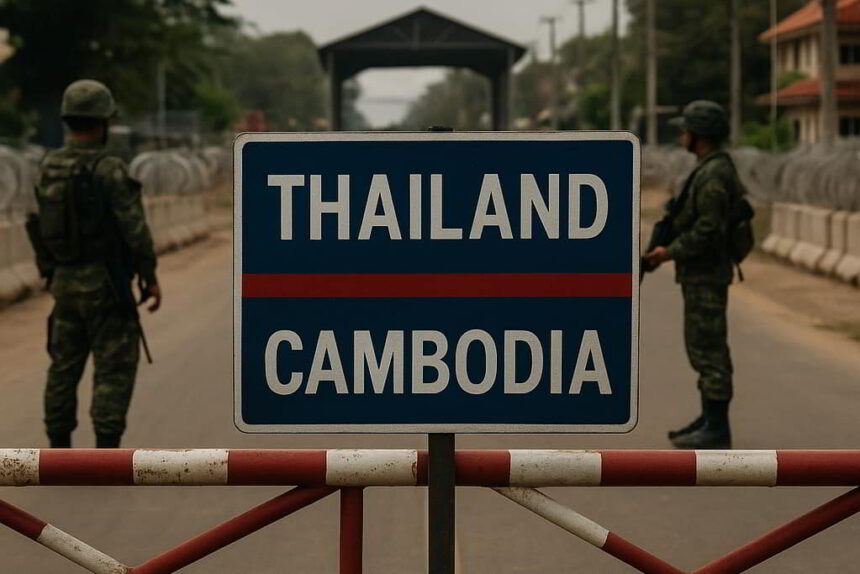
BANGKOK – People along the Thailand-Cambodia border have a small reason to hope. Both countries say they will restart senior defence talks to bring back a shaky ceasefire first helped into place by U.S. President Donald Trump.
The update followed a special ASEAN foreign ministers’ meeting in Malaysia on 22 December. It comes as heavy clashes move into a third week, with at least 80 deaths reported and close to a million people forced from their homes.
Military officials are now expected to meet on 24 December. It is the clearest diplomatic step forward since violence flared again on 8 December, ending a truce that had held, uneasily, since July.
People familiar with the discussions say the agenda will centre on quick steps to cool tensions. Those steps may include pulling troops back and setting up checks to confirm compliance, to revive the Kuala Lumpur Peace Accords that were widened in October.
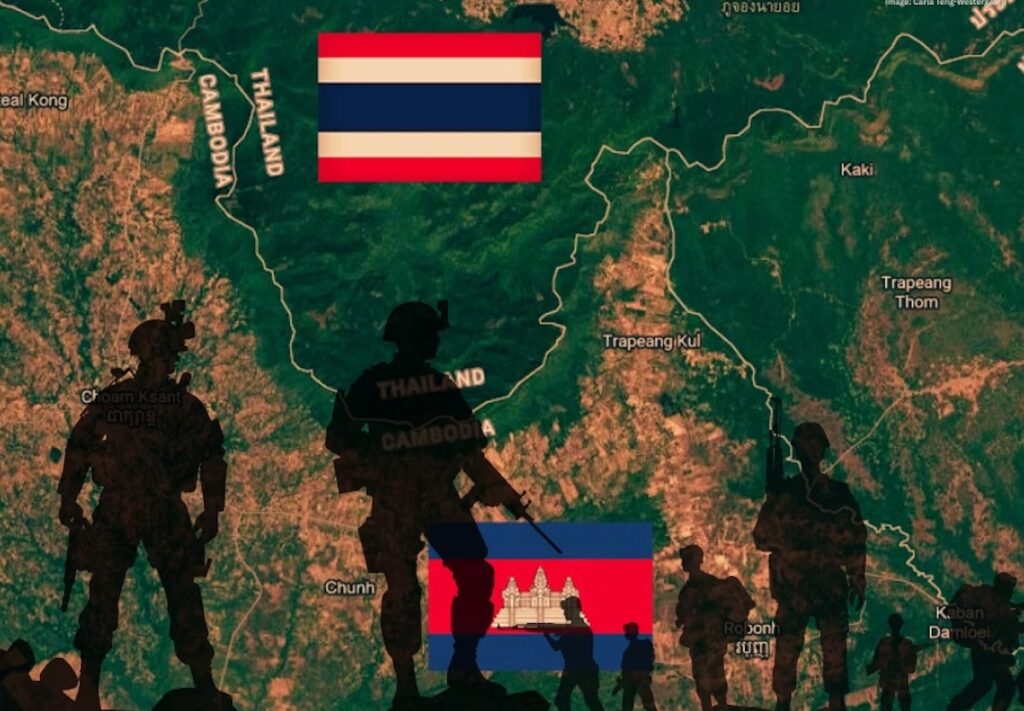
A Border Dispute With Deep Roots
This dispute goes back to borders drawn during the colonial period. One key point is a 1907 French map that placed important ancient temple areas on Cambodian territory, a line Thailand has challenged for decades. The flashpoints include UNESCO World Heritage locations such as the Preah Vihear Temple, an 11th-century Hindu site sitting high in the Dangrek Mountains, plus nearby ruins including Ta Muen Thom.
In 1962, an International Court of Justice decision awarded Preah Vihear to Cambodia. Still, the land around it remained unclear, and that gap has helped trigger repeated stand-offs. This year’s surge began in July, when fierce exchanges, including airstrikes and artillery fire, killed dozens. Pressure from outside, led by Malaysia, the U.S., and China, pushed both sides into a ceasefire.
Trump, who got involved directly through calls with leaders and attended an October summit in Malaysia, presented the deal as a major success. The process then stalled in November. Thailand said Cambodia had planted new landmines, an accusation Phnom Penh rejected.
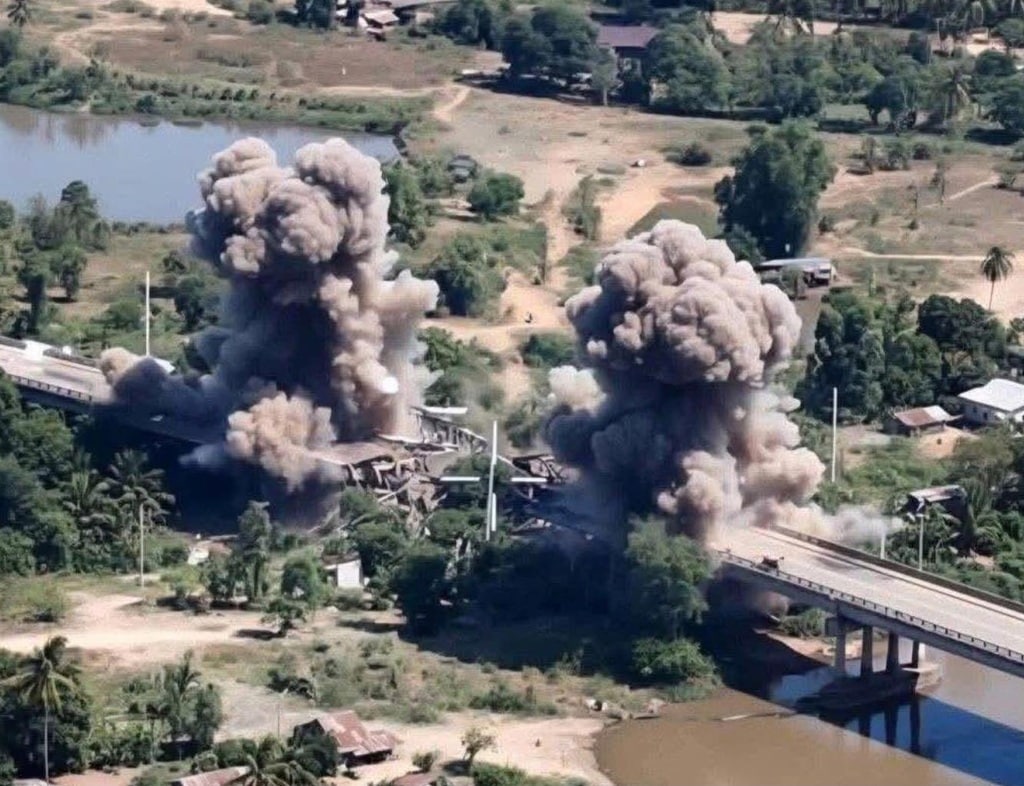
Fighting Returns and Spreads Along the Frontier
The truce broke again in early December. Violence spread across several areas, from wooded hills near Laos to coastal stretches by the Gulf of Thailand. Thailand used F-16 jets to strike what it described as Cambodian military positions. Cambodia hit back with rocket attacks and drones.
Civilian harm rose fast. Thailand said 21 of its soldiers had been killed, while estimates point to heavier Cambodian losses, linked to differences in equipment and firepower. Civilians were also killed. Attacks hit villages, casinos, and key infrastructure, triggering evacuations of more than 750,000 people. UNESCO warned about damage to heritage sites, including Preah Vihear, and urged both sides to protect shared cultural landmarks.
Trump tried to step in again in mid-December. In a social media post, he said Thailand’s Prime Minister Anutin Charnvirakul and Cambodia’s Premier Hun Manet had agreed to “cease all shooting”. The fighting did not stop. Bangkok said it would continue operations until threats were removed, while Phnom Penh accused Thailand of aggression.
ASEAN Pushes Talks Forward
Momentum picked up during the ASEAN gathering hosted by Malaysia’s Prime Minister Anwar Ibrahim, who has pressed for regional dialogue. ASEAN foreign ministers called for restraint, as the bloc faces a serious test when conflict breaks out between member states.
Thailand’s Foreign Minister Sihasak Phuangketkeow confirmed the planned defence talks and suggested Chanthaburi province as a location. The outline is still limited, but many see the move as a shift by Bangkok, which had earlier resisted outside mediation.
Cambodia’s defence ministry has not issued a full public statement. People close to the matter say Phnom Penh is open to talks if pullbacks are real and can be checked. The U.S. and China are also working behind the scenes, with Washington highlighting trade incentives and Beijing using its close relationship with Cambodia.
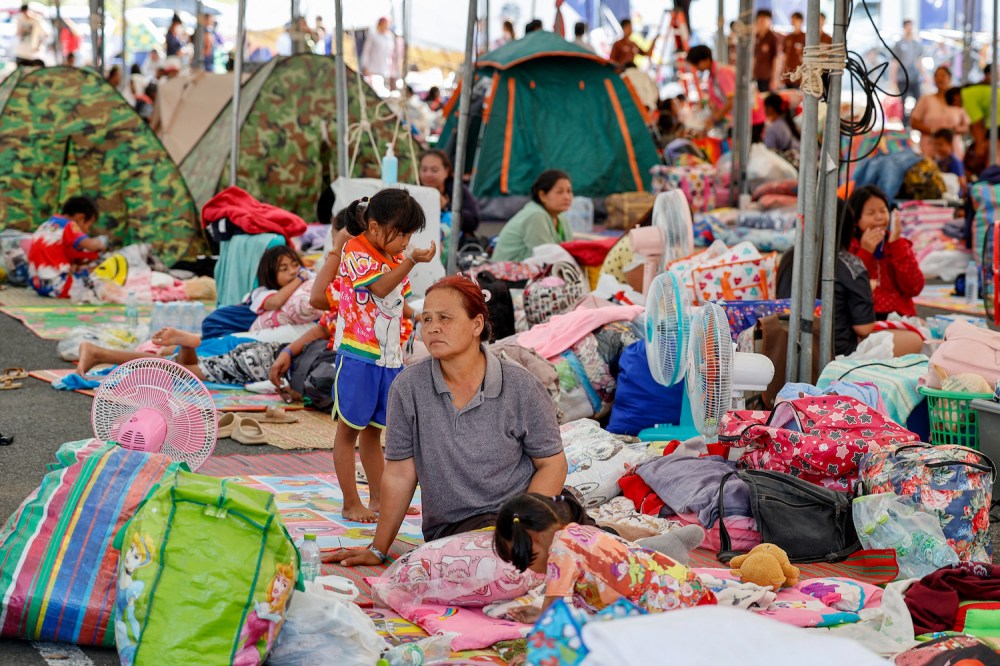
Civilians Pay the Price, and the Region Watches Closely
Away from the front lines, border towns are struggling. Trade worth billions has slowed to a halt. Thailand has imposed limits on fuel exports, while Cambodia has shut crossings. Displaced families have crowded into temples, schools, and racetracks, with shortages growing as the holiday period approaches.
Analysts warn that the longer the conflict runs, the greater the risk to wider stability in South East Asia. It also puts pressure on ASEAN’s long-standing approach of non-interference, while increasing the chance that major powers become more involved. Nationalist anger has risen in both countries, making de-escalation harder, especially with Thailand heading towards elections.
Still, the decision to sit down again brings cautious hope. One Thai evacuee summed it up simply, “We’ve run before, we just want peace so we can go home.”
With talks set for Christmas Eve, attention is fixed on whether both sides can restore Trump’s truce and stop more deaths. If the meeting fails, a crisis that has already shattered lives and damaged shared heritage could drag on.