



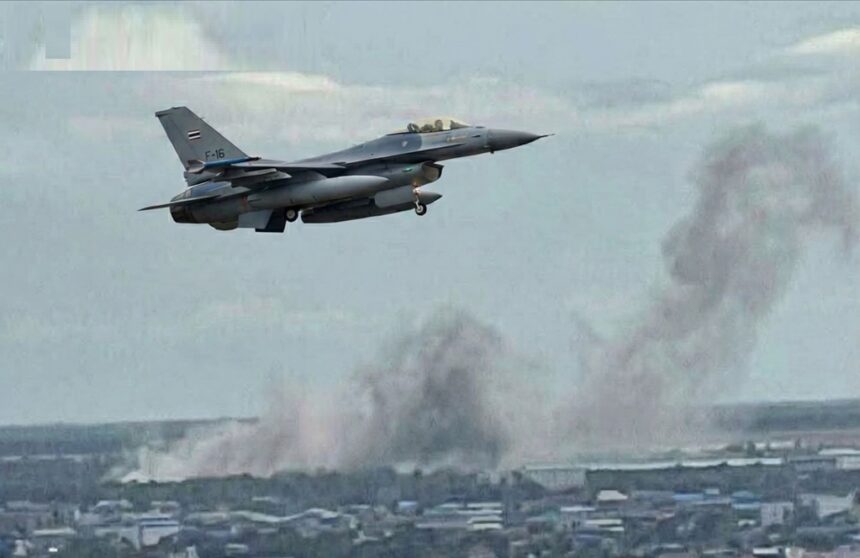
BANGKOK – Thailand and Cambodia’s border tensions took a sharp step up on December 18, when Royal Thai Air Force (RTAF) F-16 fighter jets carried out precision strikes on Cambodian military sites near the busy casino town of Poipet.
Thai officials said the sorties were defensive, aimed at stopping heavy weapons threats, including BM-21 Grad multiple rocket launchers, after repeated rocket fire into Thai territory since clashes flared earlier this month.
According to Thai briefings, the strikes hit logistics points and weapons storage areas on Poipet’s outskirts in Banteay Meanchey Province. Thai intelligence reports said Cambodian forces were building up rockets there and preparing more attacks. RTAF spokesman Air Marshal Chakkrit Thammavichai said the operation followed sightings of heavy weapon movements that posed an immediate risk to Thai soldiers and civilians in nearby areas such as Sa Kaeo Province.
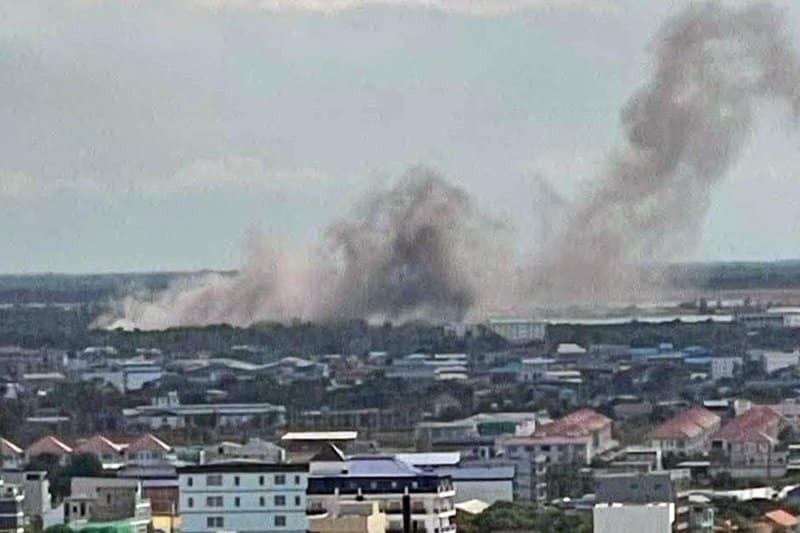
Precision Strikes Focus on BM-21 Threat
Thailand’s choice to send F-16s came as reports grew of stronger Cambodian shelling using BM-21 systems, which can fire up to 40 rockets from a single launcher. Thai defence sources say these Soviet-era launchers have been used in repeated cross-border attacks, including strikes that reached civilian areas in provinces such as Surin and Sisaket.
Thai reports also linked a recent incident in Sisaket, where rockets allegedly struck a petrol station, to injuries and major damage.
A Thai Ministry of Defence spokesperson said the targets were military only, describing arms depots and supply hubs used to store and fire BM-21 rockets. Video shared by the Second Army Region appeared to show secondary blasts after the bombs hit, which Thai officials said pointed to ammunition stocks igniting.
Thai authorities also said the strikes were kept outside Poipet’s central area to lower the risk to civilians. Cambodian officials disagreed, saying bombs fell inside the town area.
Independent confirmation of casualties from the December 18 strikes was not available at the time of reporting. The attack stands out as the first direct airstrike near Poipet in this latest phase of fighting, which restarted on December 7 after a fragile ceasefire agreed in July broke down.
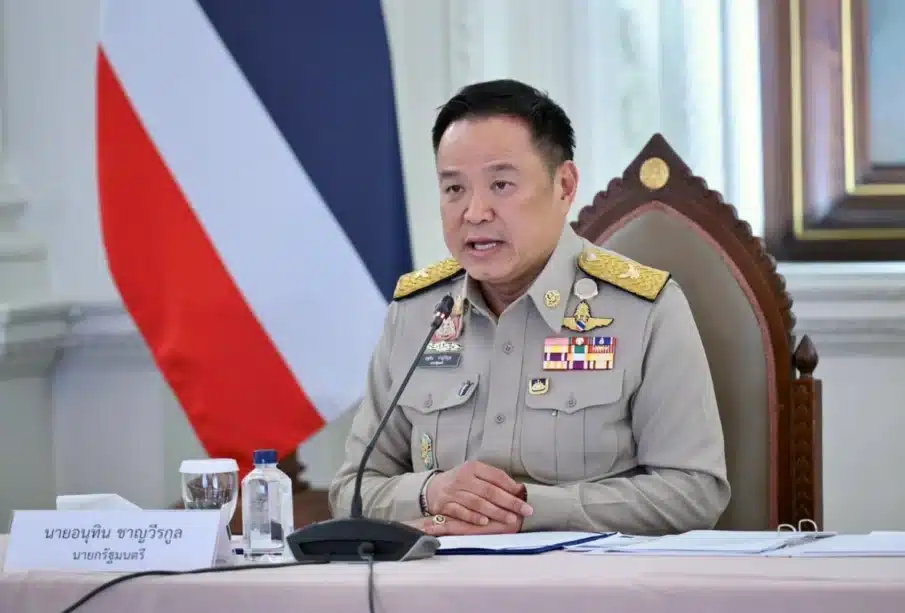
Prime Minister Anutin Charnvirakul Backs the Operation
Prime Minister Anutin Charnvirakul defended the strikes at a press conference in Bangkok soon after they took place. He said Thailand’s forces were responding to repeated attacks and acting to protect national security. He also called on Cambodia to halt attacks, pull back heavy weapons, and clear landmines before serious talks could move forward.
Anutin, who took office earlier this year during major political changes at home, said Thailand wanted to protect its sovereignty while still keeping the door open to calm things down through direct talks.
He also referred to outside efforts to reduce tensions, including calls linked to U.S. President Donald Trump, while stressing that Cambodia needed to show good faith first. Thai reports have also suggested Bangkok prefers direct negotiations over third-party involvement.
Cambodia reacted quickly, with the Ministry of National Defence in Phnom Penh accusing Thailand of “brutal aggression”. Cambodian officials said F-16 jets dropped several bombs on Poipet, a key economic centre known for its casinos, which draw many Thai visitors because gambling is illegal in Thailand.
The ministry said the strike was unlawful, took place on Cambodian soil, and put civilians and buildings at risk. Cambodian statements mentioned building damage but did not give clear casualty figures.
Senate President Hun Sen, the influential former leader, posted online, urging restraint while also accusing Thailand of pushing the conflict further. Cambodia has said its troops are acting in response to Thai moves and has shut all land crossings, including Poipet.
The closures have left large numbers of Thai nationals stranded. Phnom Penh has also asked ASEAN and the United Nations to step in, describing the Thai strikes as breaches of international norms.
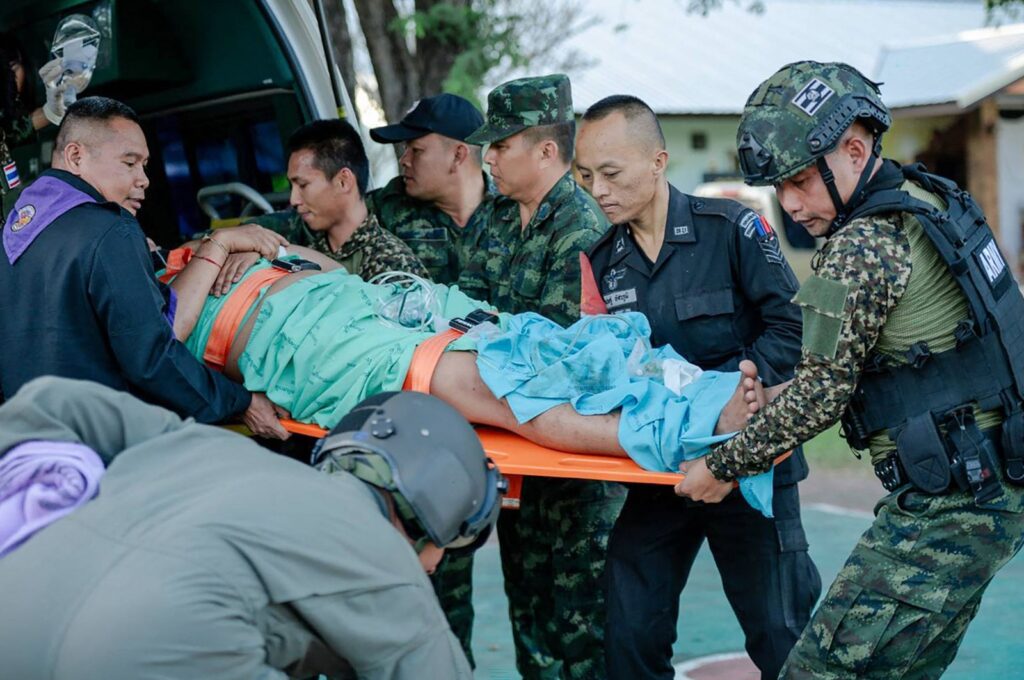
Casualties Rise as Displacement Grows
Since fighting restarted on December 7, both sides have reported heavy losses. Thai authorities say at least 21 people have died, including 16 soldiers and several civilians, and hundreds more have been injured. Cambodian sources have reported 17 to 18 civilian deaths and dozens wounded, while Phnom Penh has not shared figures for military losses.
The wider impact has been severe. With artillery, tanks, drones, and air power now in play, more than 800,000 people on both sides have reportedly been forced from their homes. Evacuation centres in places like Surin and Banteay Meanchey are under strain as families arrive with few belongings and no clear end in sight.
Thai accounts have linked earlier BM-21 attacks to strikes on civilian areas, including reports of children injured after an explosion at a petrol station. Thailand has also said Cambodia triggered this latest round by pushing positions forward and laying landmines.
Tensions are also growing at sea. Thai naval patrols in the Gulf of Thailand have reported sightings of Cambodian military drones operating near Thai oil rigs. Thai officials suspect the drones are gathering intelligence or could be used for disruption in disputed waters that overlap with energy claims. A Royal Thai Navy source said the activity widened the conflict beyond the land border, and promised stronger patrols and countermeasures.
On land, drones have become a major part of the fighting. Reports describe “kamikaze” FPV drones, similar to those used in other conflicts, being aimed at Thai bunkers. Thai forces claim they have shot down large numbers, including drones that appeared to be flown with advanced methods, raising talk of possible outside know-how.
The dispute has deep roots, tied to old border lines drawn in the colonial era and long-running tensions around historic temple sites such as Preah Vihear. Another spike in violence in July 2025 eased only after outside pressure, but distrust on both sides has helped drive the latest fighting.
As ASEAN pushes for urgent talks and major powers call for restraint, people living near the border face daily uncertainty. In Chiang Rai and other northern provinces, residents have voiced concern about stability and trade, with business already feeling the effect of disrupted routes.
Anutin has signalled possible economic steps, including limits on fuel exports, to increase pressure on Cambodia. At the same time, calls for dialogue continue on both sides, with many warning that a wider war would bring costs neither country can afford.
Thailand has kept the RTAF and ground forces on high alert. With Poipet affected by the latest strikes and border towns bracing for more, the next steps by both governments will shape whether the conflict cools or spreads.
Related News:
Over 500,000 Civilians Flee Thailand-Cambodia Border Conflict
Cambodia Accused of Holding Over 3,000 Thai Civilians Hostage at Poipet Border Crossing