

HAT YAI – The Royal Thai police and immigration officers have rescued 16 Bangladeshi migrant workers from a rented house where they had been shut in for three days without food or water. The men were weak, thirsty, and desperate for help. Police said they had been waiting for smugglers to move them across the border into Malaysia, where they hoped to find jobs.
People living in Hat Yai first alerted authorities after hearing cries and groans from a small house in an alley near the Thong Nimit gold shop on Kanchanawanit Road in tambon Phatong. On March 18, 2026, officers from Border Patrol Police Unit 43, Immigration, Thung Lung police, and the Internal Security Operations Command went to the scene. Because the front door was locked, they entered through the back.
Inside, officers found all 16 men packed into a very small room. They were badly dehydrated and clearly worn out. Pol Sub-Lt Sommart Kerdsaengsuriyong, who leads intelligence work at the 43rd Border Patrol Police unit, said the sight was painful.
He said the men had gone at least three days without food or drinking water. As soon as officers opened the room, the illegal migrants begged for something to eat and drink. Police then took them to Thung Lung police station, where they received water, meals, and urgent care.

A Risky Route From Bangladesh to Southern Thailand
The men later told police they had come by boat from Bangladesh and arrived in Phuket. After that, traffickers moved them by pickup truck to Songkhla province.
Each man said he had paid a broker about 96,000 baht, roughly Tk 3.6 lakh, for the full trip to Malaysia through Thailand. Before leaving Phuket, the smugglers allegedly tied red strings around their wrists so they could identify the group during transport.
Like many migrants on this route, the men said they wanted steady work in Malaysia so they could send money home. Instead, they ended up trapped in a crowded safe house with no food, no water, and no way out while they waited for the next part of the journey.
Police believe the case is linked to a wider trafficking and smuggling operation active across Southeast Asia. Investigators are now trying to identify the brokers, drivers, and others behind the movement.
This rescue is far from a one-off case. Every year, large numbers of Bangladeshi and other South Asian migrants take similar risks. They hand over huge sums to agents who promise safe travel and good jobs, but many are met with abuse, debt, and confinement.
Why Human Trafficking Remains Hard to Stop in Thailand
Thailand sits on one of Asia’s busiest migration corridors. Because of its land and sea borders, demand for low-paid labor, and income gaps across the region, traffickers keep finding ways to move people through the country. Jobs in farming, fishing, construction, and domestic work often attract migrants, and criminal groups exploit that demand.
Officials face several major problems:
- Corruption and help from insiders: Some police and border officers have been accused of shielding smuggling groups, especially in remote areas. That slows cases and damages public trust.
- Limited staff and equipment: Smaller police stations in places like Songkhla and Hat Yai often don’t have enough officers, interpreters, or vehicles when migrant numbers suddenly rise.
- The line between smuggling and trafficking: Some migrants agree to travel at first, but then become trafficking victims when smugglers lock them up, beat them, or force them into debt.
- Large numbers of migrants: Thailand receives workers from Myanmar, Cambodia, Laos, and other countries, including Bangladesh. Screening every person is very difficult.
- Cross-border criminal networks: Smugglers use boats, trucks, and jungle routes that stretch across several countries, so arrests often depend on strong cooperation between governments.
The US State Department’s 2025 Trafficking in Persons Report said Thailand remained on Tier 2. That means the country is making serious efforts, but still falls short of full standards. The report also said corruption along both northern and southern borders continues to block progress.
Still, the Hat Yai rescue showed that authorities can act quickly. After getting a tip from residents, officers reached the house within hours and moved fast to protect the victims.
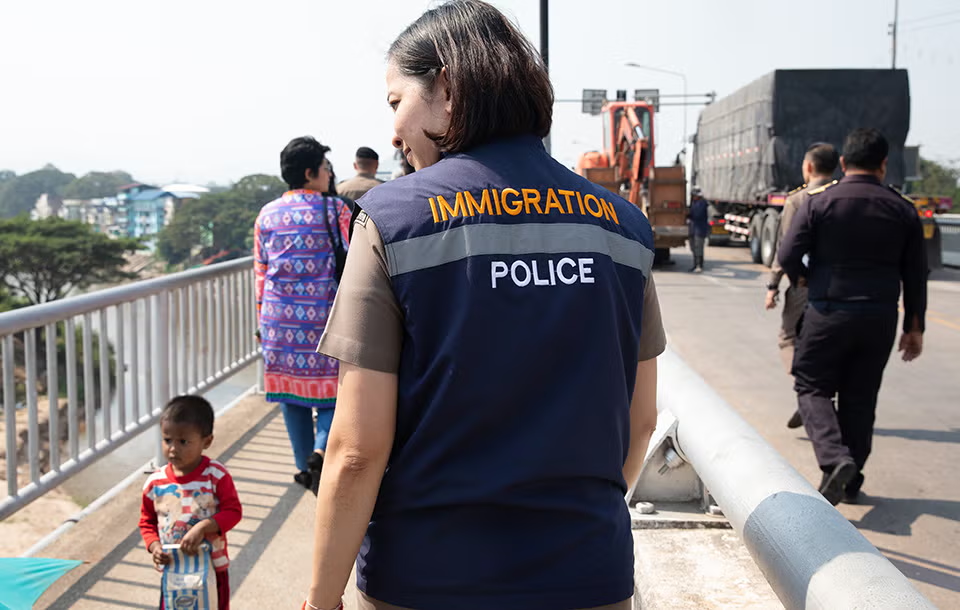
Steps Thailand Has Taken Against Human Trafficking
In recent years, Thailand has introduced several measures to tackle human trafficking more directly.
- Anti-Trafficking in Persons Act: Updated laws now treat forced labor and other forms of exploitation as criminal offenses, with tough prison terms for offenders.
- National Referral Mechanism (NRM): Since 2022, this system has helped officials identify victims faster and connect them with shelters, medical care, legal support, and repatriation help.
- 24-hour hotlines and reporting channels: People can report suspected trafficking at any time, which helps police respond sooner.
- Business training requirements: In 2024, Prime Minister Paetongtarn Shinawatra introduced yearly training for factory owners and businesses on how to spot and stop trafficking.
- Higher funding: Government spending on prevention and victim support increased, starting from $3.2 million in 2023 and rising in the following years.
- Joint working groups: The National Anti-Trafficking in Persons Committee brings together police, immigration, labor inspectors, and NGOs to improve coordination.
- International cooperation: Thailand works with neighboring countries, ASEAN, and the United Nations on joint action and information sharing.
Authorities investigated 381 trafficking cases in 2024 alone, a sign that enforcement efforts are moving forward. Border crackdowns have also produced results. For example, Thai operations near the Myanmar border, including action against scam compounds, helped free thousands of victims.
These measures show clear intent, but many experts say more must be done. Frontline officers still need better training, and victims still need stronger protection after rescue.

Northern Thailand Continues to Face Heavy Trafficking Pressure
Although this case happened in the south, northern Thailand remains one of the country’s hardest-hit areas for human trafficking. Provinces such as Chiang Rai, Chiang Mai, and Mae Sot face ongoing risks because of their long and rugged border with Myanmar.
That border allows easier movement for people escaping war, instability, and poverty. At the same time, it gives traffickers space to operate. Ethnic minority communities and stateless hill-tribe groups are often at the greatest risk. Criminal groups lure people with false job offers, then force them into work such as:
- Farm labor on strawberry, longan, or orange plantations
- Construction work
- Sex work in hidden brothels
- Online scam centers across the border, where victims are confined and forced to commit fraud
US reports have repeatedly pointed to corruption among some local officials in these areas. In recent years, Thai forces have brought back hundreds of trafficking victims from scam compounds in Myanmar.
In early 2025 alone, more than 6,000 foreign nationals were repatriated from such operations. Meanwhile, community groups and women-led networks in places like Chiang Khong have started awareness campaigns and watch programs to report suspicious activity. Even so, the problem continues because Myanmar remains unstable and trafficking still brings in huge profits.
The Hat Yai case shows that these networks do not operate in just one region. They stretch across the country, from landing points in Phuket to routes in the north and border crossings in the south.
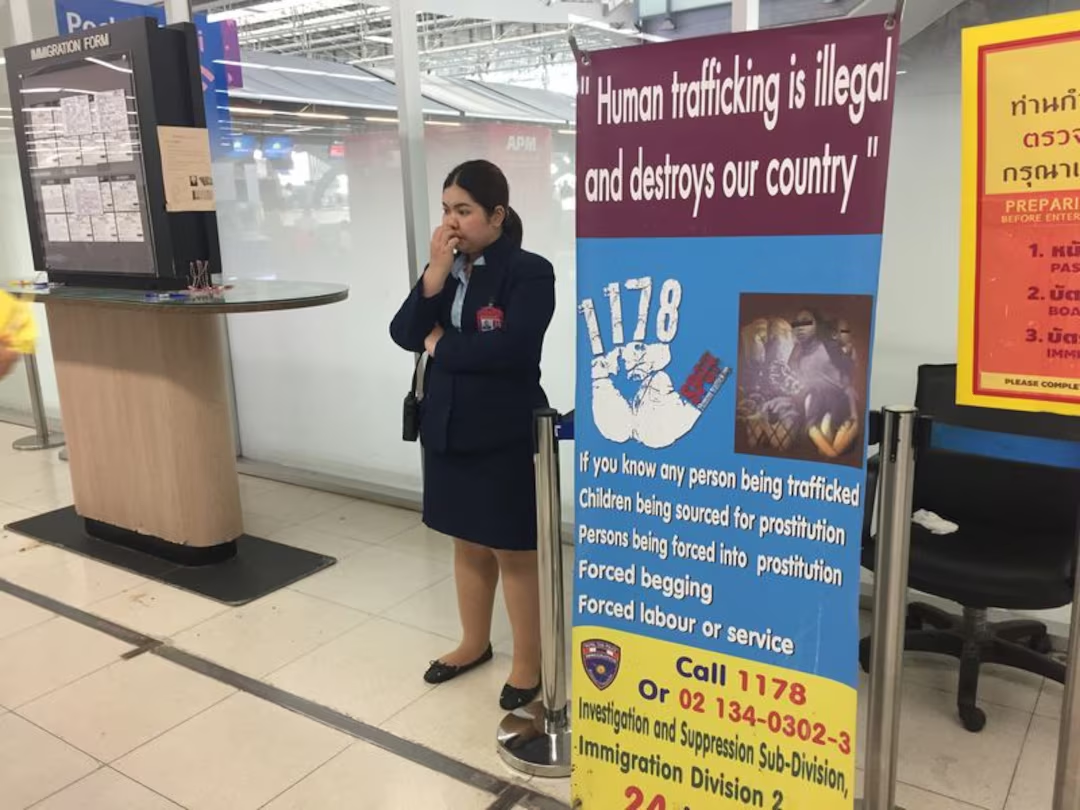
What People Should Do If They Suspect Human Trafficking in Thailand
Anyone can help stop trafficking. People do not need full proof before making a report. A reasonable concern is enough to alert authorities.
Here are the main ways to report it:
- Call official hotlines right away:
- 1300, Ministry of Social Development and Human Security (MSDHS) Social Assistance Centre, 24/7 and free
- 1191, Helpline for Human Trafficking, Anti-trafficking in Persons Division
- From overseas: +66 99 130 1300 or +66 1300
- Contact the police: Call 191 in an emergency, or go to the nearest police station.
People should also watch for common warning signs, such as:
- People locked inside houses, factories, or boats
- Workers who have not been paid or whose passports were taken
- Migrants burdened with heavy debts
- Groups marked with strings, tattoos, or matching clothes
- People who look hungry, frightened, or exhausted
- Overcrowded homes or vehicles at unusual hours
Reports can be made safely, and callers can remain anonymous. Hotlines are meant to protect the public and respond fast. In addition, NGOs such as NightLight International and local shelters can provide guidance and support for victims.
One phone call can matter. In this case, a report from nearby residents helped save 16 men and may lead police to a larger criminal network.
A Clear Warning, and a Reason to Stay Alert
The Hat Yai rescue is a success, but it also reveals the harsh truth behind migrant smuggling and human trafficking. Thai authorities showed they could respond quickly and treat the victims with care. Still, stopping this crime will take more than one rescue. Police, businesses, local communities, and ordinary residents all need to stay alert and report warning signs.
As Pol Sub-Lt Sommart said, the men found in the house were human beings like everyone else. With stronger enforcement, public awareness, and steady use of the country’s reporting systems, Thailand can move closer to a future where no one is starved, confined, or sold for profit.
The 16 Bangladeshi men are now going through legal procedures. Authorities hope their statements will help identify the traffickers and lead to arrests across the wider smuggling chain.