




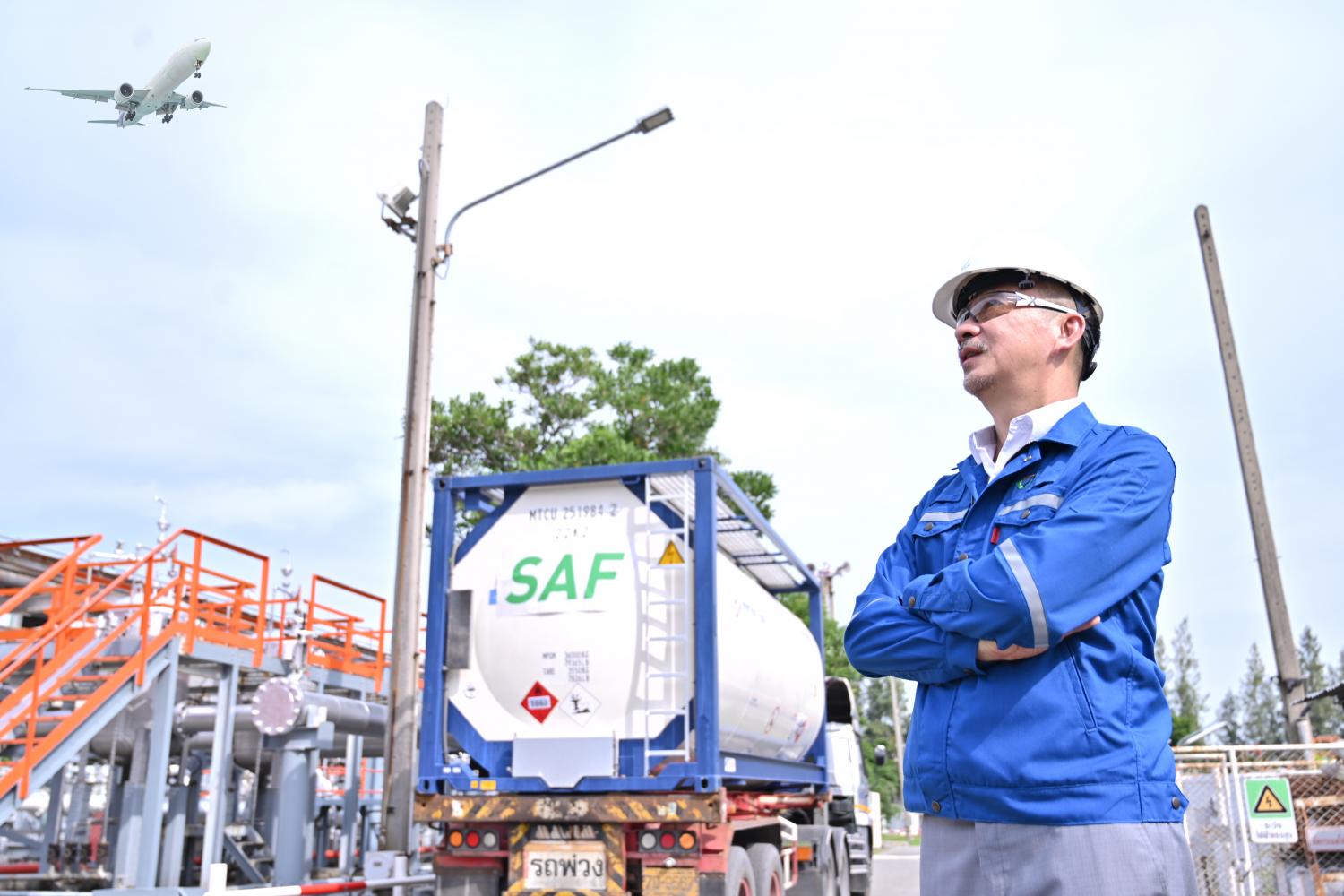
A factory is being built near Bangchak’s oil refinery in Bangkok’s Phra Khanong area to produce sustainable aviation fuel (SAF) from cooking oil. This project, backed by industrial authorities and private companies, aims to convert used cooking oil into SAF, a step towards cutting carbon emissions.
SAF is gaining traction in the aviation sector as it can reduce greenhouse gas emissions by up to 80% compared to traditional jet fuel, according to industry estimates. “Our goal is to create an eco-friendly industry that supports Thailand’s carbon neutrality targets,” said Industry Minister Akanat Promphan.
Thailand committed to becoming carbon neutral by 2050, a pledge made by former Prime Minister Prayut Chan-o-cha during the 26th UN Climate Change Conference in 2021.
Minister Akanat made these remarks at the signing of a memorandum of understanding (MoU) involving the Department of Industrial Promotion (DIPROM), Bangchak Corporation Plc, and four major food businesses — Central Group, Thai Beverage, Charoen Pokphand Foods, and Thai President Foods. The Thai Food Processors Association also joined the initiative.
DIPROM chief Natthiya Netayasubha said officials are studying SAF demand and exploring potential raw materials like palm oil and sugarcane molasses. The MoU focuses on building a reliable supply chain to collect enough used cooking oil for SAF production.
The agreement also includes public education efforts to highlight how recycling cooking oil can help lower carbon emissions.
Chaiwat Kovavisarach, president of Bangchak Corp, urged the government to encourage the use of diverse raw materials for SAF production and establish clear targets for the aviation industry.
Bangchak stated that the construction of its SAF facility near the Phra Khanong refinery is 93% finished. Once operational, the plant will produce 1 million litres of SAF a day, using used cooking oil as its primary input.
How Sustainable Aviation Fuel (SAF) is Made from Cooking Oil
Making aviation more sustainable is a big challenge, but using cooking oil to create fuel is proving to be a smart way to cut emissions. Here’s a look at how it’s made, its benefits, and the challenges involved.
Used cooking oil, typically from vegetable oils or animal fats, can be turned into Sustainable Aviation Fuel (SAF) through a process called hydroprocessing. The most common method, known as Hydrotreated Esters and Fatty Acids (HEFA), transforms the oil into a fuel that closely matches traditional jet fuel. This means it can be used in existing aircraft engines without any changes.
Here’s a step-by-step breakdown:
- Collection: Cooking oil is gathered from restaurants, homes, or food production facilities. This prevents it from being discarded as waste.
- Pretreatment: The oil is cleaned to remove food bits, water, and other impurities.
- Hydroprocessing: The treated oil is combined with hydrogen and passed over a catalyst. This process converts the oil’s triglycerides into hydrocarbons, which are the building blocks of jet fuel.
- Refining: The fuel is further distilled and blended to meet aviation industry standards.
- Certification: The final product is rigorously tested to ensure it can safely and efficiently power aircraft engines.
Why SAF from Cooking Oil Is Gaining Attention
Using SAF made from cooking oil has several clear benefits:
- Lower Emissions: It can cut lifecycle greenhouse gas emissions by up to 80% compared to fossil fuel, depending on how it’s produced.
- Waste Reuse: Turning used cooking oil into fuel reduces waste and promotes a circular economy.
- Easy Compatibility: Because it works with current engines and infrastructure, it simplifies the transition to greener aviation.
The Roadblocks
While promising, SAF from cooking oil isn’t without its challenges:
- Limited Supply: The global need for aviation fuel far outweighs the availability of used cooking oil, with an estimated 20-30 million tons of it worldwide compared to hundreds of millions of tons of annual fuel demand.
- High Costs: SAF currently costs 2-4 times more than traditional jet fuel, though scaling up production could help bring prices down.
- Feedstock Competition: Other industries, such as biodiesel for vehicles, also rely on the same raw materials, creating competition.
Real-World Applications
Major airlines like United, Delta, and KLM are already using SAF blends for some flights. In 2011, KLM made headlines with a flight from Amsterdam to Paris powered by a 50% blend of SAF derived from used cooking oil. Producers like Neste and World Energy are ramping up efforts, converting millions of litres of waste oil into jet fuel every year.
Looking Ahead
Cooking oil-based SAF is a strong step toward reducing aviation emissions, but it won’t solve the problem alone. Other sources, like algae, municipal waste, and captured CO2, will also play a role in decarbonizing the industry. Still, replacing even a portion of fossil fuel with SAF is a meaningful move towards sustainability.