




Just before dawn on January 31, 2026, Thai authorities stopped a group of Chinese nationals near the Thai Cambodian border in Chanthaburi. Later the same day, officers intercepted another man near a natural crossing. In total, seven Chinese nationals were caught in two separate incidents, along with a large haul of phones, SIM cards, written scripts, and documents that officials said looked forged. In one case, officers also found methamphetamine and drug paraphernalia.
This matters far beyond Chanthaburi. Chinese scammers and other cross-border fraud teams don’t need to be physically close to their targets. A single phone can reach hundreds of people a day. If a team carries dozens of phones and stacks of SIM cards, it points to scale.
It also raises the risk of account takeovers, stolen personal data, and money mule recruitment, problems that hit Bangkok, Chiang Mai, Pattaya, and anywhere else with a signal.
Key Takeaways
- What happened: Two border interceptions in Chanthaburi resulted in arrests and major seizures, including numerous phones and Cambodian SIM cards.
- Why now: Regional enforcement pressure can prompt scam networks to move personnel and equipment quickly.
- How to protect yourself: Basic habits (never sharing OTPs, calling back on official numbers, locking SIMs) cut risk quickly.
- What the seizures suggest: Scripts and forged documents point to organized fraud, not random travelers.
What happened in Chanthaburi, and why the items seized matter
Authorities reported two separate interceptions in the Pong Nam Ron district, a border area in Chanthaburi province.
In the first incident (reported around 5am), officers detained six Chinese nationals near the Ban Phak Kad border area after an alleged illegal entry. Reports said officers seized 59 mobile phones, written Chinese-language scripts, suspected forged official documents, and a notebook tied to finances. Officials said early questioning suggested links to a Cambodia-based call center gang.
In the second incident (reported around 10pm), officers stopped one Chinese national near a natural crossing. Reports said officers seized 26 mobile phones and 17 Cambodian SIM cards, along with methamphetamine and paraphernalia.
It’s tempting to treat a pile of phones as a petty crime detail, like someone carrying too much electronics. In practice, bulk devices and SIM cards are often used by call center scams in Thailand and neighboring countries. It can also indicate that a person is moving equipment for a group rather than acting alone.
Some details about charges and suspects appeared in local reporting, including a report that a Thai guide helped lead a group through a hidden trail. For a summary of that case, see The Nation’s report on the Chanthaburi arrests.
Dozens of phones and SIM cards are a scammer’s toolkit, not random luggage
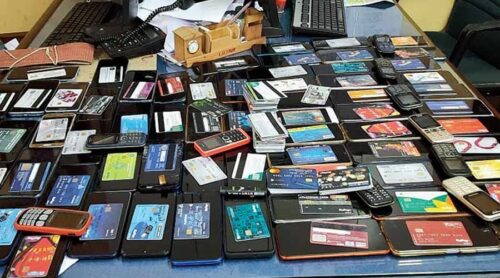
A normal traveler might carry one or two phones. Scam operators often carry many devices because each device can represent a different “identity.”
Many phones can mean:
- A separate device for each social account, chat app, or “customer service” persona.
- A way to keep scam conversations running at the same time without mixing messages.
- A quick way to reset if a number is reported or blocked.
SIM cards matter just as much. SIM card trafficking helps scammers cycle through numbers and appear local. A victim might ignore an unknown number but answer one that looks familiar or appears to be from within Thailand. Rotating numbers also weakens simple call blocking because the next call comes from a new line.
Law enforcement often treats bulk phones, SIM stacks, and chat scripts as evidence of organized fraud because they support repeat operations at scale. They are not proof of guilt on their own, but they are not typical personal items either.
Scripts, forged documents, and a money notebook point to organized fraud
A “script” is a prepared set of lines meant to guide a caller through a scam. It usually includes what to say first, how to build trust, how to create urgency, and how to handle resistance. Scripts also help managers ensure a consistent tone across many workers, even when they rotate in and out.
Scam scripts often center on impersonation. Common angles include:
- A bank or payments issue that “must be fixed today.”
- Police or government threats meant to scare someone into acting fast
- Delivery or parcel problems that push targets to click links
- Investment pitches that promise quick returns
Reports also mentioned suspected forged documents. Fake documents can help people pass identity checks, open accounts, rent rooms, or travel while hiding their real names. A handwritten money notebook can be even more revealing. It may track targets, transfers, commissions, or the flow of devices and SIM cards across a team.
Authorities have not publicly confirmed all details of how these items were used in the Chanthaburi case. Still, the combination of scripts, forged documents, and a ledger fits patterns seen in broader cyber scam investigations.
Why are more Chinese-linked scam operators trying to enter Thailand now
The Chanthaburi arrests did not happen in isolation. Across the region, enforcement actions have increased pressure on scam compounds, call centers, and the networks that support them. When pressure rises in one area, groups often shift people and equipment to new routes or try to hide in “safer” places while they reorganize.
Cambodia has drawn significant attention due to large-scale scam centers and alleged masterminds. A Reuters report carried by the Bangkok Post described Cambodia’s pledge to maintain enforcement after a major arrest, and also referenced the scale of regional scam operations. See Reuters coverage via Bangkok Post on Cambodia’s crackdown.
Thailand has also reported on scam hubs shifting locations. Thai authorities said they identified a new scam center in Cambodia following earlier crackdowns, underscoring that networks can relocate quickly. See Bangkok Post reporting on a newly found Cambodia scam center.
The result is not a neat story where arrests “end” scams. It’s often a moving target. Networks split into smaller groups, change routes, and rebuild.
Crackdowns in Cambodia and Myanmar can push scam networks to change routes fast
Recent reporting has also tied Thai arrests to scam groups linked to Myanmar. When authorities intensify pressure in known scam zones, some suspects attempt to enter Thailand through border towns and crossing points.
One late January report described arrests in Bangkok tied to scam networks after suspects allegedly fled a crackdown and entered via the Mae Sot route. See The Nation’s report on the Bangkok arrests tied to Myanmar networks (same outlet, separate incident coverage within the period).
This pattern shows up repeatedly in regional cases:
- People move first, often with phones, SIM cards, and login details.
- Groups use natural trails where formal checkpoints are tight.
- Equipment gets ditched, split across carriers, or moved at night.
None of this proves a single “master plan” behind the Chanthaburi arrests. It explains why border provinces can see sudden spikes in attempts to cross illegally, linked to cyber scam gangs.
Illegal border crossings and visa overstays are two different ways scammers may try to blend in
Two common ways scam-linked operators may try to operate in Thailand are illegal entry and visa overstay.
Illegal border-crossing cases in Thailand often involve natural trails, short-distance guides, and rapid movement away from the border. Policing focuses on patrols, checkpoints, and local intelligence in border districts.
Visa overstays look different. A person enters legally but remains longer than permitted. That shifts enforcement toward immigration checks, hotel records, and workplace inspections.
For residents and businesses, the impact can look similar either way. More scam calls, more fake profiles, and more attempts to recruit Thai bank accounts for laundering. The entry route matters most for how police find them, not for how the fraud reaches victims.
How call-center scam teams work, and the real risks for people in Thailand
A call center scam is not just a persuasive caller. It is often a pipeline with roles and routines. Some people handle first contact. Others handle “closing,” which means pushing for transfers. Others manage devices, SIM cards, and accounts.
At a high level, many operations follow this structure:
- Get lead lists (from stolen data, bought lists, scraped profiles, or past victims).
- Make contact by phone, SMS, or social apps.
- Move the target to a chat platform for steady pressure and control.
- Disburse funds via bank transfers, QR payments, or crypto.
- Cycle numbers and accounts, then repeat.
It’s also important to note a human risk behind these crimes. Regional investigations have shown that some scam workers may be coerced or trafficked. That is a broader pattern reported in international coverage, but it has not been confirmed in the Chanthaburi case. A clear explainer on why these networks are hard to shut down is available from PBS NewsHour’s AP report on Southeast Asia scam operations.
From first contact to money transfer, the simple playbook behind most phone and chat scams
Most phone and chat scams rely on a few repeat tactics.
The hook is often urgency or temptation. It may be “your account has a problem,” or “you’ve won,” or “a parcel is stuck.”
Trust building comes next. Scammers use official-sounding language, stolen logos, or fake caller IDs. They may claim they are from a bank, police unit, or delivery company.
Pressure is where many people get trapped. Red-flag lines include “keep this secret,” “don’t tell your family,” or “act in the next 10 minutes.” Another common move is trying to shift the conversation to LINE or WhatsApp.
Payment and exit come last. The target is pushed to transfer funds, scan a QR code, or “verify” identity with an OTP. Then the number changes, the account disappears, and the same team moves on.
What this means for residents, workers, and small businesses
For individuals, the risk is not limited to losing cash. Many cases start with data theft and end with long cleanups.
Common harms include attempts at identity theft, takeover of messaging accounts, and compromise of bank apps. Small businesses face invoice fraud and fake supplier changes. Front desk staff and sales teams are also targeted by fake customer service calls designed to steal logins or trick staff into paying into the wrong account.
A short red-flag checklist for Thailand-based readers:
- Calls that claim to be from an agency, but demand fast action
- Requests for OTPs, PINs, or screen sharing
- “Updated” QR payment codes sent by chat
- Messages that push app installs outside official stores
- Job offers that require opening or “renting” a bank account
How to protect yourself from Chinese scammers and other call-center fraud
Good security is not about being paranoid. It’s like locking doors. Most thieves move on when it’s hard.
A quick safety checklist you can use today
- Never share OTP codes, PINs, or banking passwords, not even with “staff.”
- Hang up, then call back using an official number from a bank card, bank app, or official website.
- Don’t click links from unknown senders, even if the message looks local.
- Verify delivery issues inside the official delivery app, not by SMS links.
- Lock your SIM with a SIM PIN to reduce SIM-swap risk.
- Use a strong screen lock (6-digit PIN or longer) and enable biometric unlock.
- Enable 2FA for email and social accounts, as email resets everything else.
- Review app permissions, remove apps that can read SMS or “accessibility” without a clear need.
- Limit what you share on social media (birthdate, phone number, workplace, travel plans).
- Treat urgent pressure as a warning sign. Real agencies allow verification.
- Don’t send ID photos to strangers on chat apps.
- Use a separate email address for banking and government logins.
- Warn older relatives, since scammers often target people who answer unknown calls.
- Report suspicious numbers and accounts inside the platform, and to your mobile carrier if needed.
If you already shared info or sent money, do these steps in order
- Stop contact right away. Don’t argue, don’t “negotiate,” just end it.
- Screenshot and save evidence (numbers, chat logs, bank details, transaction slips).
- Call your bank immediately and request that any pending transfers be frozen or recalled, if possible.
- Change your email password first, then your banking and social media accounts.
- Sign out of other sessions (most apps show active devices).
- If you shared OTPs or your SIM appears compromised, contact your carrier to secure or replace it.
- Enable 2FA wherever possible, and update recovery options.
- File a police report and provide the evidence you saved.
- Monitor accounts for days and weeks, including small “test” charges or login alerts.
- Warn contacts if your LINE, WhatsApp, or Facebook may be used to target them.
Conclusion
The Chanthaburi border arrests show how fast scam networks can move people and equipment when pressure rises nearby. Phones, SIM cards, scripts, and forged documents indicate organized activity, not chance travel. The good news is that simple habits, like refusing to share OTPs and calling back on official numbers, still block many call center scams in Thailand. The next time a caller tries to rush a decision, treat speed as the warning sign it is.
Sources
- Bangkok Post report on Chanthaburi arrests (Jan 31, 2026)
- The Nation report on Chanthaburi suspects and a Thai guide
- Reuters coverage via Bangkok Post on Cambodia’s scam crackdown
- AP explainer via PBS NewsHour on why scam hubs persist
This article is for awareness. It is not legal advice.
FAQ
Are Chinese scammers the only groups running call center scams in Thailand?
No. Cases across Southeast Asia involve many nationalities and mixed networks. The Chanthaburi arrests highlight Chinese-linked suspects, but the broader scam economy is multinational.
Why do scammers carry so many phones?
Bulk phones enable a team to run multiple identities simultaneously, rotate numbers after reports, and keep chats active across multiple targets.
Can a scammer fake a Thai phone number?
Some scams use spoofing or internet calling tools to appear local. That’s why verification matters more than the displayed number.
What’s the single biggest red flag in a scam call?
Requests for OTPs, PINs, or secrecy are major warnings. Real banks and agencies do not need an OTP spoken aloud to “secure” an account.
Should businesses do anything different than individuals?
Yes. Businesses should confirm payment changes using a second channel, tighten access to invoices and customer data, and train staff to refuse OTP and remote access requests.
SEE ALSO: Police Seize 1.2 Million Meth Pills at Chiang Rai Bus Terminal, 2 Men Arrested