


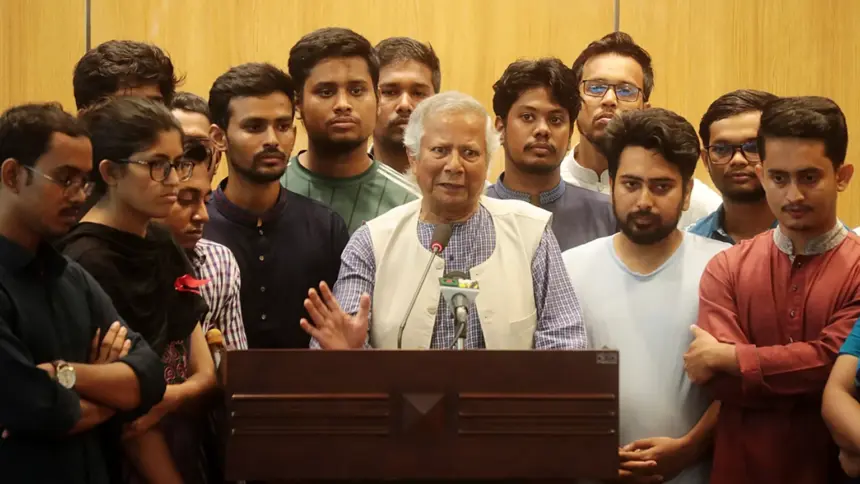
DHAKA – Bangladesh is set to hold its 13th parliamentary election and a referendum on the July National Charter on Thursday, February 12, 2026. Ahead of the vote, interim government chief Professor Muhammad Yunus urged all candidates to put the country first, no matter who wins or loses.
Speaking to a nation of more than 170 million people, Nobel Peace Prize winner Dr. Yunus said that winning and losing are both part of democracy. He asked candidates to accept the results and then work together to build a new Bangladesh that is fair, democratic, and inclusive.
He also encouraged voters to take part with energy and a positive spirit. Prof. Yunus gave a special message to women and young voters, many of whom missed chances to vote in the past. He asked them to step forward and show their support for a fresh start.
Voting Schedule, Campaign Rules, and Public Holidays
Campaigning began on January 22 and ended on February 10 at 7:30 pm. Election authorities have banned public rallies and processions for 96 hours before and after election day.
Polling on Thursday will run from 7:30 am to 4:30 pm.
A two-day government-declared general holiday started on February 11. Friday and Saturday (February 13 and 14) are also weekly holidays in Bangladesh.
International Election Observers Arrive in Dhaka
Nearly 400 foreign election observers have arrived in Bangladesh, including about 200 journalists from 45 international media outlets. That is a sharp rise compared with the 12th parliamentary elections held on January 7, 2024, when there were 158 foreign observers and only a small number of foreign media workers.
The interim government invited many countries to send observers, including India, Nepal, Australia, Brazil, Canada, Egypt, France, Kuwait, Morocco, Nigeria, and Romania.
Several international organizations also agreed to send election observer teams. These include the European Union, the Commonwealth Secretariat, SAARC Human Rights Foundation, the Asian Network for Free Elections, the Organisation of Islamic Cooperation, SNAS Africa, the Polish Institute of International Affairs, and US-based groups such as the International Republican Institute and the National Democratic Institute.
Awami League Barred as Bangladesh Heads Back to the Polls
Sheikh Hasina’s Awami League has been barred from taking part in the election. That leaves more room for its main rival, the Bangladesh Nationalist Party (BNP), to compete.
Bangladesh last held a general election in January 2024. After a student-led mass uprising toppled Hasina’s government about six months later, the country moved toward new polls under an interim administration.
CPJ Urges Political Parties to Protect Press Freedom
The New York-based Committee to Protect Journalists (CPJ) has called on major Bangladeshi political parties to protect journalists and defend press freedom during the election period.
In a statement released ahead of the national vote, CPJ urged urgent action to keep journalists safe. The group sent separate letters to leaders of the BNP, Jamaat-e-Islami Bangladesh, the student-led National Citizen Party, and the Jatiya Party. CPJ asked them to make public commitments to protect journalists by rejecting violence, intimidation, and the misuse of criminal or national-security laws.
Awami League, led by the ousted prime minister Sheikh Hasina, remains barred from the election process.
Rising Risks for Journalists Before the Vote
CPJ said threats against journalists increased in the run-up to the election. The group pointed to ongoing cases where reporters have been jailed on unverified charges, along with long-standing impunity for attacks on media workers. CPJ warned that this has fed a climate of fear and self-censorship.
In its letter to BNP chair Tarique Rahman, CPJ stressed that a free press is central to an election’s credibility. Journalists help voters by reporting facts, holding leaders accountable, and supporting public debate. CPJ said the BNP could strengthen public trust by backing this basic democratic principle.
CPJ also said Bangladesh remains one of Asia’s leading jailers of journalists. It reported that five journalists are currently in prison on murder and national-security charges that appear linked to their reporting and perceived political ties. CPJ added that impunity remains high in cases involving journalist killings, with attacks and threats often going uninvestigated or unpunished.
CPJ’s Kunal Majumder on Harassment and Hate Campaigns
CPJ Asia-Pacific program coordinator Kunal Majumder told this writer that dangers for Bangladeshi journalists rose sharply before the election. He cited mob attacks on the offices of The Daily Star and Prothom Alo in December 2025. He also said many reporters, editors, and commentators faced heavier online harassment, including coordinated hate campaigns tied to political polarization.
Majumder said this type of abuse was encouraged under the previous Hasina government to pressure journalists. He added that all continues despite a change in leadership and promises of media reforms. In his view, real reform means ending past practices, not repeating them. He also called for removing barriers to access official information, press briefings, and public records, which can limit fair and accurate election coverage.
Press Groups Cite Attacks and Demand Accountability
The Geneva-based Press Emblem Campaign (PEC) condemned the killing of Bengali Hindu journalist Rana Pratap Bairagi (45) in the Jessore area on January 5. PEC called for a full investigation to identify the attackers and punish them under the law.
In a separate incident, at least 12 Bangladeshi journalists were injured during an attack by extortionists in Narsingdi on January 26. PEC chairman Blaise Lempen denounced the violence and urged authorities to bring the group to justice.
Bangladesh Editors’ Council also pressed for stronger protections for journalists during the election period. The council said working reporters often face threats while gathering information during elections. It urged the interim government, the Election Commission, and law enforcement agencies to take effective steps to protect media workers.
BNP Seen as Front-Runner, Tarique Rahman in Focus
Some Western media reports describe the BNP-led alliance as the leading contender in the election. Many also present BNP chairman Tarique Rahman as a likely next prime minister.
Rahman returned to Bangladesh on December 25 after 17 years of self-imposed exile in the United Kingdom. Large crowds welcomed him home. He is the son of former President Ziaur Rahman and former Prime Minister Khaleda Zia. Addressing supporters, he used the line “I have a plan,” echoing Martin Luther King Jr.’s famous 1963 “I Have a Dream” speech.
Khaleda Zia, Bangladesh’s first female head of government, died on December 30 at age 80. After her death, Rahman received a wave of condolences, and the government declared three days of state mourning.
Global Media Forecasts and Rahman’s Campaign Promises
The US-based magazine The Diplomat recently published an analysis suggesting Rahman is on track to become Bangladesh’s next prime minister. Time magazine and Bloomberg also cited opinion polls that place him ahead in the race. The UK weekly The Economist previously projected that the 60-year-old political heir could become the next head of government in Dhaka.
At election rallies, Rahman has promised to focus on job creation, technical education, information technology, and sports. He has also spoken about building a new Bangladesh based on trust and respect, where people live peacefully under the rule of law and with freedom of speech.