


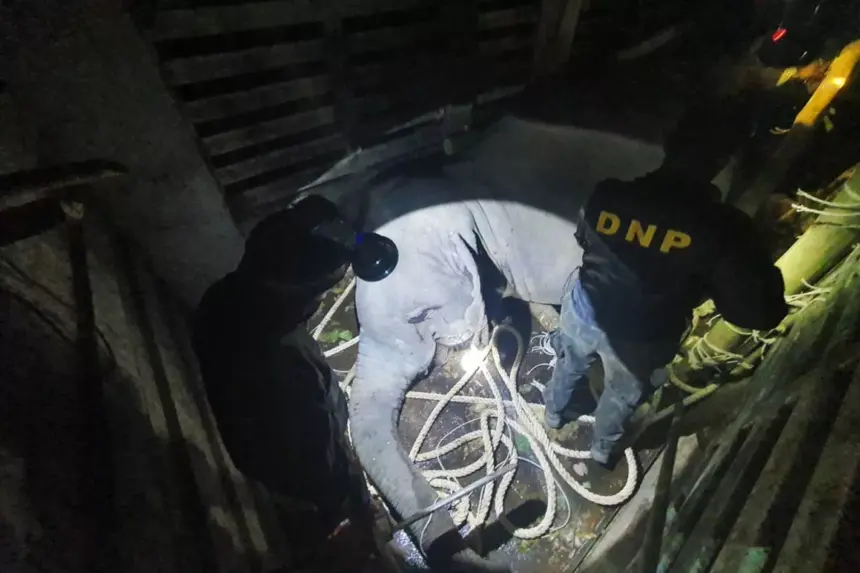
KHON KAEN – A young wild elephant has died during a state-led relocation to from Khon Kaen back to the Phu Luang Wildlife Sanctuary in Loei , upsetting conservation groups and nearby communities.
The male, thought to be 15 to 20 years old, was known locally as Seedor Hu Pub, a name linked to his folded ear, collapsed and died only minutes after transport began on 4 February 2026.
More than 200 officials, vets, and wildlife specialists from the Department of National Parks, Wildlife and Plant Conservation (DNP) took part in the operation. The plan was to move the elephant from farmland in Khon Kaen back to a restoration and rehab area inside Phu Luang Wildlife Sanctuary in Loei.
The relocation followed an order from the Khon Kaen Administrative Court, after complaints that the elephant had caused repeated disruption and was connected to the deaths of two villagers in 2025.
Early information from DNP staff suggests aspiration of food as the likely cause, meaning the animal may have choked or inhaled regurgitated material. A full necropsy is taking place to confirm the exact cause. The DNP has issued a formal apology and started an urgent inquiry, saying it will make the process clear and accountable.
The incident shows how hard it is to protect people while also protecting wildlife in Thailand’s rural areas.
Habitat Encroachment Pushing Elephants to the Edge
This elephant’s story reflects a wider problem facing Thailand’s wild Asian elephants. As forests shrink and break apart, elephants often leave protected land to find food and water. That brings them closer to villages and farms, where conflict can turn deadly.
Across parts of the north-east, including Loei and Khon Kaen, forest areas have been cleared for crops such as cassava, sugarcane, rubber, and oil palm. These fields are easy food. Elephants raid crops, break fences, and sometimes hurt or kill people when residents try to chase them off. Phu Luang Wildlife Sanctuary still protects large tracts of mountainous forest, but pressure around its edges has grown over time. When complaints pile up, communities often turn to petitions and court action. Relocations then become a go-to response, even though they carry real risks.
Illegal logging also adds to the strain. Logging in natural forests has been banned since 1989, but some areas still see unlawful cutting. Along with roads, new buildings, and a growing population, the loss of habitat has made human-elephant conflict (HEC) more common across the country.
Recent estimates offer a mixed outlook. DNP figures and conservation reports from 2025 to 2026 put Thailand’s wild elephant population at about 3,000 to 4,400. Some sources place the number at roughly 4,000 to 4,422 across 91 protected areas, including national parks and wildlife sanctuaries. In some regions, numbers have risen. In the east, for example, the population is reported to have grown from 334 in 2015 to almost 800 in 2025, with annual growth around 8 percent in certain zones.
Growth can be good news, but it also raises pressure where forest space is limited. The species is still endangered, with that status in place since 1986. Habitat loss, poaching, and HEC continue to take a toll on elephants and people.
Sanctuaries and Rehabilitation Work
Thailand’s protected areas remain the backbone of elephant survival. Important sites include Khao Yai National Park, Thung Yai and Huai Kha Khaeng Wildlife Sanctuaries, Kaeng Krachan National Park, and Phu Luang Wildlife Sanctuary. Phu Luang also plays a role as a refuge and rehab base for elephants linked to conflict.
Projects such as the Phu Luang Wild Elephant Food Restoration Project, where this elephant was being taken, are designed to support recovery. Work can include extra food, help with behaviour adjustment, and steps to prepare animals for life away from farms and villages, under royal initiatives.
Outside state-run sites, ethical private sanctuaries also play a part. Elephant Nature Park in Chiang Mai is known for rescue and rehab, with no-contact tourism and a focus on keeping elephants free from chains and harsh labour. Over time, the focus has shifted from the old logging era, when elephants were used as workers, towards care and conservation.
Wild Elephant Protection Plans
The DNP says it is pushing several approaches to reduce conflict and protect wild elephants. These include tighter enforcement in protected areas using smart patrol systems, wildlife corridors to reconnect broken habitats, and community programmes that support coexistence.
In early 2026, authorities also announced a pilot contraceptive vaccine programme for female wild elephants in high-density areas, including parts of eastern Thailand. The goal is to manage growth in a controlled way and ease pressure linked to HEC. Anti-poaching patrols, habitat repair, and compensation schemes for crop damage are also in place.
Even with these steps, relocation remains one of the riskiest tools. This death is a stark example of what can go wrong. Many experts want more study into safer translocation methods, larger and better-connected protected zones, and stronger local involvement so people and elephants can share space with fewer clashes.
The loss of this young bull from Phu Luang is a sobering reminder of what’s at stake. Thailand is trying to balance development with wildlife protection, and elephants sit at the centre of that challenge. From farmers adapting how they plant and protect crops, to policymakers expanding green corridors, lasting progress depends on steady effort from everyone.
Elephants like Sido Hoo-pub should be able to live in healthy forests, away from roads and fields. With long-term commitment, Thailand can give its wild elephants a real chance to survive for generations.