


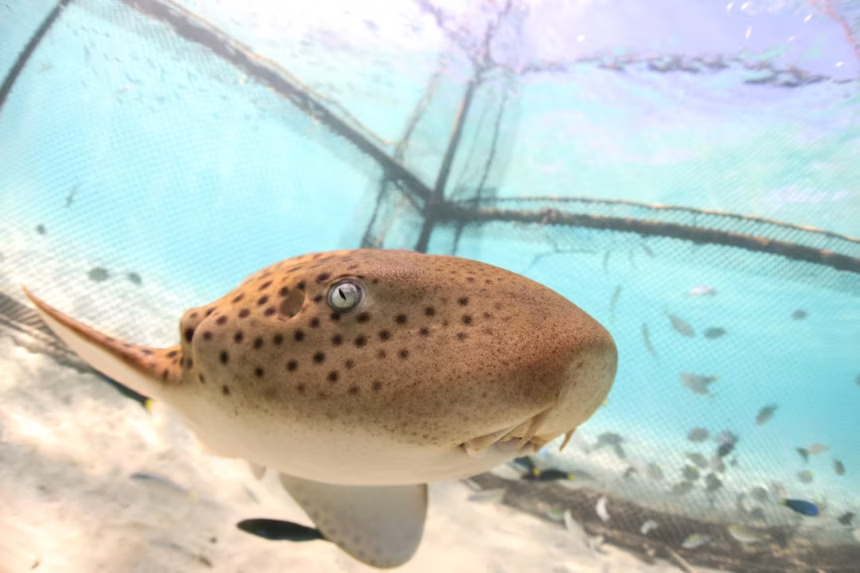
In the Andaman Sea, a spotted shark is getting a second chance. Recent reports describe leopard sharks released Thailand as part of a plan to rebuild wild Indo-Pacific leopard sharks (Stegostoma tigrinum) near the Phuket area. The sharks were bred and raised in human care, then checked by specialists, tagged for tracking, and released near Maiton Island. This matters for reefs and for the people who depend on healthy seas, from fishers to dive guides. It also raises practical questions: what caused the decline, how scientists track the sharks, and what the public can do that actually helps.
What happened (the release)
Thailand’s latest release involved captive-bred juvenile Indo-Pacific leopard sharks moved from controlled care into open water in the Andaman Sea, near Maiton Island off Phuket. The goal is simple to state, but hard to achieve: rebuild a wild population of a species that has become rare.
Based on public updates from conservation groups and partner statements, the process followed a careful routine. Teams prepared young sharks that were born in aquarium conditions, raised as juveniles, and then readied for a life where food, currents, and risks are real. Before release, experts checked each shark’s health and fitness, then fitted tracking tags so researchers could monitor early survival and movement.
Reports have described this effort as Thailand’s first species-focused “rewilding” push for Indo-Pacific leopard sharks, tied to the StAR (Stegostoma tigrinum Augmentation and Recovery) Project Thailand, with government and non-profit partners involved. A January 2026 Reuters report highlighted the releases as part of a conservation drive aimed at restoring wild numbers in the Phuket area of the Andaman Sea.
From tank to tag to ocean: the basic steps
The release story makes more sense when broken into steps that people can picture:
- Breeding and raising juveniles in an aquarium setting
- Transport to the release team and site under controlled conditions
- Vet checks, measuring, and a quick fitness assessment
- Fitting an acoustic tracking tag (a device that “pings” so receivers can detect where the shark goes)
- Release into open water, followed by monitoring over weeks and months
For more background on the program’s public updates and recent releases, see WildAid’s report on Thailand’s first leopard shark rewilding releases.
Where it happened and why that spot matters
The release area is described as the Andaman Sea near Maiton Island (often referenced through Maiton Resort), off Phuket’s southeast. In plain terms, it’s a mix of reef and sandy seabed habitats, the kind of place leopard sharks use for feeding and resting.
A nearshore island site also makes monitoring easier in the early period. Researchers can reach the area by boat without long transits, and dive teams can check nearby reefs for signs of the sharks. That access can matter when a juvenile animal faces its first storms, new predators, and changing currents.
Why leopard sharks matter for reefs, fish, and local tourism
Leopard sharks aren’t a movie monster. They are part of the daily work of a reef ecosystem, moving slowly over the seabed and feeding on smaller animals. When they disappear, the system can shift in ways that are hard to see at first, then hard to fix.
A reef is like a busy market. Many species have “jobs” that keep things in balance. Indo-Pacific leopard sharks help by feeding on bottom-dwelling prey, which can support a healthier mix of small animals and fish. That balance helps reefs function, and reefs support coastal food supply and tourism.
There’s also a human link. Phuket, Phang Nga, and Krabi rely on marine tourism. Visitors come for coral, clear water, and wildlife. Responsible encounters can support local businesses without taking anything from the sea.
For context on the formal launch and partner structure of StAR Project Thailand, ReShark’s announcement offers details in its StAR Project Thailand launch statement.
A gentle shark with a real job in the ecosystem
Indo-Pacific leopard sharks tend to feed on small animals on or near the seabed. That means they spend time over sand flats and around reef edges where food is available.
The cause-and-effect is straightforward:
- Leopard sharks help keep some prey species in check
- That supports a more balanced seabed community
- A balanced seabed supports reef life and fish diversity nearby
They are also generally considered low risk to people when left alone. Most diver encounters involve a calm animal resting on sand or moving slowly across the bottom.
Why their return can be good news for Phuket-area marine tourism
Wildlife sightings help dive operators plan trips and build stable, respectful experiences. A known chance of seeing a leopard shark can support guides, boats, and local jobs without pressuring fragile reefs with constant novelty.
The warning is just as important. When tourists chase sharks for photos, crowd them, or block their path, the animal may leave the area. That doesn’t just harm the shark. It makes sightings less reliable for everyone, and it teaches animals that humans mean stress.
Why leopard sharks disappeared from many Thai waters
The decline wasn’t caused by one thing. It’s the combined weight of fishing pressure, accidental capture, and habitat decline in busy coastal zones. Even when leopard sharks aren’t a target species, they can still die in fishing gear set for other animals.
Globally, the Indo-Pacific leopard shark is listed as Endangered on the IUCN Red List. In Thailand, the species has received stronger protection in recent years through national rules and enforcement efforts. Protection helps, but it doesn’t reverse decades of decline overnight.
Public reporting on the rewilding project has repeatedly highlighted the same drivers: bycatch, overfishing, and damaged habitats near reefs and coastal waters. Bangkok Post coverage provides local context on the project’s goals and pressures in its report on the Phuket leopard shark rewilding launch.
Bycatch: when sharks get caught by accident
Bycatch is simple in concept and harsh in impact. Nets, lines, and traps set for other fish can also catch sharks. When a shark gets stuck in the gear, it can be injured, stressed, or unable to breathe properly.
Even if the animal is released, survival can be low. That’s one reason protected status is only one part of the solution. Reducing accidental capture matters just as much.
Overfishing and habitat decline: fewer safe places to feed and rest
Fishing pressure reduces populations over time, especially for species that don’t reproduce as fast as many reef fish. At the same time, habitat decline makes survival harder. Reef damage, anchor scars, coastal construction, and pollution can reduce food and shelter.
This is why rebuilding will take time, even with releases. Adding young sharks back to the sea helps, but only if the sea can support them.
How the program works (from aquarium to ocean) and how success is measured
The StAR Project Thailand model is built like a pipeline, moving sharks through stages and checking results at each step. Reports and partner releases describe a multi-organization effort involving Thailand’s Department of Marine and Coastal Resources (DMCR) and conservation partners, with juvenile sharks raised in care and prepared for release.
Success is not just “a shark swam away.” Scientists look for signs that released sharks survive, use suitable habitat, and avoid high-risk areas. Over the longer term, they want evidence of a self-sustaining population, including signs of breeding and wild-born sharks.
ReShark’s release note also outlines the tagging and release milestone in its first releases press statement.
Sea pen training: helping young sharks learn the wild
A key step described by project partners is pre-release conditioning in sea pens. A sea pen is a large, enclosed area in the ocean where a young shark can adjust to real seawater, tides, changing light, and natural sounds, while still having some protection.
This period can help sharks build strength and adapt their behavior before they face full exposure to predators and fishing gear. It also gives teams time to confirm each shark is feeding and behaving normally before release.
Acoustic tracking: how researchers know where sharks go
Acoustic tracking is one of the most practical tools in coastal shark work. The shark carries a small acoustic transmitter. Underwater receivers, sometimes described as listening stations, detect those signals when the shark passes nearby.
This turns scattered sightings into usable data. It can show:
- Which reefs and sand areas the sharks use most
- How far they travel in the first weeks
- Whether they return to certain habitats
- When they enter risk zones, like heavily fished corridors
Tracking can also guide protection decisions. If data shows young sharks clustering near a reef, agencies and partners can focus patrols, reduce disturbance, or adjust local management in that area.
For a broader description of the rewilding effort and early releases, WildAid also summarizes the approach in its update on Indo-Pacific leopard shark releases in Thailand.
What the numbers suggest, and why a comeback is slow
The number of leopard sharks in the Andaman Sea is hard to pin down. Reports often describe the remaining wild population as very small, but they also note there is no single exact count. Estimates vary because surveys cover limited areas, methods differ, and sharks move between reefs and sand habitats.
Recent public updates on the rewilding program reported releases in 2025, including four sharks released in December and three earlier in the year. Even with more sightings, that doesn’t equal full recovery.
A comeback is slow for a basic reason: sharks generally grow more slowly and produce fewer young than many fish. Rebuilding a population can take years, sometimes longer, even when threats are reduced and the habitat improves. The most meaningful sign of recovery will not be a single viral dive video. It will provide evidence that sharks survive in the long term and that wild-born juveniles are beginning to appear.
What divers and tourists should do (and not do) if they see a leopard shark
Leopard sharks have become a symbol of hope for many Andaman Sea divers. That attention can help, but it can also backfire if it turns into crowding and harassment underwater.
The aim is simple: observe without changing the animal’s behavior. If a shark has to flee, it’s not a good encounter. It’s a disturbance.
Spotting reports can also help conservation when they’re collected in a structured way. WildAid has promoted “Spot the Leopard Shark – Thailand” as a citizen-science initiative for divers and snorkelers. People should follow official guidance from DMCR and project partners on how and where to submit sightings.
A quick responsible wildlife checklist for your next dive
Do:
- Keep a respectful distance; several meters is a practical rule of thumb
- Stay low and calm, and let the shark choose its path
- Watch your fins and buoyancy, avoid kicking up sand over the animal
- Choose operators who brief guests on wildlife rules and reef care
Don’t:
- Don’t touch, grab, ride, or block the shark
- Don’t feed wildlife, it changes behavior and raises risk
- Don’t chase for photos, if the shark swims off, let it go
- Don’t crowd the animal, one group at a time is better
How to report a sighting in a way that helps science
A useful report is more than “I saw one.” It includes details that let researchers compare sightings over time.
If conditions allow, record:
- A clear photo showing the body pattern (spots help identify individuals)
- Date and time
- Location (site name and GPS if available)
- Depth and habitat (sand, reef edge, coral bommies)
Share sightings through “Spot the Leopard Shark – Thailand” or official DMCR and partner reporting channels used by the project. Avoid disturbing any underwater receivers or approaching a shark to inspect a tag.
FAQ: quick answers about leopard sharks in Thailand
Are leopard sharks dangerous to humans?
They are generally considered low risk to people when left alone. Most encounters are calm, and bites are rare. Treat them as wildlife, keep distance, and don’t touch.
Where can you see leopard sharks in Thailand?
Sightings are most associated with the Andaman Sea, including areas around Phuket, Phang Nga, and nearby islands. Exact locations change with season, habitat, and human activity.
Why release captive-bred sharks?
Releases can help rebuild wild numbers where populations are very low. It’s used alongside protection, habitat care, and bycatch reduction, not as a stand-alone fix.
How are sharks tracked after release?
Many are fitted with acoustic tags. Underwater receivers detect the tag signal when the shark passes, helping researchers map movements and habitat use.
What threats still remain?
Bycatch, fishing pressure, habitat decline, and coastal impacts remain key risks. Disturbance from tourism can also add stress in popular dive sites.
How can the public help?
Support responsible operators, follow wildlife rules, report sightings through official channels, and back reef protection work in local communities.
Does seeing more sharks mean the population is back?
Not always. More sightings can come from better reporting or a few sharks using a popular site. True recovery needs long-term survival and evidence of breeding.
What should I do if I see a tagged shark?
Keep a distance and don’t try to photograph the tag up close. A normal body photo and a good location record are safer and more useful.
Conclusion
Thailand’s leopard shark conservation push is a test of patience and good practice. Success will look like released sharks surviving, using healthy reef and sand habitats, and eventually more wild-born leopard sharks showing up in the Andaman Sea. People can support that path through respectful tourism, careful reporting of sightings, and public backing for reef protection and bycatch reduction.
Sources and reporting notes
Confirmed through project and partner statements: captive breeding and rearing, pre-release sea pen conditioning, acoustic tagging and monitoring, and DMCR involvement in marine conservation and project coordination (as described by StAR Project Thailand partners). Public partner information is available through materials from WildAid and ReShark, including the StAR Project Thailand launch statement.
Reported: Reuters initial reporting (January 26, 2026) described the releases as part of Thailand’s conservation push. Public updates around late 2025 described releases near Maiton Island and ongoing monitoring results; estimates about how many leopard sharks remain in the Andaman Sea are presented as reported and uncertain because survey coverage and methods vary.
SEE ALSO: Thailand Visa-Free for Indians: Rules, Documents, and 2026 Update