



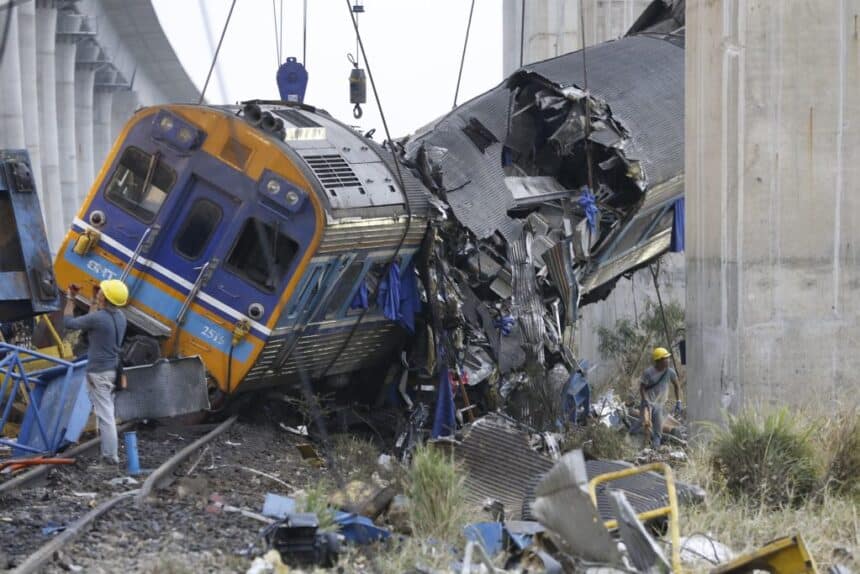
BANGKOK – A major construction crane collapsed onto a moving passenger train in northeastern Thailand yesterday, leaving dozens dead and many more injured. The crash happened at about 9:00 a.m. local time in Sikhio district, Nakhon Ratchasima province, around 230 kilometres north-east of Bangkok.
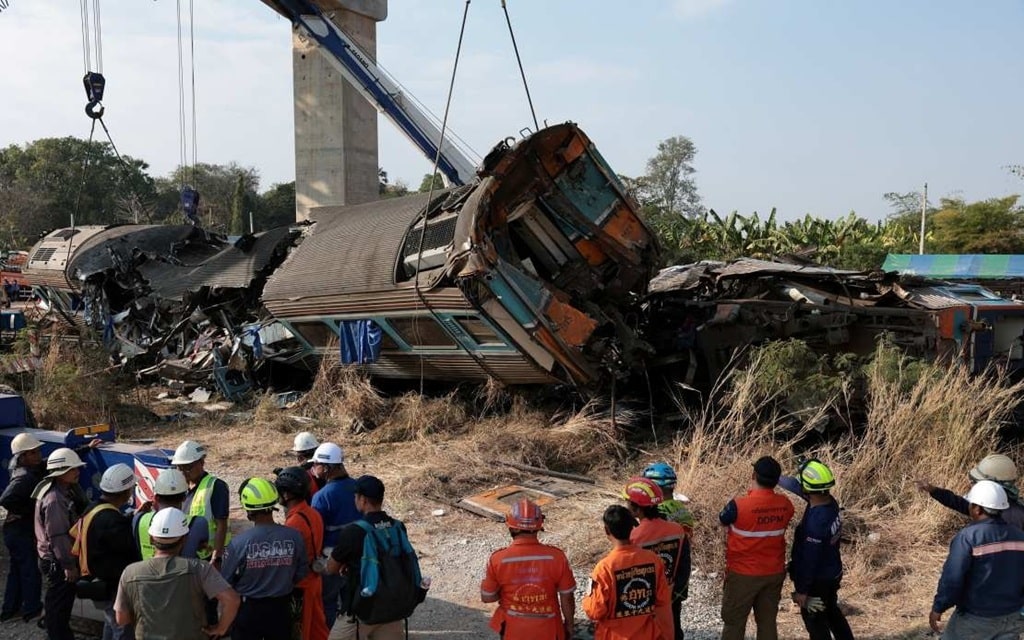
The crane was being used on the Bangkok to Nong Khai high-speed rail project. It fell from an elevated work area straight onto Special Express Train No. 21, travelling from Bangkok to Ubon Ratchathani. The strike hit the middle carriage, tore it apart, and forced several coaches off the tracks. One carriage briefly caught fire.
Rescue crews rushed in with hydraulic cutters and heavy machinery. They worked through mangled metal and scattered debris to reach passengers trapped inside. Officials say at least 32 people have died and 66 have been injured, with seven in critical condition.
The injured include a one-year-old child and an 85-year-old passenger. The train was carrying about 195 passengers and crew, including students, workers, and families heading into the Isan region for day-to-day travel and personal commitments.
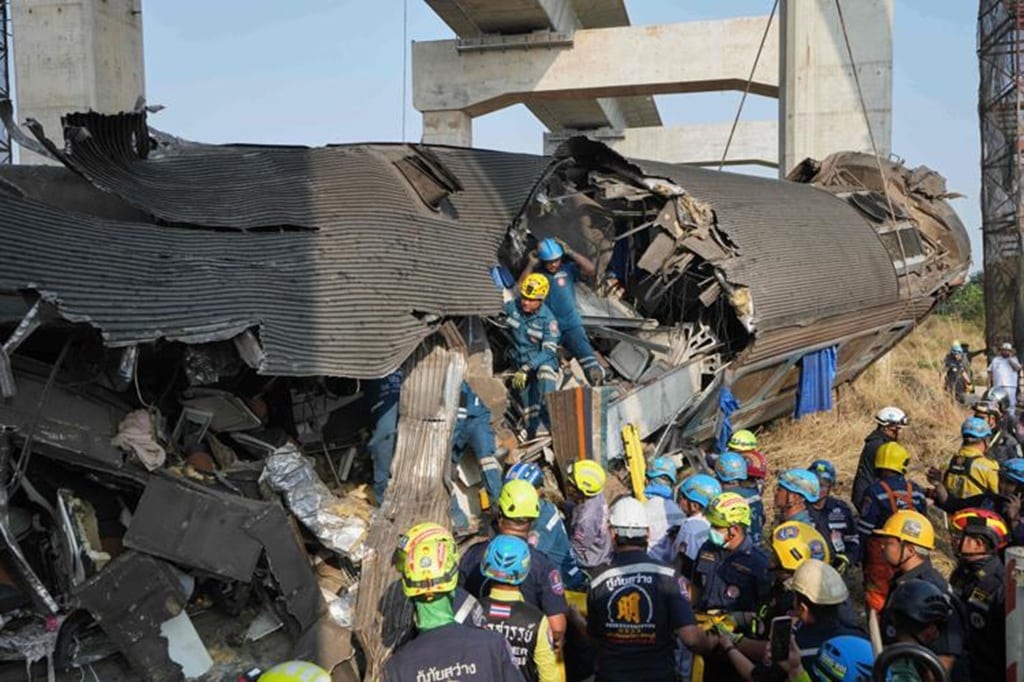
Heartbreaking personal stories emerge.
As names and details come out, the loss feels even heavier. One of the victims was a woman in her 40s from the north-east who was on her way home for her father’s funeral. Relatives told local media she hurried to catch the early service after learning of his sudden death the day before. What should have been a final goodbye ended in tragedy.
Survivors spoke of confusion and panic. Train staff member Thirasak Wongsoongnern said the force of the crash threw him into the air. Maliwan Nakthon, who lives close to the tracks, said she heard pieces falling moments before the loud impact, then screams and rising smoke.
Prime Minister Anutin Charnvirakul visited the scene and offered condolences to families. He said “someone must be punished and held accountable”, and criticised what he called repeated safety failures. He also pointed to the contractor involved, Italian-Thai Development Public Company Limited (ITD), which has faced scrutiny over earlier incidents.
The State Railway of Thailand said it plans to sue the company. Early estimates put the damage to the train carriages at more than 100 million baht (about US$3.1 million).
The Bangkok to Nong Khai high-speed rail project is tied to the Belt and Road cooperation with China. It is meant to link Bangkok with the Lao border and run at speeds of up to 250 km/h. After this crane collapse and train derailment, safety rules around construction above active rail lines are under fresh pressure.
A pattern of rail and construction tragedies
Thailand’s rail network stretches more than 5,000 kilometres. It has often been criticised forits ageing infrastructure and uneven safety standards. This crash is now one of the worst rail disasters in recent years.
Other major incidents include:
- 1979: A collision at Taling Chan Junction killed 51 people and injured 138, still the deadliest railway disaster in Thailand.
- 2023: A freight train hit a pick-up truck at a level crossing in eastern Thailand, killing eight and injuring four.
- 2020: A freight train struck a coach bus carrying people to a religious event, killing at least 18 and injuring more than 40.
Construction sites have also seen serious accidents, often linked to weak enforcement. Last March, a partly built high-rise in Bangkok collapsed during an earthquake, killing more than 100 people. It was the only major structure in the country to fail in that way during the tremors. ITD was also involved in that project, and legal cases against executives for negligence are still ongoing.
Together, these events point to a wider issue. Big infrastructure projects can move quickly, but safety checks do not always keep up.
As the rescue phase winds down and investigators begin their work, families across the country are mourning. Transport Minister Phiphat Ratchakitprakarn has ordered a full investigation. Rail services in the area have been changed or cancelled, and passengers have been offered full refunds.
For people in north-eastern Thailand, rail travel is often the most affordable option. After this passenger train accident in Nakhon Ratchasima, many will want clear answers, stronger safety regulations in Thailand, and real oversight of contractors working above live tracks.