





PICHIT – A calm Sunday morning in Thap Khlo district ended in disaster after a 37-year-old man addicted to drugs allegedly set his family home on fire. Police say he acted in anger when his mother refused to give him money to support his drug use.
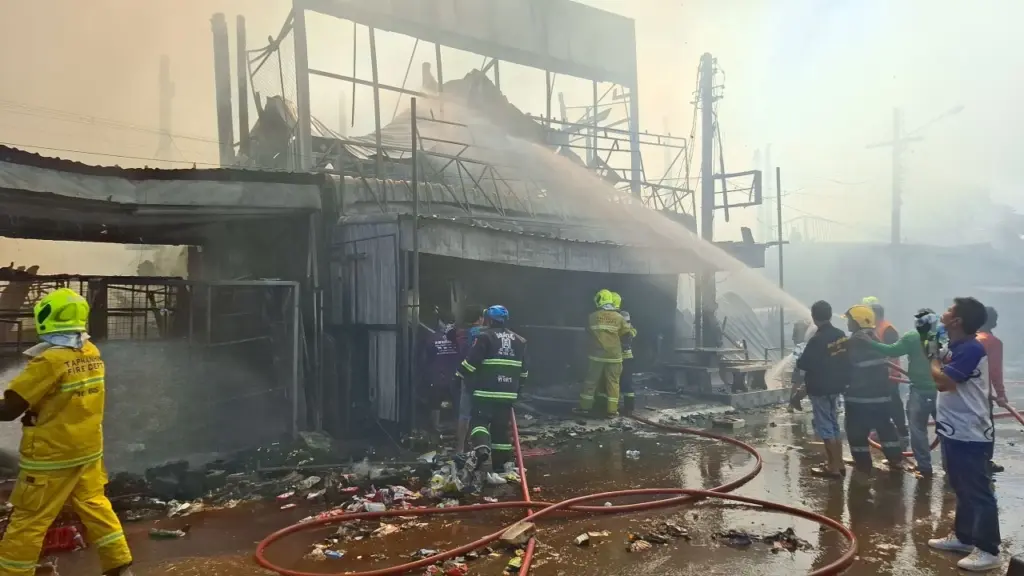
The flames spread quickly through the Khao Sai market area, damaging 10 homes and forcing dozens of residents to leave with little more than what they could carry.
The Pichit Department of Disaster Prevention and Mitigation said the fire was reported at about 9:50 a.m. Fire crews spent hours bringing it under control. Many of the buildings were wooden or semi-concrete, and several were destroyed. No deaths were reported, though some residents suffered minor injuries, mostly from smoke and the chaos of escaping.
The suspect, named as Yutthana (surname withheld for legal reasons), was arrested at the scene. Officers said they found methamphetamine tablets and an unlicensed firearm in his possession. He faces charges including arson with intent to cause property damage, a serious offence under Thailand’s Criminal Code that can carry the death penalty, along with illegal drug and weapons offences.
People living nearby described Yutthana as a long-term methamphetamine user. They said his addiction had caused ongoing tension at home. Witnesses reported a loud argument with his elderly mother shortly before the fire began. After the dispute, he reportedly went back to his room and started the blaze.
One local shop owner, who lost both their home and business, called the incident devastating. The resident said the neighbourhood had lived peacefully for years, but a drug-driven outburst had left many families with nothing.
A Family Pulled Apart: The Real Cost of Addiction
The case shows how methamphetamine addiction can break family relationships and turn everyday conflict into violence. Investigators said Yutthana’s mother had refused to give him money because she feared it would go straight to drugs.
Relatives spoke of years of distress, with household items stolen and sold, shouting matches at home, and repeated efforts to get him help that did not last.
Across Thailand, similar stories play out in many households. Drug use may begin with curiosity, often in the teenage years, then grow into dependence. Once that happens, money problems, family rows, and fear can take over. Parents and carers often feel trapped, caught between enabling a habit and facing the risk of a confrontation.
Health workers warn that methamphetamine, widely known as “yaba” (or “crazy medicine”), can lead to paranoia, anger, and poor judgment, especially with long-term use. These effects can destroy trust in a home. Families may break up, children may be neglected, and the harm can last for years.
Reports have also described parents taking extreme steps, including locking addicted relatives in makeshift rooms, because they feel there is no other safe option. Addiction rarely harms just one person. It drains families, weakens communities, and can deepen poverty and mental health struggles.

Thailand’s Long-Running Methamphetamine Crisis
The Pichit arson case also points to a wider issue: Thailand’s continuing fight against methamphetamine, the most misused illegal drug in the country. Yaba and crystal meth (often called “ice”) remain the main drugs in circulation. Much of the supply is smuggled from the Golden Triangle area near the borders of Thailand, Laos, and Myanmar.
Production there has increased during years of unrest, pushing large amounts of cheap, strong meth into the region. UN reports have linked this trend to record drug seizures in Thailand, including massive hauls of yaba tablets in recent years.
With prices dropping, meth is easier to access than ever. In some places, a yaba pill can cost as little as 50 to 100 baht. That low price helps drive use among labourers looking for energy to work long hours, and among young people chasing a high.
Estimates suggest around 1 to 1.5 million people in Thailand are living with meth addiction, with the highest rates among those aged 15 to 59, the main working-age group.
Thailand’s drug market has also shifted over time, from heroin to synthetic drugs. Border routes, organised crime, and local networks have helped keep supply flowing. Social pressure, work stress, and money worries can all play a part in why people start. Northern provinces such as Chiang Rai face added risk because of their closeness to production routes.
The mental health impact is serious. Long-term meth use can cause psychosis, depression, and aggressive behaviour. Mixed drug use can make recovery harder, and shame still stops many people from asking for support.

Changing Policy: Moving from Punishment to Treatment
Thailand’s approach to drug harm has been changing, with more focus on health and treatment rather than punishment alone.
Earlier crackdowns, including the 2003 “war on drugs”, were linked to thousands of extrajudicial killings, yet supply and demand remained. Today, the Ministry of Public Health places more weight on treatment, describing addiction as a health condition rather than a moral failing.
Compulsory rehab centres still exist, but more voluntary options are being promoted. Community-based programmes aim to help people recover with support from families and local networks, so they can return to everyday life. Monastic programmes such as Wat Thamkrabok, along with modern rehabilitation centres in places like Chiang Mai, offer detox support, counselling, and mindfulness practices based on Buddhist teachings.
The National Addiction Treatment and Rehabilitation Committee has worked on training care teams to treat patients without judgment. Harm reduction work also continues. Drop-in centres run with support from groups such as the Thai Network of People Who Use Drugs offer counselling, HIV testing, and peer support.
Government plans for 2025 to 2030 aim to combine tougher action against major traffickers with wider access to treatment. Thailand also works with international partners to target supply routes linked to Golden Triangle production, while schools and public campaigns warn young people about the risks.
Even so, major problems remain. Many prisons still hold large numbers of low-level drug offenders, and rural areas often lack staff and services. Specialists say more investment is needed in prevention, early support for families, and long-term care.
As families in Pichit begin clearing rubble and searching for ways to rebuild, the impact of the fire is still sinking in. The incident left a community without homes, and it also showed how badly addiction can strain families and how fast violence can follow.
The country faces a hard task. It must disrupt methamphetamine supply networks, while offering fair and humane care for people trapped by addiction. Families also need practical support so they can act early, before a crisis hits. Stigma needs to fall away because shame keeps people silent and delays help. A local elder summed up the mood with a simple message, Drugs do not only burn houses, but they destroy futures.


