






BANGKOK – Chinese New Year, also called Lunar New Year or the Spring Festival, runs for 15 days. It starts on the new moon that falls between 21 January and 20 February, then ends on the next full moon. In Thailand, it’s widely recognised as a big cultural moment. It’s not usually a public holiday, but many people still treat it as an important date on the calendar.
In 2026, Chinese New Year’s Day is on 17 February. Still, the meaning in Thailand goes far beyond one day. It reflects centuries of contact between people, sea trade, migration, and a growing modern relationship between the two countries.
Historians say long-distance sea trade linked early societies in what is now Thailand with wider networks, including Chinese merchants, long before the Ayutthaya period.
What’s hard to pin down is a clear “first Chinese New Year” in Thailand. Older sources tend to focus on trade, settlement, and royal life. They rarely spell out festival practices in a way that proves the event was being celebrated locally.
By the Ayutthaya era, the picture is easier to follow. Chinese communities were more settled, active in trade, and visible in city life. Their influence showed up in business, food, religion, and everyday culture.
Some Western writings from the late 17th century, including accounts linked to French visitors to Ayutthaya, mention court shows and performances. These included Chinese theatre alongside other forms of entertainment.
This still isn’t direct proof of large public Chinese New Year events at the time. It does, though, back up the broader story of the ongoing Chinese cultural presence and exchange in Siam.
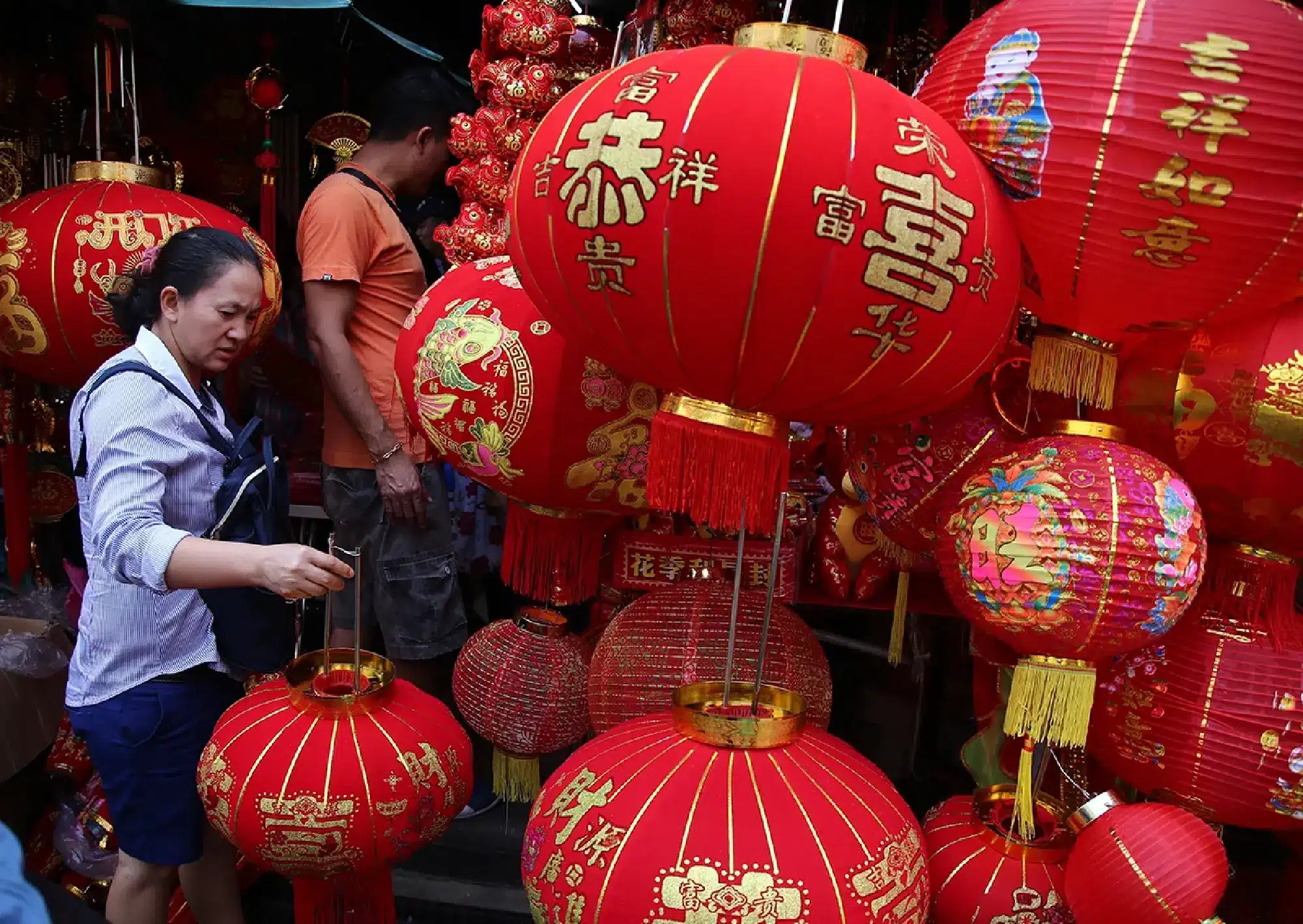
Why the Chinese New Year matters in Thailand today
Chinese New Year in Thailand matters for three connected reasons: culture, diplomacy, and the economy.
Shared culture in everyday Thai life
The festival feels mainstream in part because Thai people of Chinese heritage have long been closely woven into Thai society. Over time, many families adopted Standard Thai as their main language and became Theravada Buddhists. That mix helped the Chinese New Year become a celebration enjoyed well beyond one group.
Today, many people treat it as a family-centred festival. It’s about reunion meals, remembering ancestors, visiting temples, and doing things believed to bring good luck for the year ahead.

A visible symbol of Thai–China relations
Chinese New Year also acts as a clear public sign of Thai–China ties, both between governments and between communities. Thailand and China established diplomatic relations on 1 July 1975, and cooperation has grown steadily since then.
In 2025, the two countries marked 50 years of relations. That anniversary underlined how cultural connections and modern diplomacy often move side by side. In many places, Chinese New Year events also serve as cultural diplomacy, with ceremonies, performances, and city celebrations that highlight shared heritage.
A strong economic and tourism period
The festival also matters because it boosts spending and travel. Chinese New Year is a key season for shops, restaurants, hotels, and tourism campaigns. Events take place across Thailand, especially in areas with large Thai-Chinese communities.
For tourism, it often adds energy to domestic trips and supports Thailand’s image as a friendly country with a mix of cultures.

Highlights of Chinese New Year celebrations in Thailand
Across the country, Chinese New Year takes on a local feel. You see it in Bangkok’s Chinatown streets, in large provincial parades, and in “old town” areas that use heritage as a focus.
Yaowarat (Bangkok), Thailand’s best-known Chinatown celebration
Yaowarat Road and the nearby Chinatown lanes are still the most famous places forthe Chinese New Year in Thailand. The area usually hosts stage shows and cultural displays, with huge crowds filling the streets.
Nakhon Sawan (Pak Nam Pho), known for its big processions
Pak Nam Pho is often promoted as one of the largest Chinese New Year celebrations outside Bangkok. It runs for several days and is best known for its day-and-night processions. These draw large crowds and keep the city busy well into the evening.

Phuket Old Town, heritage, and a modern festival style
In Phuket, Chinese New Year links closely with the island’s Chinese-Thai (Peranakan) roots and the revival of Old Town as a cultural hub.
Recent celebrations have mixed tradition with modern staging. Some editions have featured a large parade with more than 300 participants, light-and-sound features like projector mapping, a 40-metre Dragon Lantern Tunnel, and hundreds of vendors across the Old Town area. This approach supports both cultural pride and tourism.
Taken together, these events show why the Chinese New Year in Thailand isn’t just a festival brought in from outside. It’s now part of the country’s yearly rhythm, shaped by long ties and strengthened by a modern Thai–China relationship that continues to influence diplomacy, the economy, and daily life.


