


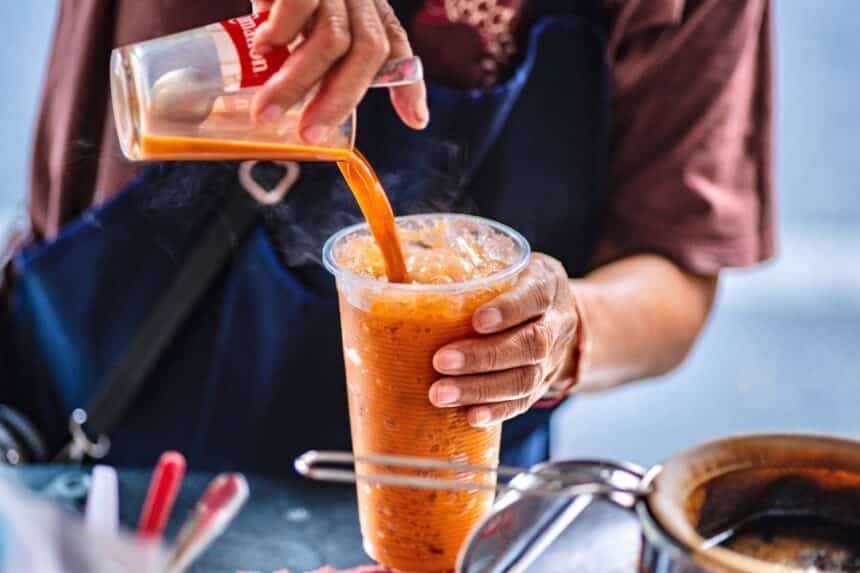
BANGKOK – Nine of Thailand’s best-known beverage chains are working with the Department of Health on a new default for drink sweetness. Starting February 11, 2026, “normal sweet” will mean 50 percent less sugar in freshly made drinks.
The move follows World Health Organization (WHO) advice to cut back on free sugars, a key step in lowering the risk of non-communicable diseases such as diabetes and obesity, which continue to climb across Thailand.
Under the updated standard, popular drinks will taste less sweet unless customers ask otherwise. A 16-ounce iced coffee that used to contain about 7.3 teaspoons of sugar will drop to roughly 3.7 teaspoons.
Many iced teas and milk teas will fall from around 6.6 teaspoons to about 3.3 teaspoons of sugar. People can still order full sweetness or extra sweet, but the default change is meant to reduce daily sugar intake without banning sweetened drinks.
Sugar Meets a Tough Health Problem
Thailand’s strong demand for sweet drinks has come with serious health costs. The average person consumes about 21 teaspoons of added sugar each day, more than three times the WHO guidance of no more than six teaspoons.
Much of that sugar comes from everyday favorites such as iced coffee, Thai milk tea, and bubble tea, which are widely available in cities, malls, convenience stores, and travel stops.
National health surveys show how quickly the problem has grown. Based on 2025 data, about 45 percent of people ages 15 and up are overweight or obese, which equals roughly 27.4 million people. Diabetes affects around 10.6 percent of adults, about 6.1 million people, with many more considered pre-diabetic.
Hypertension impacts 29.5 percent or 17.5 million people, and 28.4 percent of the population lives with metabolic syndrome.
Health experts connect these patterns to more processed foods, less daily movement, and easy access to high-sugar drinks. Young adults and working-age groups have shown sharp increases, which can raise long-term health care costs and strain the workforce.
The Department of Health has warned that high sugar intake raises the risk of type 2 diabetes, fatty liver disease, heart problems, and other complications.
Beverage Brands Join a Rare Team Effort in Thailand
This voluntary agreement brings together seven companies across nine major brands. Participants include Café Amazon, Inthanin (from PTT gas stations), All Café (from CP All’s 7-Eleven), Black Canyon, and Punthai. These chains play a major role in Thailand’s fast-growing beverage market, from stand-alone cafés to convenience store counters and roadside locations.
The plan builds on earlier efforts, including the 2017 tax on sugar-sweetened beverages and the “Less Sweet Can Be Ordered” campaign, which pushed customers to request lower sugar. This time, half-sweet becomes the standard choice.
Officials see it as a practical way to shift behavior through default settings rather than strict rules. Director-General Amporn Benjaponpitak called it a first major step toward changing sugar habits, while Deputy Pakorn Tungkasereerak pointed to the urgency shown in the 2025 obesity and diabetes numbers.
Participating chains have agreed to update recipes, train staff, and explain the change to customers. Many are using in-store signs, mobile apps, and promotions to highlight unsweetened and low-sugar options. Health leaders want the change to support national targets, including a goal for 90 percent of customers to choose low-sugar drinks by 2027.
What Customers May Notice Next
Early reactions are mixed. Some regular customers say the lighter taste feels easier to drink, especially for Thai iced tea and creamy milk teas. Others may keep ordering “extra sweet” to match what they are used to. Street vendors and smaller shops are being encouraged to follow the same guidelines, but the approach remains cooperative, not punitive.
Public health advocates have supported the plan as realistic and in line with WHO guidance to keep free sugars under 10 percent of daily energy intake, with 5 percent as the best-case target. The launch date near Valentine’s Day also shifts the message in a simple way: caring for health can mean choosing less sugar.
Thailand still faces a heavy non-communicable disease burden, but this reset of “normal sweet” adds a daily, practical tool. By lowering sugar in the drinks people buy most often, the country takes a clear step toward reducing preventable health risks, one cup at a time.