


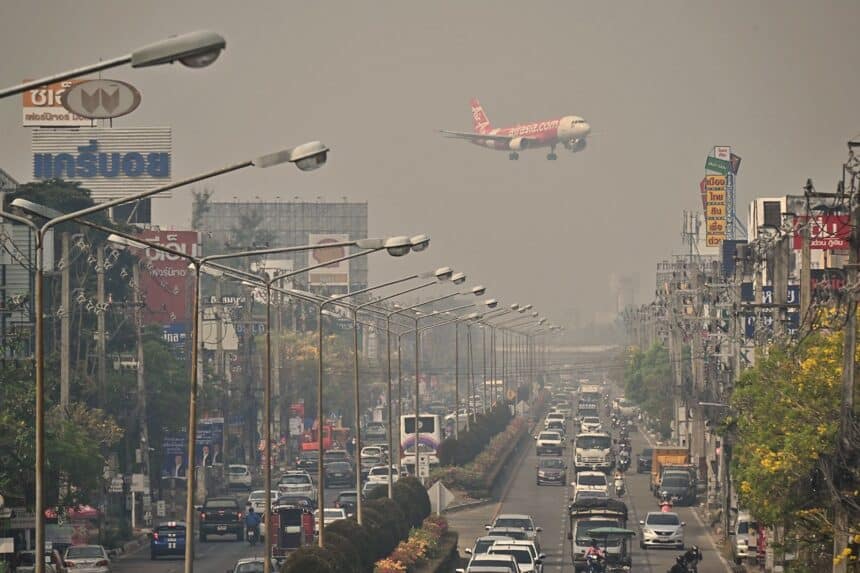
BANGKOK – Thailand health officials are preparing for a serious air pollution crisis as fine dust, known as PM2.5, is expected to climb across the country over the next few days and weeks.
Health officials have issued urgent alerts, warning that air quality in many provinces is already above national safety limits. If levels keep rising, more people could face health problems.
The Air Pollution Mitigation Communication Centre, under the Pollution Control Department, said that as of Monday, PM2.5 levels above the standard were recorded in dozens of provinces. Areas affected include Bangkok and nearby provinces such as Pathum Thani, Nonthaburi, and Ayutthaya.
Higher readings have also been reported in the Northeast, including Khon Kaen and Nakhon Ratchasima, and in the East, including Chon Buri. Forecasts suggest PM2.5 will increase again, especially from late January, with Bangkok, the Central Plains, the North, and the Northeast most at risk.
Some parts of the Northeast have already reached 66 micrograms per cubic metre (µg/m³). Sections of the North and East are also above safe levels. The South is still in better shape, with mostly good air quality.
How PM2.5 Builds Up in the Air
PM2.5 is made up of tiny particles that are 2.5 micrometres wide or smaller. They are small enough to reach deep into the lungs and can even enter the bloodstream. These particles come from both local sources and pollution carried in from elsewhere.
In Thailand, the main causes include vehicle exhaust, factory emissions, dust from construction, and open burning of crop waste. Burning is more common in the dry season, from November to April.
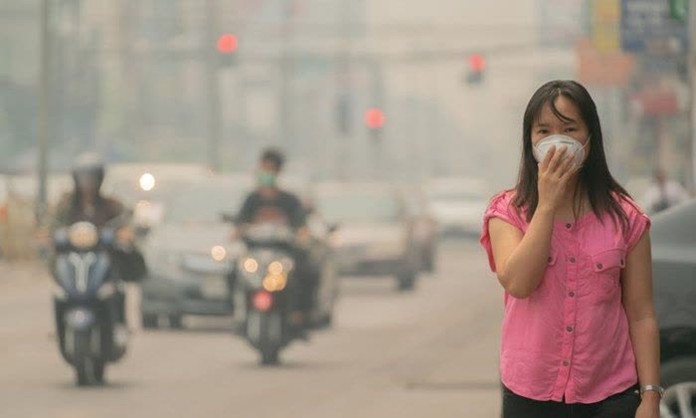
Cooler air and still weather can trap pollution close to the ground, so it hangs around rather than clearing. In big cities like Bangkok, heavy traffic and poor airflow make it worse. In rural and northern areas, smoke from burning vegetation is often the biggest driver.
In the North, including Chiang Rai, transboundary haze is a major issue. Smoke from forest fires and agricultural burning in nearby countries such as Myanmar, Laos, and Cambodia can drift into Thailand on seasonal winds.
This haze often peaks between January and March. When it mixes with local pollution, PM2.5 can rise fast. In Chiang Rai and nearby provinces, recent readings have stayed in the moderate to unhealthy range, with some places around 27 to 34 µg/m³.
That is well above the World Health Organization’s annual guideline of 5 µg/m³. The mountainous landscape in the North can also hold pollution in place, leading to longer haze periods, lower visibility, and poor air quality that lasts for days.
Health Effects When PM2.5 Is High
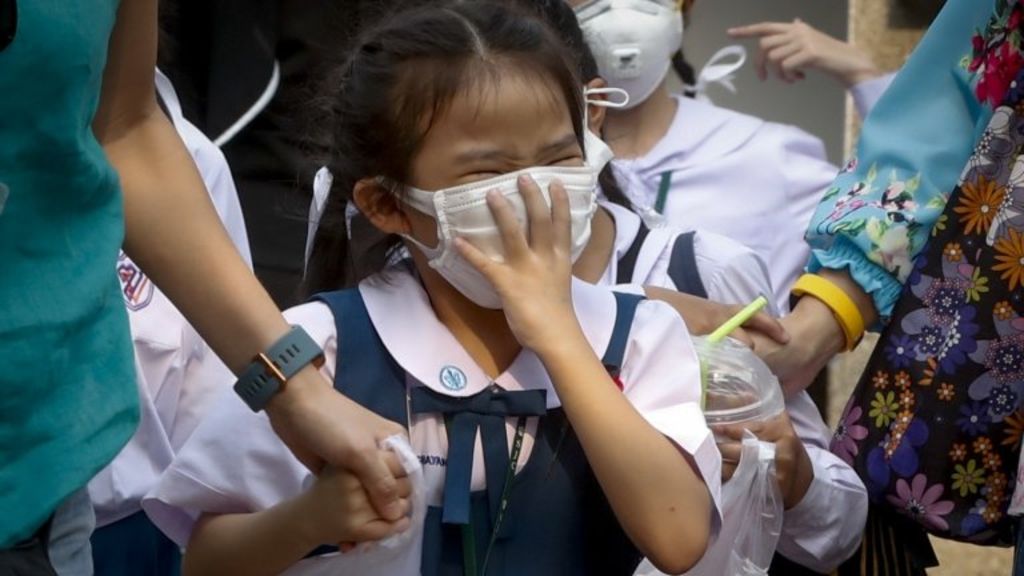
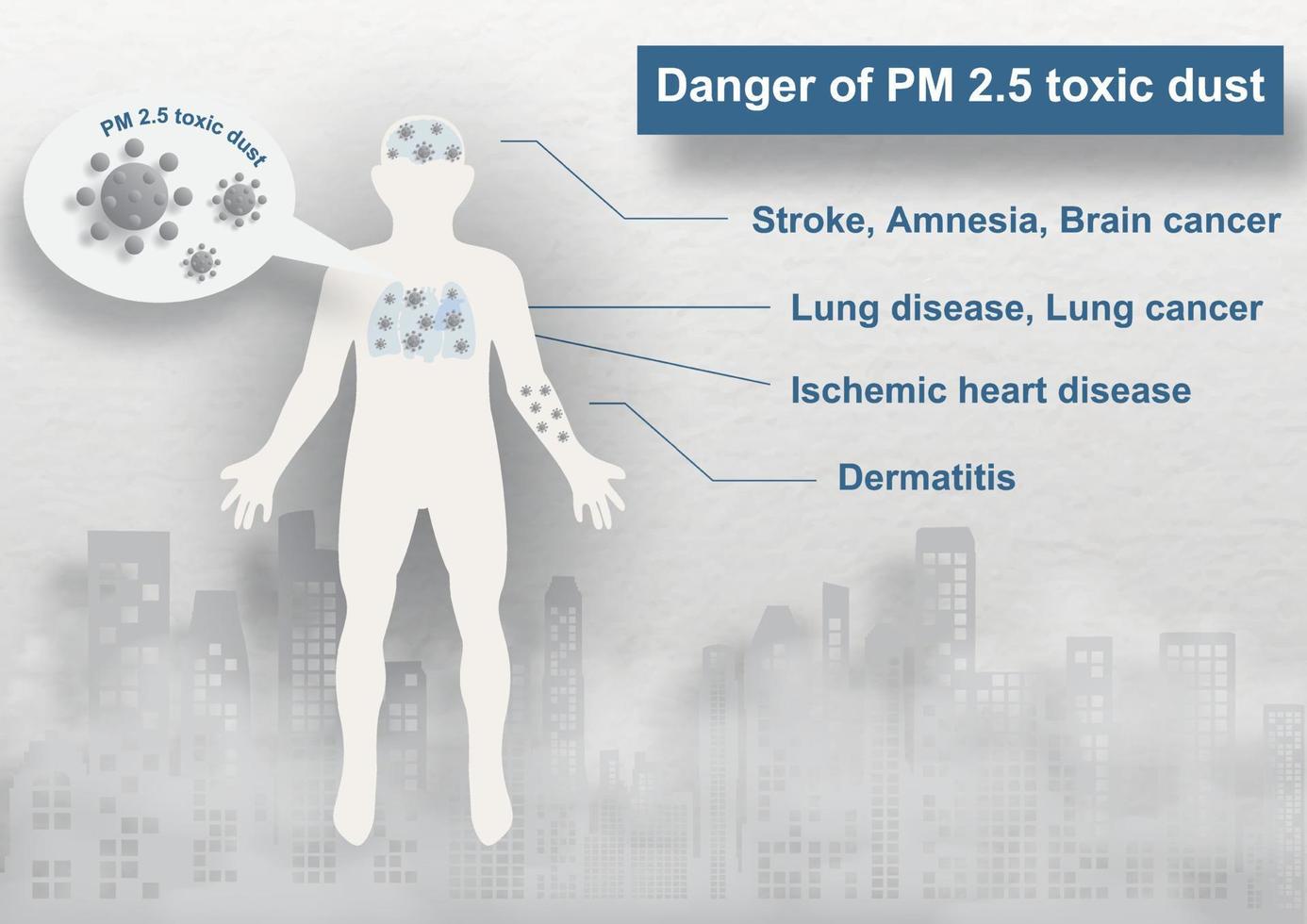
Breathing in high PM2.5 can harm anyone, but it’s riskier for children, older adults, pregnant women, and people with heart or lung conditions. Short-term exposure can cause irritated eyes, nose, and throat, along with coughing, sneezing, a runny nose, and shortness of breath.
Long-term exposure is linked to more serious problems. These include worse asthma, chronic obstructive pulmonary disease (COPD), heart disease, stroke, lung cancer, and diabetes-related complications.
Research in Thailand has linked higher PM2.5 to increased deaths from non-communicable diseases. Northern provinces often see the worst effects during the haze season. Across the country, PM2.5 is tied to thousands of early deaths each year.
The risk is higher in places where readings often exceed 37.5 µg/m³, which is Thailand’s 24-hour standard. Fine particles can trigger inflammation and stress in the body, putting extra strain on the lungs and heart. During severe episodes, hospital visits and serious illness can rise.
Practical Ways to Protect Yourself
Officials are working on reducing pollution at the source, including tighter controls on open burning, closer monitoring, and possible cloud-seeding. At the same time, you can lower your exposure with a few sensible steps:
- Wear a proper mask: Use an N95 or KN95 mask outdoors during high pollution, since they filter fine particles well. Standard surgical masks don’t block PM2.5 as effectively.
- Cut down time outside: Stay indoors when air quality is poor, especially in orange or red categories. Avoid hard exercise outdoors.
- Keep indoor air cleaner: Close windows, use an air purifier with a HEPA filter, and air out rooms when pollution levels drop.
- Track air quality updates: Use real-time apps or official sources like the Pollution Control Department to check local PM2.5 readings.
- Reduce exposure when driving: Use air recirculation in the car and avoid idling where possible.
- Get medical help if symptoms worsen: Seek care quickly for ongoing coughing, chest pain, or breathing trouble.
People in higher-risk areas, including Chiang Rai, should stay alert, as transboundary haze may push pollution levels up further.