



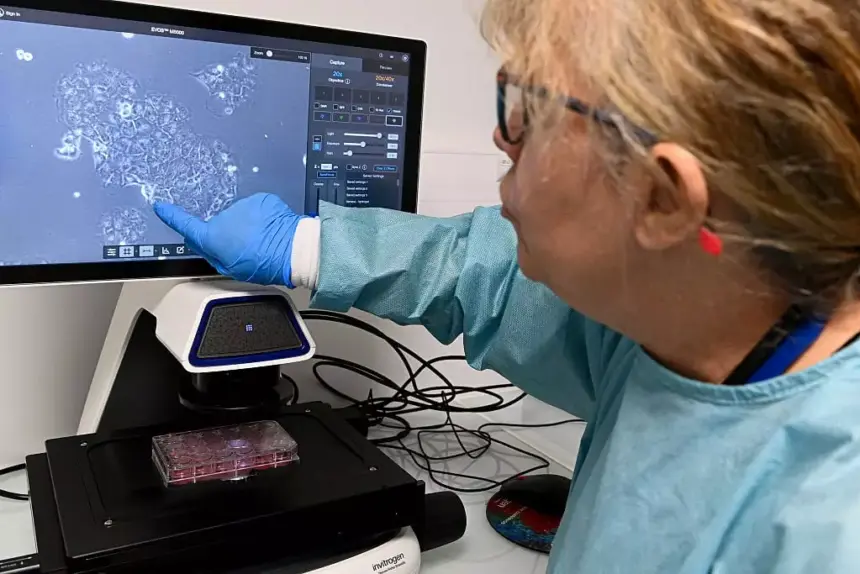
In late January 2026, scientists at Spain’s National Cancer Research Centre (CNIO) shared a major preclinical result in pancreatic cancer research. The team, led by Dr Mariano Barbacid, reported that a three-part treatment removed pancreatic tumors in mouse models, and the cancer did not come back. They also did not see resistance develop.
The work appeared in Proceedings of the National Academy of Sciences (PNAS) and quickly drew attention from outlets including Newsweek and Euronews. Pancreatic cancer remains one of the deadliest cancers. So any report of complete tumor regression, even in animals, gets noticed fast.
Why Pancreatic Ductal Adenocarcinoma Is So Hard to Treat
Most pancreatic cancer cases are pancreatic ductal adenocarcinoma (PDAC). PDAC has a long track record of resisting treatment. A key reason is genetics. More than 90% of cases involve mutations in the KRAS gene, and many also include TP53 mutations.
Standard options like chemotherapy can help some people, but results are still limited. Targeted drugs, including KRAS inhibitors, have not solved the problem either. Immunotherapy has also struggled in PDAC. Survival rates remain low overall, and they drop even more in later stages.
The CNIO researchers focused on the KRAS network, which drives growth and survival in many PDAC tumors. Their strategy aimed at three points in that system at the same time.
What the CNIO Triple Therapy Targets
The study targeted three major signaling nodes linked to KRAS-driven cancer growth:
- RAF1, a downstream part of the KRAS pathway
- EGFR family receptors are an upstream input that can keep signaling active
- STAT3, a separate support route that can help tumors survive even when KRAS signaling is blocked
By hitting all three, the therapy aimed to shut down escape routes that cancers often use to survive.
What Was in the Drug Combo
The treatment combined:
- An experimental KRAS inhibitor
- An approved drug first used for lung cancer (reported as likely targeting EGFR)
- A STAT3 protein degrader or inhibitor
In orthotopic mouse models, where tumors are placed in the pancreas to better mirror human disease, this combination led to complete tumor regression. The tumors did not return after treatment ended, and the team reported no major side effects in the animals.
That result stands out because single-drug KRAS inhibition often leads to only partial responses. Resistance can show up quickly, and tumors can find other ways to keep growing.
What the Researchers Said, and What This Does Not Mean Yet
News coverage around January 28 to 30, 2026, was upbeat, but the researchers were careful with their wording. Barbacid and co-lead author Carmen Guerra described the findings as a strong guide for what future clinical trials should test.
They also made an important point: the strongest effect came from genetic ablation, meaning the pathways were knocked out in a way that drugs may not fully match. Turning this concept into a safe three-drug plan for humans will take more work.
The team said they are not ready to launch clinical trials using this exact triple therapy. More preclinical studies, safety testing, and regulatory steps would be needed first.
How This Fits Into Recent Pancreatic Cancer Progress
This CNIO result comes during a busy stretch for pancreatic cancer research. In 2025 and early 2026, several other approaches have moved forward, including:
- Multi-selective RAS inhibitors such as daraxonrasib (RMC-6236) from Revolution Medicines, which finished enrollment in a phase 3 trial (RASOLUTE 302) for metastatic disease, with results expected in 2026
- Tumor Treating Fields (TTFields) under FDA review for locally advanced pancreatic cancer
- Antibody strategies that aim to reactivate immune responses by blocking tumor “sugar disguises”.
- Ongoing work on RNA vaccines and CAR T-cell therapies that target more than one antigen
None of these is a cure today, but together they show steady movement after years of limited progress.
What This Could Mean for Patients, With Realistic Expectations
For patients and families, this study offers cautious hope, not an immediate shift in care. Pancreatic cancer is often found late. Symptoms like jaundice, weight loss, and belly pain may not show up until after the cancer spreads. Many people are diagnosed with metastatic disease, where survival is often measured in months.
The most encouraging part of the CNIO report is how it handled resistance, which is one of the biggest barriers in PDAC treatment. If a similar approach works in humans, it could help people live longer. In some cases, it could even support long-term remission, especially in tumors that depend heavily on KRAS-driven signaling.
Where Combination Therapy Could Fit With Today’s Standards
If this kind of three-target strategy translates to humans, it could support more personalized care. Patients with KRAS and TP53 mutations, common in PDAC, might be the best match.
It could also raise results beyond current first-line options like gemcitabine plus nab-paclitaxel or FOLFIRINOX. Over time, stronger tumor control might help more patients become eligible for surgery in borderline cases. It could also make other treatments work better, including immune-based therapies, in a cancer type that is often described as immunologically “cold.”
Why Mouse Results Often Fail in People
Experts still urge caution for a simple reason: strong results in mice do not always repeat in humans. Human tumors behave differently; the tumor microenvironment is not the same, and side effects can be harder to manage.
If human trials begin, approval could still take 5 to 10 years. The process usually moves through phases that test safety, dosing, and then benefit in larger groups. A three-pathway approach also raises a clear challenge: toxicity can add up, and not every patient’s tumor will respond the same way.
The Bigger Picture: More Trials, More Funding, More Focus on Early Detection
Even with those limits, a result like this can push the field forward. It can also attract more funding and speed up new trial designs.
Groups such as the Pancreatic Cancer Action Network (PanCAN) have pointed to 2026 as a major year for pancreatic cancer research, with more phase 3 trials starting or reporting results. That includes work on targeted drugs added to chemo, plus PRMT5 inhibitors for MTAP-loss tumors.
Early detection work is also moving ahead, including PanCAN’s Early Detection Initiative. Finding more cases earlier could increase the number of people treated at a stage where a cure is still possible.
Summary
The CNIO announcement from January 2026 is a strong preclinical step forward, not a finished cure. It shows that shutting down KRAS signaling from multiple angles may overcome resistance, which is a major reason PDAC has been so hard to treat.
The next challenge is translation, turning this concept into drug combinations that are safe, effective, and realistic for patients. Continued research, trial participation, and sustained funding will decide how fast this moves from mouse models to real changes in pancreatic cancer care.