



BANGKOK – As the rainy season picks up in many parts of Thailand, communities are preparing for a higher risk of dengue fever. The virus spreads through mosquito bites, and wet weather leaves more places for mosquitoes to breed.
Because of that, dengue remains a steady public health concern across the country. Reports from late 2025 into early 2026 show ongoing spread, so health officials continue to push practical prevention steps, especially in areas that see frequent outbreaks.
Dengue fever comes from four serotypes of the dengue virus. It spreads mainly through Aedes aegypti and Aedes albopictus mosquitoes. Common symptoms include high fever, a strong headache, pain behind the eyes, muscle and joint pain, and skin rash.
In some cases, dengue can turn severe and lead to dangerous problems such as dengue hemorrhagic fever or dengue shock syndrome. Thailand sees thousands of cases most years. In addition, infections often rise during the wet months from June to October, although dengue can show up any time.

Current Dengue Situation in Thailand 2026
Thailand continues to track dengue closely in 2026. Full national totals for the first part of the year are still coming in. Still, surveillance updates from late 2025 reported about 51,795 dengue cases and 120 deaths by October 31, 2025, based on regional reporting shared by UniteDengue and the European Centre for Disease Prevention and Control (ECDC). Early signals in 2026 suggest transmission has continued, so officials are watching closely for a seasonal rise in the dengue virus.
At the same time, forecasting models such as ARIMA, built from earlier trends through 2024, suggest transmission may rise and fall in cycles through 2026. Some projections show higher monthly totals later in the year, with peaks possibly reaching several thousand cases in a given month. However, real numbers can shift because rainfall, city growth, and mosquito control efforts all affect how fast dengue spreads.
Around the world, dengue remains a grade 3 emergency under the World Health Organization (WHO). Billions of people live in tropical areas at risk. Southeast Asia, including Thailand, continues to carry a large share of cases. Even so, patterns across 2025 and 2026 appear more stable than the record surges seen in earlier years.

Thailand Dengue Risk Map 2026: Areas With Higher Risk
Dengue is endemic in Thailand, placing the country among endemic countries worldwide. In other words, the virus circulates in the country year-round, and no region is fully risk-free. Sources such as the U.S. Centers for Disease Control and Prevention (CDC) list Thailand as a destination with dengue risk. That guidance applies to cities, rural provinces, and popular tourist areas.
Risk often rises where people live close together and where standing water collects after rain. Some areas also see higher transmission because of local weather, border movement, or changing land use. Recent public health reporting and long-term patterns often point to these higher-risk zones:
- Southern provinces: These areas often report higher rates because rainfall stays heavy and humidity stays high. Provinces such as Narathiwat, Yala, Pattani, Songkhla, and parts of Phuket have seen higher burdens in past seasons.
- Northeastern border provinces: Places such as Ubon Ratchathani and Mukdahan can face added risk, in part due to local conditions and proximity to Laos.
- Central Thailand (including Bangkok): Bangkok and nearby areas remain common hotspots. Urban dengue often links to man-made breeding sites such as water containers, construction zones, clogged drains, and poor drainage. Research from 2015 to 2024 also shows that risk varies by neighborhood, so some Bangkok districts report higher rates than others.
- Northern provinces: Chiang Mai, Chiang Rai, and Mae Hong Son can see higher activity during monsoon periods. Tourism and travel also increase movement between areas, which can affect the spread.
- Eastern and western border areas: Provinces near Cambodia and Myanmar can see changing but meaningful transmission from season to season.
Because cities keep expanding, mosquitoes can find more breeding spots in built-up areas. Likewise, land clearing near homes can increase human exposure. For that reason, residents and international travelers in any province should assume dengue risk, especially during rainy months.

Dengue Vaccines in Thailand 2026: What’s Available
Vaccines add another layer of dengue prevention. As of 2026, Thailand has two main vaccine options available:
- Qdenga vaccine (TAK-003): This newer live attenuated tetravalent vaccine has been approved in Thailand since 2023 and is broadly available. Local guidance often lists an age range of about 4 to 60 years. It can be given regardless of past dengue infection, so it does not require serostatus testing. QDENGA uses two doses given three months apart. Reported data show about 80 percent protection across the four serotypes, plus up to a 90.4 percent reduction in hospitalization and severe disease. Long-term findings reported through 2025 also describe protection lasting up to seven years. Health agencies recommend it most often in higher-transmission settings, and Thailand remains one of the endemic countries where it has been rolled out.
- Dengvaxia (CYD-TDV): Sanofi’s earlier dengue vaccine remains approved for people with confirmed prior dengue infection, often within an age range such as 6 to 45 years (and up to 60 years in some settings). It requires three doses over 12 months. However, it is not recommended for people without prior dengue infection because of a higher risk of severe dengue after a first natural infection. Manufacturing is scheduled to end globally by mid-2026 due to low demand, and many programs have shifted attention to QDENGA.
Clinics often advise a conversation with a healthcare provider or travel clinic to confirm eligibility. Vaccines help reduce risk, but they do not replace mosquito bite prevention.
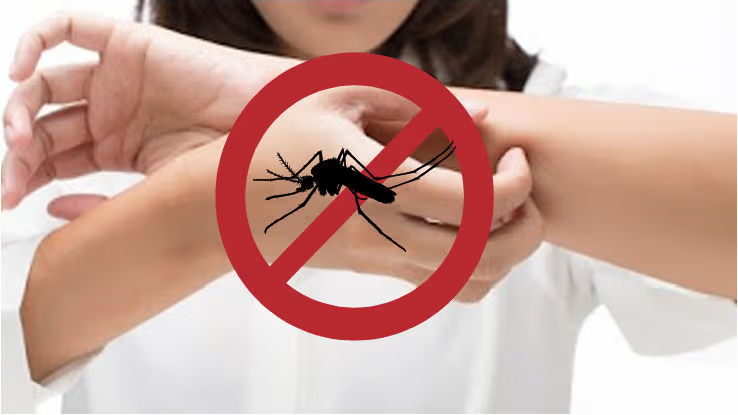
Staying Safe During Thailand’s Rainy Season
Thailand’s rainy season usually runs from June through October, and some areas see rain into November. The peak risk period falls from May to September, when Aedes mosquitoes can breed in tiny amounts of water. Prevention works best when people combine home cleanup with personal protection, especially non-immune travelers visiting during the monsoon.
Preventative measures include:
- Remove breeding sites: Empty, cover, or scrub water-holding items each week, including buckets, plant trays, tires, and clogged gutters. Also, throw away trash that collects water.
- Use mosquito repellent: Apply repellents with DEET, picaridin, or IR3535 on exposed skin. In addition, permethrin-treated clothing can help reduce bites.
- Wear covering clothing: Long sleeves, long pants, and socks help, especially during peak biting times. Since Aedes mosquitoes bite during the day, protection matters even outside early morning and late afternoon.
- Add physical barriers: Window and door screens help keep mosquitoes out. Mosquito nets, especially for young children and sleeping areas, add another layer of safety. Indoor sprays can also help when used correctly.
- Join community control efforts: Local fogging, vector control, and larval control programs can reduce mosquito numbers. Reporting standing water to local officials can also help.
- Get medical care quickly: High fever, muscle and joint pain, skin rash, abdominal pain, warning signs, or any bleeding after the incubation period need prompt medical attention. Manage high fever with acetaminophen; early care helps lower the risk of severe complications.
Children often face ha igher risk of severe dengue infection, so families may need extra care during school months that overlap with the rainy season.
Summary: Reducing Dengue Risk in Thailand in 2026
Dengue Fever in Thailand remains a serious concern in 2026, especially during the rainy season when rain creates more mosquito breeding sites that can lead to severe dengue.
Even so, clear steps can cut risk. Vaccination (when appropriate), steady mosquito control, and daily bite protection work best when used together. Public health teams continue to monitor case trends and transmission, and they stress shared responsibility at home, at work, and in the community to reduce outbreaks of dengue infection and protect those most at risk.


