





Imagine waking up to a message that does more than just tell you to have some water. It actively informs you precisely how much magnesium your body requires today. This prediction is based on your specific genetic code, recent sleep quality, recorded stress rates from the previous day, and even the air quality in your local area, all suggesting a developing deficiency.
This type of prediction is now a reality. Artificial intelligence, when combined with DNA sequencing and continuous tracking of daily habits, now creates profoundly accurate preventative health strategies, completely redefining medical care.
The period of generic, one-size-fits-all medical advice has reached its conclusion.
From Genetic Snapshots to Daily Coaching: Personalised Medicine Advances
A decade ago, DNA testing services available directly to consumers, such as 23andMe, offered millions their first view into genetic risks. They might report, for instance, a twelve percent higher chance of developing type 2 diabetes. While revolutionary at the time, these reports were static; they did not change.
Today’s AI-driven platforms offer considerably more than unchanging documents. Companies including Genomelink, SelfDecode, and newer entrants such as Levels Health and Zoe, which uses Oura-powered data, now combine deep genome sequencing or high-resolution DNA analysis with instant feedback from wearable technology.
This includes heart-rate variability measured by an Oura Ring or Apple Watch, precise glucose monitoring from devices like Dexcom or Abbott Freestyle Libre, blood test results from InsideTracker, and analysis of the gut microbiome.
These processes yield dynamic, daily health frameworks that adjust faster than any human physician possibly could.
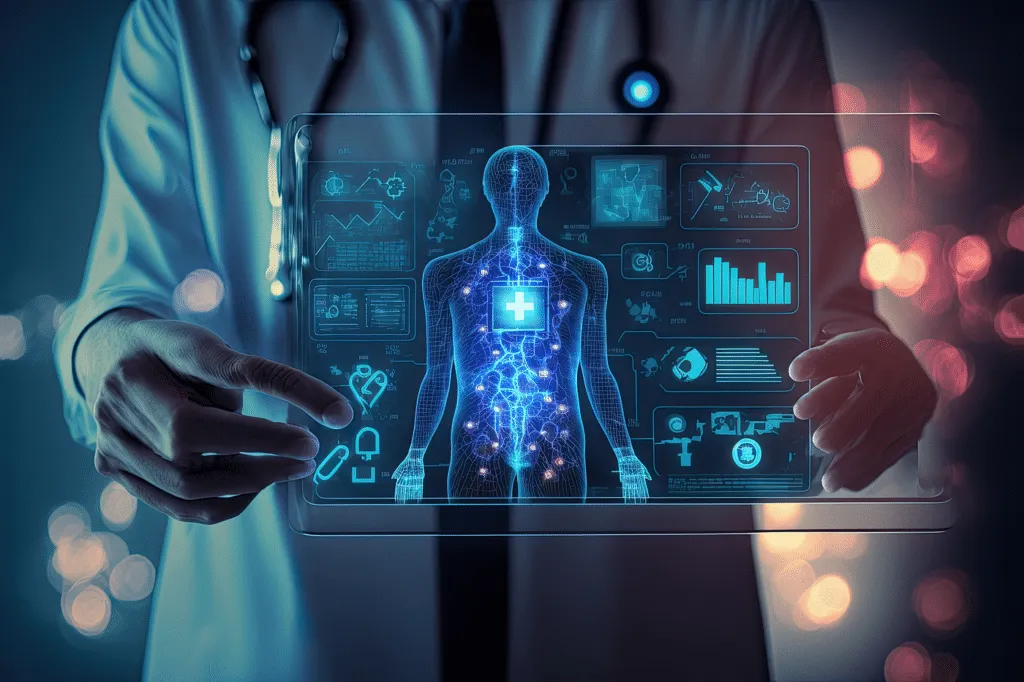
How Artificial Intelligence Constantly Monitors You
Modern AI platforms focused on preventative health operate across three continuous levels:
- Genetic Blueprint
An individual’s DNA is sequenced once, or existing raw data from tests like 23andMe or Ancestry is uploaded. The AI analyses millions of single-nucleotide polymorphisms (SNPs) and rare genetic differences linked to how the body processes nutrients, manages inflammation, determines cardiovascular likelihood, controls neurotransmitter function, and influences hundreds of other biological characteristics. - Real-Time Biological and Environmental Information
Wearable electronics and smart devices supply information on sleep cycles, heart rate variability, resting pulse rate, physical activity, blood oxygen levels, and increasingly, constant glucose and ketone readings. Complementary applications also gather information on weather conditions, local pollen levels, and air quality indexes, all of which directly influence an individual’s inflammation response. - Machine Learning That Evolves Endlessly
Proprietary algorithms are routinely trained using data from millions of anonymised patient outcomes. These systems recalculate an individual’s risk assessments and recommendations several times each day. - For example, SelfDecode’s AI might detect that a specific COMT gene variation combined with three consecutive nights of poor sleep and high caffeine consumption increases the likelihood of a significant anxiety episode the following day by 68 per cent. The system would then instantly advise reducing caffeine intake after eleven in the morning and suggest taking 400 mg of magnesium glycinate before sleeping.
Examples of Success: From Preventing Diabetes to Extending Life
In Singapore, Ryan Tan, a 38-year-old marketing professional, succeeded in reducing his HbA1c level from 6.3 per cent (pre-diabetic) to 5.1 per cent in just fourteen weeks. He achieved this using a combination of Zoe, Oura, and a Continuous Glucose Monitor (CGM) guided by AI.
The system observed that his South-Asian genetic markers made him especially sensitive to white rice and eating late at night. Rather than offering vague instructions like, eat fewer carbohydrates,” the AI provided precise timings for post-dinner walks and advised replacing jasmine rice with a fifty percent mixture of cauliflower rice, perfectly matched to his glucose response curves.
In California, Dr. Peter Attia, a 62-year-old retired surgeon known for his longevity podcast, openly uses a similar arrangement: comprehensive whole-genome sequencing, a Dexcom G7 CGM, an Eight Sleep temperature-regulating mattress, and bespoke AI analysis.
He attributes the system with helping to keep his APOE ε4 Alzheimer’s risk allele dormant through extremely accurate timing of Zone 2 cardio workouts and micro-dosing rapamycin protocols, both of which a typical doctor would not usually prescribe.
Industry Leaders Driving the Change
- Zoe (UK/USA) combines at-home blood, gut microbiome, and CGM tests with an AI application that evaluates every meal on a scale of 0 to 100 based on an individual’s unique biology. The company is supported by researchers from Harvard, Stanford, and King’s College London.
- SelfDecode employs AI to analyse over 120 million genetic variations, providing daily updated reports and suggestions for supplements. It is currently one of the most exhaustive platforms linking DNA analysis to practical advice.
- Levels Health focuses exclusively on metabolic health, using continuous glucose monitoring alongside AI coaching. Well-known people, including Kevin Rose and Tim Ferriss, openly promote its use.
- InsideTracker merges blood biomarkers, DNA information, and lifestyle data to create an “InnerAge” score, offering specific plans for diet, exercise, and supplements. It is popular among professional sportspeople.
- Elo Health provides monthly smart blood tests and AI-generated daily supplement packs that are custom-mixed in facilities registered with the FDA.
The Scientific Backing
A 2024 study published in Nature Medicine tracked 2,500 participants using AI-guided personalised dietary recommendations based on genetics, gut microbes, and CGM data. The group receiving the specialised guidance demonstrated:
- Four times greater improvement in blood sugar management.
- A 31 per cent drop in inflammatory indicators (hs-CRP).
- An average fat loss of 2.1 kg, compared to 0.3 kg in the standard care group.
- 40 per cent higher adherence, as the advice felt comfortable rather than restrictive.
A separate 2025 trial conducted by Stanford researchers used SelfDecode’s platform on 1,200 subjects known to have the MTHFR genetic modification. This trial showed that AI-prescribed methylated B-vitamin dosages removed homocysteine-related cardiovascular risk in 91 per cent of participants within 90 days. Such precise intervention is often overlooked by general medical guidelines.
Data Security and Ethics
Not everyone fully embraces these advancements. Concerns exist among critics regarding the safety of storing a person’s complete genome and daily metabolic data in cloud services.
Companies address this by implementing banking-standard encryption, employing zero-knowledge architecture, and providing data vaults where user information is owned by the individual. Zoe, for instance, promises never to sell personalised data and assures users they can permanently delete all their information with a single instruction.
Nevertheless, experts advise prudence. “Your DNA is the ultimate means of identification,” states Dr. Rhonda Patrick. “It should be protected just like your national insurance number.”
The Future: Your Smartphone as Your Health Guide
By 2030, analysts anticipate that over 400 million individuals will utilise AI preventative health systems. Corporations such as Apple, Google, and Samsung are already striving to incorporate full genetic and wearable AI analysis directly into their core operating platforms.
One might imagine iOS 22 simply asking permission to sequence one’s genome using a reasonably priced mail-in kit. The system would then spend the following decade quietly helping you avoid your genetic predispositions, all operating in the background without the necessity of visiting a doctor unless a genuine health problem surfaces.
Conclusion
The convergence of artificial intelligence, increasingly affordable whole-genome sequencing, and constant biometric sensors has resulted in the first authentic preventative healthcare revolution. For the first time in history, medicine is operating proactively, catching potential illness before it takes hold. This care is precisely tailored to the unique code written in one’s cells, and the actual life one leads.
For individuals interested in living longer, remaining stronger, and maintaining mental agility, the effectiveness of personalised AI health plans is no longer a matter of debate. The question remains: which platform will be the first one to try?