


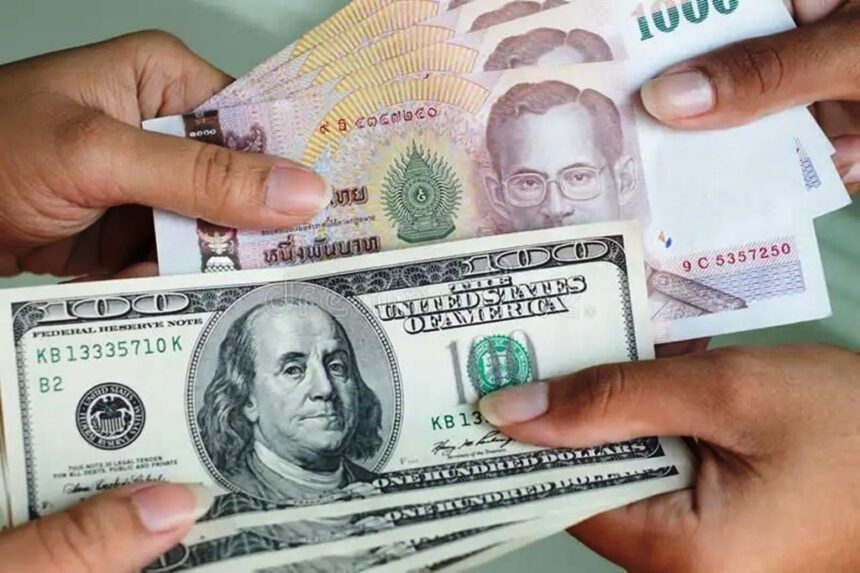
BANGKOK – The Thai baht in 2026 gives a mixed outlook for travelers, expats, investors, and companies that need to move money in or out of Thailand. THB is the currency code for the Thai baht, Thailand’s official currency. As of mid-February 2026, the Thai baht (THB) trades around 31 THB per USD, which is stronger than in past years.
Several forces sit behind this move, including capital inflows, a steady current account surplus, and the baht’s link to gold prices. Lately, though, the pace has cooled, and trading feels more settled.
Below is a look at today’s exchange rate trend, the main economic factors moving the baht, 2026 forecasts from different sources, and simple guidance on timing your exchange. Whether you’re planning a Phuket trip, sending money for a property deal, or managing business invoices, a clear view of USD to THB trends can help you get more value.
Thai Baht Forecast 2026, THB exchange rate trends 2026, USD to THB prediction, Thai currency outlook, exchange money Thailand 2026, Baht appreciation factors, Thailand economic forecast 2026
Current Baht Exchange Rate Snapshot
The Thai baht has held up well in early 2026. The weighted-average interbank rate sits around 31.05 to 31.11 THB per US Dollar, the US Dollars to Thai Baht rate, while the mid-market rate is often close to 30.95 to 31.00 THB per US Dollar. Versus other major currencies:
- 1 EUR ≈ 36.8 to 36.9 THB
- 1 GBP ≈ 42.3 THB
Compared with earlier periods above 34 to 35 THB per USD, this is a clear gain for the baht. As a result, Thailand can feel more expensive for many foreign visitors. On the other hand, it helps people who hold THB or earn income in baht.
You can find live exchange rates on platforms like XE.com or major banking apps for the most up-to-date THB figures.
Part of the support comes from Thailand’s external position. The country has kept a current account surplus, and it has seen inflows tied to tourism recovery and foreign investment. Still, officials have raised concerns about how a strong baht can squeeze exports.
Key Economic Factors Shaping the Baht in 2026
Thailand faces real economic pressure in 2026, and that can influence the currency. The Bank of Thailand sees GDP growth around 1.5%, down from higher 2025 estimates. It points to U.S. tariffs that weigh on exports, high household debt, and a strong baht that can hurt manufacturing and tourist spending.
Meanwhile, the Finance Ministry expects faster growth of about 2.0%. That outlook leans on tourism and local demand. Tourist arrivals may reach 35 to 35.5 million, which would lift service income, even if it still falls short of pre-pandemic highs.
Inflation also stays low. Headline inflation has been around 0.3% to 0.7%, below the Bank of Thailand’s 1% to 3% target. Because of that, policymakers have room to keep settings supportive.
Exports look like the weak spot. Merchandise growth could stall, or even slip a bit, due to a tough 2025 comparison, U.S. tariffs, and the stronger currency. Industry groups, including the Federation of Thai Industries and shippers’ councils, have flagged scenarios where exports fall by 0.5% to 1.5%.
Tourism can still add upside. However, a firm baht can change behavior, since some visitors spend less when Thailand feels pricier.
Politics also matters. Post-election stability has helped confidence, which can reduce risk premiums and support the baht.
Expert Forecasts for the Thai Baht in 2026
Forecasts for USD/THB in 2026 spread across a wide range. That reflects uncertainty around trade, U.S. policy, and Thailand’s domestic growth. Even so, many calls point to a mostly flat to slightly stronger baht.
- Thailand’s Fiscal Policy Office (FPO) projects an average of 31.8 THB per USD in 2026 (range 31.3 to 32.3). It ties that view to a softer U.S. dollar, continued inflows, and external surpluses.
- Some bank outlooks, including MUFG, place USD/THB around 30.5 to 31.1 across different quarters.
- Compiled forecasts from sites such as ExchangeRates.org.uk often show USD/THB near 31.5 to 31.8 for much of 2026, with a possible 31.0 to 32.0 band as gold’s impact fades.
- More bearish USD views (meaning a stronger baht), like LongForecast and Traders Union, include moves toward 29 to 30 THB per USD by late 2026.
- CoinCodex models include scenarios in the 27 to 29 area, though other paths keep rates closer to 30 to 32.
Overall, many expectations cluster around 30 to 32 THB per USD, and some analysts rate the baht as one of the stronger Asian currencies. If inflows stay strong and the U.S. dollar weakens, the baht could firm up more. In contrast, export pain could push the Bank of Thailand to step in or ease policy, which may limit gains.
The Bank of Thailand has also signaled discomfort with the baht getting too strong. It has mentioned possible steps to reduce inflows linked to gold and other drivers.
Historical Trends and Recent Movements
The Thai baht has a rich history that provides context for its current strength. Once known as the tical, the currency transitioned from the silver standard to the gold standard in the early 20th century.
Decimalization in 1946 restructured it so that 1 Thai baht was divided into 100 satang, with historical data showing earlier forms like the podduang, salueng, and fueang. Today, banknotes and coins are produced by the Royal Thai Mint and often feature images of King Rama.
Over the last few years, the baht has climbed a lot. In some stretches, it gained more than 10% against the U.S. dollar, helped by gold rallies and safe-haven demand. After trading above 35 THB per USD, it has moved closer to 31, one of its strongest levels in years.
In early 2026, the baht moved around with election-related news, softer gold prices, and short U.S. dollar rebounds. After that, it found a steadier footing as political signals improved.
This pattern looks very different from the post-pandemic period. Back then, the baht weakened as tourism collapsed, then later rebounded as travel returned.
Should You Exchange Money Now?
Timing depends on what you need and when you need it. The currency symbol ฿ represents the Thai baht (THB), and small transactions often involve the satang subunit.
- Travelers leaving soon: Because the baht is strong, exchanging now can lock in current levels in case it strengthens more. If many forecasts hold near 31 to 32 THB per USD, waiting could mean fewer baht later.
- People receiving THB (expats, property sellers): A stronger baht can raise value when you convert back to foreign currency, especially for money transfers or to send money home. If the baht keeps rising, waiting to exchange could help.
- Businesses that must pay in THB: Buying baht now can protect budgets if the currency strengthens further, particularly for international money transfers and invoices.
- Long-term investors: With many sideways forecasts, big moves may be limited. Still, watch U.S. policy shifts and Thailand’s export trend.
A few practical tips help either way. Check a currency converter for the latest rates, and mid-market providers such as Wise often price closer to the real rate than many banks, but be mindful of transaction fees. Airport booths also tend to offer weak rates, so they usually cost more. It can also help to track major data releases and Bank of Thailand comments, since those can move USD/THB quickly.
Many experts also warn against trying to time every swing. It’s often better to exchange based on your schedule, not a short-term forecast.
Conclusion: What to Expect for the Thai Baht in 2026
The Thai currency outlook for 2026 points to a baht that stays firm, or trades mostly steady, often in the 30 to 32 THB per USD range. Strong external balances and tourism recovery help support it. At the same time, slower growth and export risk can cap gains.
For most people, the best plan is simple. Exchange based on when you need the money, then keep an eye on updates from the Bank of Thailand, Reuters, and other trusted financial sources.
If you’re traveling, investing, or paying invoices tied to THB, staying current on the Thai baht forecast 2026 can help you make smarter choices as conditions change.