



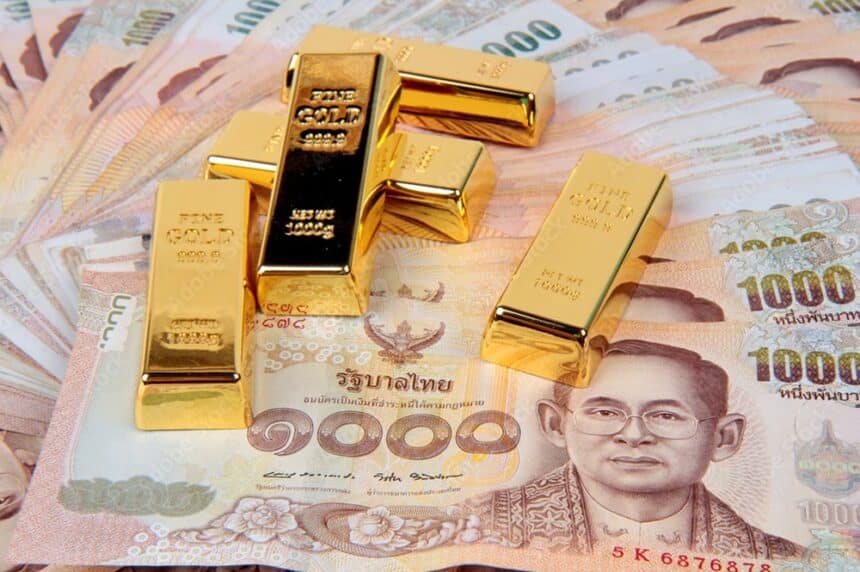
February 2026 has turned Thailand’s gold price today into a daily talking point, because the gold price on shop boards can change fast. As of February 12, 2026, Thai gold bars sell at 74,500 baht per 1 baht-weight (buy at 74,300), while gold jewelry sells at 75,300 (buy at 72,813), higher because of making charges.
Those swings can feel dramatic because the market sometimes reprices many times in a single day. In the past week alone, prices surged, then snapped back hard, including a sharp 2,300 baht drop in one session after profit-taking and shifting expectations around inflation data.
Buyers, sellers, travelers, and long-term investors are all searching for the same thing: a clear read, using historical data to analyze past price swings, on whether to lock in a price now, wait, or convert cash to gold before the next move. Thailand’s quotes can also look different from global spot gold headlines, since local pricing is posted per 1 baht-weight (15.244 grams for bars) and can include small premiums and jewelry discounts on buyback.
This post explains why Thailand’s gold market is surging in 2026, informed by gold price history, what drives the big daily moves, and how to read bar vs jewelry prices without panic when the numbers jump.
Gold price today in Thailand, the numbers people are actually paying in February 2026
In Thailand, “gold price today” usually means the posted shop board price that buyers see at gold shops, not a single national rate. Those boards can update many times per day, so the gold price someone pays at 10:00 a.m. might not be the same at 2:00 p.m.
As a real February 11 to 12, 2026 reference point, gold bars were posted around 74,500 THB per 1 baht-weight (sell), with buyback slightly lower (often only a small gap). Gold jewelry (ornaments) sat higher, around 75,300 THB per 1 baht-weight (sell), while buyback was noticeably lower than bars because the extra costs do not fully come back at resale. For a quick snapshot of how Thai outlets report these daily moves, see Thailand gold prices on Feb 12, 2026.
Gold bar price vs gold jewelry price, why the spread exists
The bar price is the cleanest read on the market because a bar is basically “metal value plus a small shop margin.” That is why bars often track global moves faster, and with less noise, than ornaments.
Jewelry pricing includes a premium that covers more than gold content, such as:
- Workmanship and design (labor, wastage, finishing)
- Brand and storefront costs (especially in prime areas)
- Shop margin (inventory risk and daily hedging costs)
- VAT-related practices where applicable (some shops quote a tax base for ornament pricing, which can confuse first-time buyers)
That premium explains why ornaments can sell higher than bars even on the same day. The hard part comes later. When someone sells jewelry back, the shop mainly pays for the gold content and often discounts for wear, scratches, or non-standard pieces. In other words, a bracelet has stories and style, but the buyback desk cares about weight, purity, and how easy it is to resell.
What “baht-weight” means, and a quick conversion so readers do not get confused
Thailand quotes gold in baht-weight, which is a weight unit, not the currency. For gold trading, 1 baht-weight is about 15.244 grams for standard Thai gold bars (96.5% purity).
A simple way to compare Thai shop prices with global headlines is to remember:
- Global news often quotes spot prices in USD per troy ounce (about 31.1035 grams).
- Thai shop boards quote THB per baht-weight (about 15.244 grams).
So one baht-weight is roughly half an ounce by weight. It is not exact, but it keeps readers from mixing up units when they see a big USD/oz number on TV and a different THB number at a shop. For larger trades, note that 1 kilogram (1,000 grams) equals about 65.6 baht-weights.
Why Thailand’s price can change even when global headlines look calm
Thailand’s shop price moves on a few parts at once, so it can jump around even on a “quiet” news day, unlike the often steadier silver price influenced by industrial demand. The main drivers are the world gold price, the USD/THB exchange rate, and local demand (including retail buying waves and dealer restocking). Shops also update boards in bursts, so buyers often turn to gold price charts to track the market, which can feel like it is sprinting, even if the daily close looks normal.
In early February 2026, the swings were sharp. Some sessions saw quick drops followed by fast rebounds, which made the market feel like it was “surging” inside a choppy trend. One widely reported day included dozens of intraday price updates as global gold spiked, then Thailand repriced quickly to match. A local example of that pace is covered in Thai gold gains after multiple updates.
For shoppers, the practical takeaway is simple: Thailand’s gold board is like a thermometer that updates mid-breath. Even when global headlines sound steady, a small move in USD/THB or a sudden buying rush can flip the local number within minutes.
The real reasons Thailand’s gold market is surging in 2026
Thailand’s gold market is not moving in isolation. Shop boards in Bangkok, Chiang Mai, and upcountry towns react to the same forces that move prices in London and New York, then add Thailand-specific layers like exchange rates and local trading costs. That is why 2026 can feel confusing: global spot might look steady on a headline, while the Thai board still flips several times amid market volatility.
Early 2026 also brought a broad global rally (roughly 12% to 16% up in many market snapshots), so Thailand is starting from a higher base. The surge is real, but the reasons are mostly mechanical and behavioral, not magic.
A global gold rally is lifting every local market, Thailand included
Thailand mostly imports its gold price signal from overseas markets. The global benchmark sets the tone, then Thailand converts it into local terms. In practice, local dealers watch spot prices (quoted in USD per troy ounce), translate that into Thai baht, then publish shop-board prices per 1 baht-weight.
That pipeline has three main parts:
- Global spot price: the worldwide reference, moving on macro data, Federal Reserve signals, interest rates expectations, and risk sentiment tied to monetary policy.
- USD/THB conversion: the same ounce price becomes a different baht number depending on the exchange rate.
- Local premiums and discounts: shipping, hedging costs, inventory risk, and shop margins show up as small add-ons, while jewelry buybacks often carry larger deductions.
Reports in early 2026 frequently cited gold price trading around $5,000 to $5,100 per ounce, with some bank and trader forecasts pointing higher. The point is not the exact target. It is the pass-through. When global gold price jumps, Thailand reprices quickly because the underlying input price changed. A useful example of the kind of global move that ripples into Thailand is covered in Reuters reporting on gold above $5,100.
The US dollar and the Thai baht, the exchange rate effect many people miss
Gold is priced globally in US dollars, so Thailand has a built-in currency step before anyone sees a number on a shop board. As a result, Thai prices can move differently from global spot, even on the same day, especially as the Thai baht trades against major currencies like the USD.
Here is the simple version. If the global ounce price stays the same, but the baht weakens versus the dollar, it takes more baht to buy that same ounce. So the Thai board can rise without any fresh rally in world gold. On the other hand, if the baht strengthens, it can soften the local impact of a global move.
A relatable way to picture it: think of a movie ticket priced in dollars. The ticket price does not change, but the cost in baht changes at the currency counter. Gold works the same way. In 2026, talk of a declining US Dollar Index tied to policy uncertainty has mattered, but Thailand still has its own FX story day to day. That is why two people can read the same global gold headline and still see different Thai board results.
Geopolitical risks and “safe money” behavior are back in a big way
When uncertainty rises, gold demand often shifts from “nice to own” to “must-have insurance.” That is the classic safe-haven behavior: buyers accept lower short-term yield because they want an asset they believe will hold up during shocks.
In 2026, the buyer mix matters in Thailand. There are investors trading bars for price exposure, but there are also households that prefer physical gold because it feels straightforward. A chain, a bracelet, or a bar is tangible, and it can be sold quickly at many shops. That familiarity can pull in demand during tense news cycles, even from people who do not follow markets daily.
This does not require panic to be effective. It is often calm, practical decision-making. People keep gold as a form of self-insurance, the way some keep extra cash at home. When more buyers think that way at once, local shops feel it in faster turnover and tighter supply, which can widen local premiums.
High global debt and lower trust in paper assets push long-term buying
Another driver sits in the background: debt and confidence. When headlines highlight rising government borrowing, sticky inflation risks, or sudden policy shifts, some savers start doubting paper promises. That does not mean they expect a collapse. It simply means they want a hedge that does not depend on any one issuer.
Gold fits that mental model, so long-term demand can stay firm even when prices swing. In fact, 2026 has shown how both things can be true:
- Gold can drop hard in the short run (profit-taking happens, and it can be fast).
- The long-term bid can remain strong because buyers keep treating gold as a store of value.
For Thailand, this long-term buying shows up as steady interest in bars, repeat purchases on dips, and quick rebounds after sell-offs. The surge, then, is not just a story about a higher global chart. It is also about why so many people still choose gold when trust in other assets feels less stable.
Why gold is especially popular in Thailand, and why 2026 is amplifying that demand
Thailand’s gold demand in 2026 is not just about a higher gold price. It is also about habits built over years, and a local market that makes buying and selling feel simple. When prices swing, more people show up on both sides of the counter. Some want safety, others want profit, and many just want a savings tool they understand.
Under that surface, Thailand has a few practical features that keep physical gold popular, even when the gold price looks scary.
Physical gold is a familiar savings tool in many Thai families
For many Thai households, gold is not a mystery product. It is a savings habit, like putting money in an envelope, except the value can rise over time. People often buy a little at a time, when they have extra cash. That could be a gold coin, a piece of gold bullion, a thin chain, or a simple bracelet, depending on budget.
This “buy a little over time” habit works because it feels manageable and supports retail investments. A person does not need a big lump sum, and they do not need to pick the perfect day. They can build a position slowly, the same way someone might add to a jar of spare change, whether stacking more gold coins or gold bullion.
Gold also shows up in gifting, because it is both personal and practical. A gift of gold can mark a big moment, and it does not go out of style the way some items do. If money gets tight later, it can be sold. That last part matters in 2026, because uncertainty makes people want choices.
Most importantly, physical gold builds trust because it is easy to understand. A bank balance is a number on a screen. A gold piece is something a person can hold, weigh, and bring to a shop. When headlines feel noisy, that simple control can feel calming.
Thailand’s gold shops make pricing feel real time and highly visible
Thailand’s gold market is built around gold shops that post prices openly. Those boards, often powered by gold price calculators, update often, sometimes many times a day, so buyers can see the market moving in real time. That visibility lowers the fear of getting a “secret” price, because everyone in the shop sees the same numbers.
Competition also plays a role. Many shops operate close together in busy areas, so pricing stays tight. When spreads are narrow, trading feels less costly. As a result, more people feel comfortable buying, selling, or swapping jewelry for bars.
Still, visibility can also make the surge feel stronger than it is. When a board flips from one quote to the next, it creates urgency. Even a normal move can look dramatic when it shows up as several updates in an afternoon. In 2026, that effect gets stronger because more people are watching prices like a scoreboard, and reacting quickly.
This is one reason retail activity can spike fast, even without a single “big” news event, because the market is always on display.
Tourism, remittances, and cross-border buying can add extra demand at the margin
Tourism and cross-border spending are not the main drivers of Thailand’s gold surge, but they can add pressure in specific places. When travel patterns change, physical buying can rise in tourist areas and border provinces, especially for shoppers who prefer a same-day, in-person purchase.
Remittances can matter too. When money comes in from relatives working abroad, families sometimes convert a portion into gold as long-term savings. It is a simple idea: cash arrives, then some of it turns into metal that can be sold later.
At the shop level, these extra flows can tighten supply for short periods. When a shop gets busy, it may run low on popular sizes, widen spreads, or delay certain buyback quotes until inventory normalizes. That can make the local “gold rush” vibe feel even louder, even if the national picture is steadier. For a snapshot of how strong Thai investment demand has looked recently, see Thai investment demand hitting a 12-year high.
How to read the surge without getting burned, smart steps for buyers and sellers in 2026
When Thailand’s gold board flips several times a day, it can feel like a flashing traffic light. The goal in 2026 is not to predict the exact next tick, it is to make clean decisions that hold up even if the price snaps back tomorrow.
Some forecasts talk about 80,000 to 88,000 THB per baht-weight later in 2026, but nobody gets a straight line up. A surge can be real and still come with sharp pullbacks. The safest approach is to treat gold like a tool, not a lottery ticket, and to match actions to the type of buyer or seller standing at the counter.
A simple checklist before buying: price type, purity, fees, and buyback terms
First-time buyers usually get tripped up by one thing, they look at the headline price, not the type of price. In Thailand, bars and jewelry are priced and resold differently, even if they look close on the board.
Gold bullion is the simple choice for price tracking because it reflects mostly metal value with a tight spread. Jewelry costs more upfront, then often sells back for less than people expect because making charges do not fully return, and it may be valued as scrap gold.
Before buying, a buyer can run a quick sanity check, using resources like gold price calculators and technical analysis tools for smarter decision-making:
- Confirm what is being bought (gold bullion vs jewelry): If the goal is exposure to the gold price today, gold bullion usually behaves more predictably at buyback.
- Check purity markings: Standard Thai gold is often 96.5%, and it should be stamped. If a piece is not clearly marked, the resale desk may discount it.
- Ask about the spread and fees: The gap between posted sell and buy prices is the cost of getting in and out. A tight spread matters most for short-term holders.
- Get a proper receipt and keep it: A clear receipt (weight, purity, date, shop) makes resale faster and reduces arguments later.
- Choose a shop with a strong reputation: A busy, established shop tends to have clearer terms and steadier buyback practices.
Buyback gets easier when the item is standard, undamaged, and documented. That is why many repeat buyers stick to common sizes and keep packaging when possible.
Finally, the budget rule: don’t overextend just because the board is hot. Chasing a single-day spike often leads to regret, especially when the next update reverses the move. Gold price charts serve as a key resource for buyers to avoid chasing spikes.
When selling makes sense, and how to avoid common shop-floor mistakes
Long-time holders often wait for the perfect top, then miss good exits. In real life, nobody sells the exact high. A smarter expectation is to sell when the gold price meets a personal goal, or when risk feels too high for comfort. Gold price charts can help sellers time exits without chasing highs.
A few shop-floor habits can protect the outcome:
- Compare a few shops before committing: Even small differences in buy price add up on heavier weights.
- Read the posted buy price carefully: Shops show a sell price and a buyback price, and the buyback is what matters at the counter.
- Bring documentation: Receipts, certificates, and original packaging reduce friction and speed up verification.
- Know the jewelry reality: Jewelry resale can disappoint because making charges and wear get discounted. A chain that looked expensive in the display case may trade like scrap gold at buyback.
For sellers who only want to track prices, it helps to watch the gold bullion buyback line, not the jewelry sell line. That number is closer to what cash-out looks like.
For a sense of how bullish forecasts can sound during this run, see Thai trader projections for 88,000 baht gold. It is useful context, but it should not become a deadline that forces a rushed sale or a rushed buy.
If prices pull back, what it means and what it does not mean
Pullbacks are normal in fast markets. In 2026, a drop often comes from profit-taking, a shift in rate expectations, or a sudden change in the US dollar. Sometimes it is as simple as big buyers stepping back after a rush, which lets prices breathe.
A pullback does not automatically mean the trend is over. It can also mean the market is clearing out short-term traders who bought late. If the bigger drivers stay in place, the price can recover quickly.
At the same time, a surge does not promise nonstop gains. Gold can rally hard, then chop sideways for weeks, or fall fast if the news flips. The calm way to read it is this: short-term moves are often emotion and positioning, while longer moves usually track rates, currency, and risk sentiment.
For first-time buyers, that argues for smaller buys over time instead of one big bet. For holders, it supports partial sells when goals are hit, rather than waiting for a headline number.
What to watch next in 2026: key signals that can move Thai gold quickly
A simple watchlist helps price trackers avoid noise while still staying informed:
- USD/THB moves: Gold is priced in dollars, so a weaker baht can push Thai prices up even if spot gold is flat.
- Federal Reserve interest rate expectations: Rate cut talk, particularly tied to US jobs data, often supports gold because cash and bonds look less attractive by comparison.
- Inflation trends and central bank signals: Sticky inflation can keep demand firm, while cooling inflation can reduce urgency.
- US jobs data releases: These reports frequently sway rate cut bets and trigger quick gold moves.
- Major geopolitical headlines: Sudden conflict risk can trigger quick safe-haven buying and sharp repricing.
- Global risk appetite shifts: When markets move from “risk-on” to “risk-off,” gold often catches a bid as traders reduce exposure elsewhere. Keep an eye on financial news and spot platinum as a comparative asset.
- Spot platinum trends: Monitoring spot platinum provides context on broader precious metals dynamics.
Thailand’s gold price today feels like it is always in motion in 2026, because the surge has clear fuel, as reflected in the gold price history we’ve covered. First, global gold strength sets the base price, and Thailand converts that move into baht. Next, the USD/THB rate can amplify the jump, so the shop board may rise even when global headlines look calm. At the same time, Thailand’s strong habit of buying physical gold keeps demand steady, while shop boards that update all day make every move feel urgent and very public.
For anyone buying or selling, the best edge is discipline, not speed. That means tracking the bar buyback line, watching the spread, and keeping an eye on exchange rates before reacting to a noisy intraday swing. It also means setting personal goals, then sticking to them, whether that is buying in small amounts, taking partial profits, or holding as long-term savings.
Thanks for reading, if Thailand’s gold price keeps swinging, will readers judge the next move by the board updates, or by spreads, FX, historical data, and a plan they can live with?