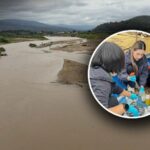



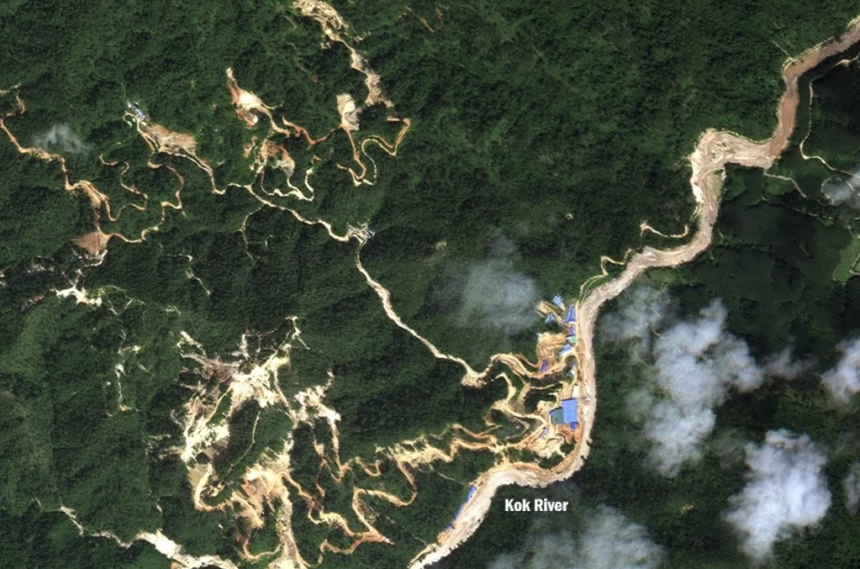
CHIANG RAI – A Shan human rights group has released satellite images pointing to a major expansion of mining by a large Chinese state enterprise. The new activity includes rare earth and gold operations along the upper Kok River north of Mae Ai. Six months ago, images showed rows of circular pits.
The latest shots reveal enclosed structures now in place, raising the risk of more severe cross-border pollution. The group says the operator is the same entity behind rare earth mining in northern Xiangkhouang, Lao PDR.
The Shan Human Rights Foundation published satellite imagery over Shan State, Myanmar, and reported ongoing extraction of manganese, gold, and rare earths in key river basins.
The images also identify China Investment Mining Company, a state-owned enterprise from the People’s Republic of China, expanding gold and rare earth mines on the Kok River south of Mong Hsat in eastern Shan State, near the Thai border with Mae Ai district, Chiang Mai, and Mae Fa Luang district, Chiang Rai.
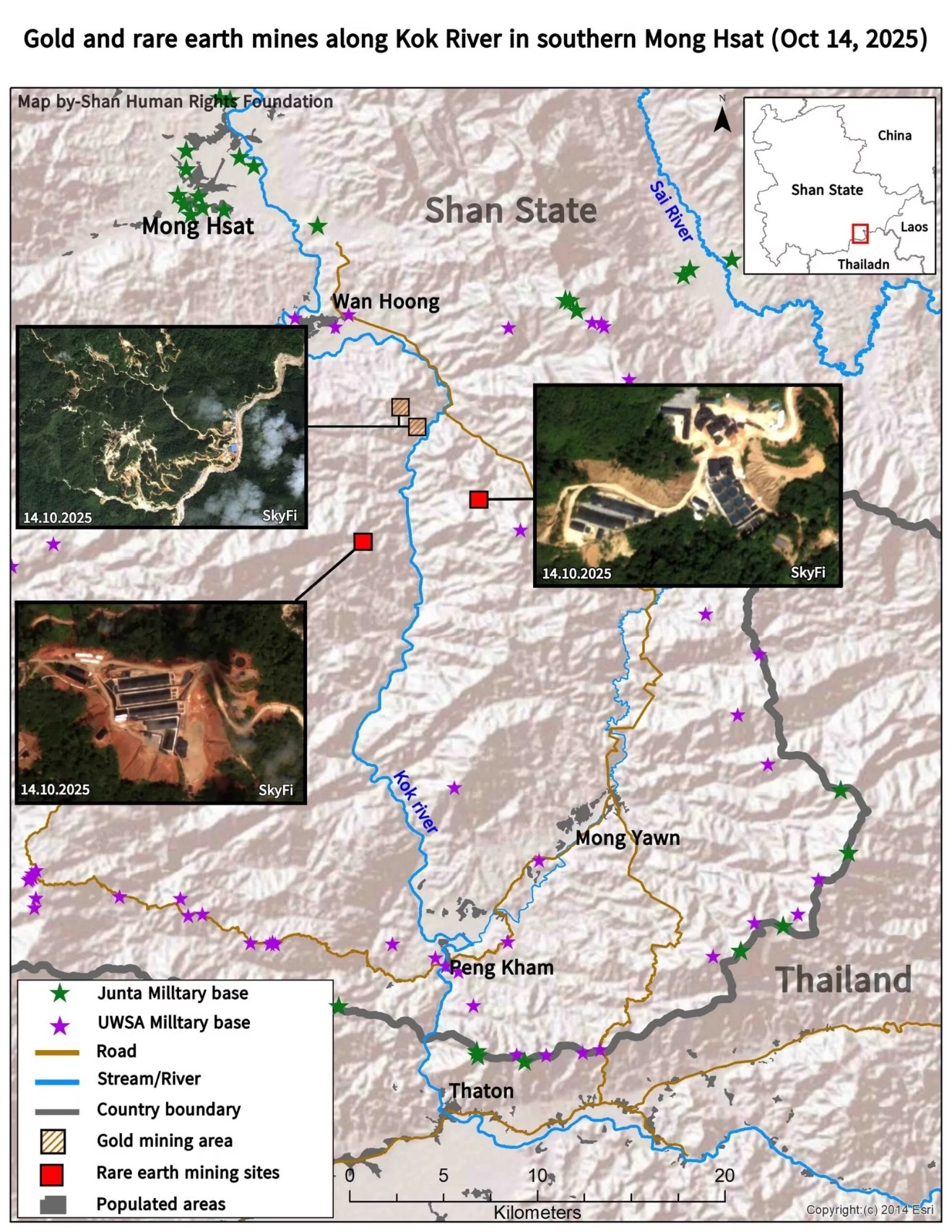
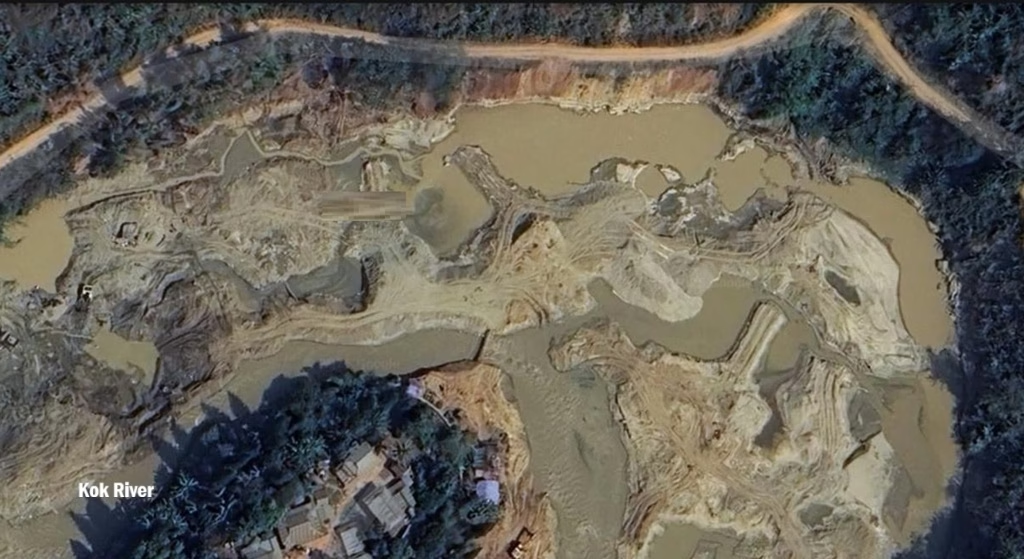
Satellite images from early 2025 and 14 October 2025 show major surface changes at the gold mine near Muang Yawn, close to the Kok River before it flows into Tha Ton, Mae Ai, about 30 kilometres away.
New roads and mining corridors cut into forested foothills, and ore processing on the river’s west bank appears continuous. Waste and heavy metals could be discharged straight into the Kok River.
Two rare earth sites previously flagged on 15 May 2025, one on each bank of the Kok River, now show bigger footprints. Both appear to use in-situ leaching, which involves injecting large volumes of chemicals into hillsides, causing extensive environmental damage.
At the western site, imagery from 6 May 2025 showed circular leaching ponds under construction. By 14 October 2025, construction looked complete, and the ponds were covered with black roofing.
The eastern site has operated since January 2025. Bright blue liquid in rows of ponds indicates ongoing chemical use, and several new buildings to the northeast of the ore zone point to an increase in activity.
The foundation added that Thai authorities have tested water quality in the Kok River every two weeks since April 2025.
Arsenic and lead exceeded safety limits several times. The mining area spans Muang Yawn and Mong Hsat, under joint control of the United Wa State Army (UWSA) and Myanmar’s military government. Mining permits must be issued by both before China Investment Mining Company, already active in rare earths in northern Lao PDR, can operate.
China Investment Mining Company is part of Shanghai Chijin Xiawu Metal Resources Co. Ltd., which holds a 90 percent stake. Shanghai Chijin is a joint venture formed in 2022 between Xiamen Tungsten Corporation, one of China’s largest rare earth producers, and Chifeng Gold, the country’s largest private gold producer.
The company opened a rare earth project northeast of Muang Kham in Xiangkhouang, northern Lao PDR. Reports document widespread pollution there, with wastewater discharged into the Nam Khao. The river feeds the Nam Khan, which then flows into the Mekong in Luang Prabang.
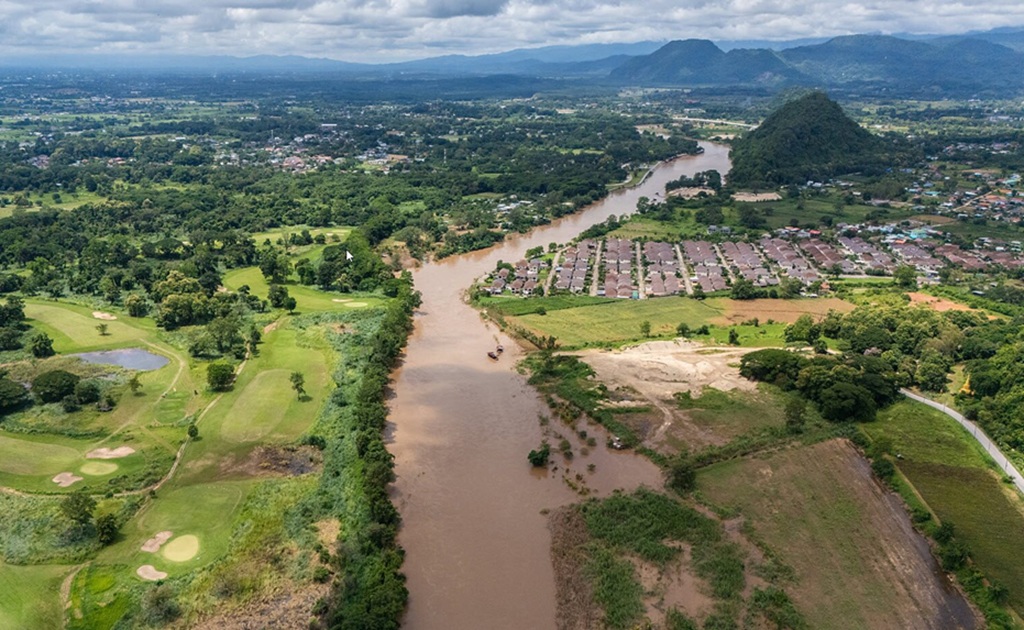
Overview of the Kok River
The Kok River (Thai: แม่น้ำกก, pronounced Maenam Kok) is a key tributary of the Mekong that flows mainly through northern Thailand, in Chiang Rai and Chiang Mai. It rises in Myanmar’s Shan State and enters Thailand at the border town of Tha Ton, then winds for about 180 kilometres across Thai territory. The river is prized for its scenery and supports farming, fishing, and tourism. In recent years, however, upstream pollution has caused serious harm.
Geography and Course
- Origin and path: The Kok begins in the Daen Lao Range in Shan State, Myanmar. It crosses into Thailand at Tha Ton in Chiang Mai Province, moves southeast through Mae Ai District, then turns northeast into Chiang Rai Province. It passes districts such as Mueang Chiang Rai, Mae Chan, Wiang Chai, and Chiang Saen, and meets the Mekong at Sop Kok, opposite Laos.
- Characteristics: The river is broad, shallow, and slow. An irrigation dam about 11 km east of Highway 1 near Chiang Rai often creates a lake-like stretch. The dam has 11 gates and feeds rice fields, but it can trigger seasonal floods. Major tributaries include the Fang and Lao rivers.
- Length in Thailand: Roughly 180 km of its total course of around 285 km.
Ecology and Biodiversity
The Kok has long supported rich habitats and floodplain farming, with crops such as rice, oranges, baby corn, and green peppers. Pollution in recent years has led to:
- Reports of deformed fish in the Kok, Sai, Ruak, and Mekong.
- Brown, sediment-heavy water during the rainy season from June, where clear flows once prevailed.
- Contamination found in floodplain crops, with toxins building up in soil and sediment.
Current Environmental Issues
As of October 2025, the Kok River faces a severe pollution crisis linked to unregulated rare earth and heavy metal mining in Myanmar’s Shan State, largely from Chinese-led projects. The main impacts include:
- Toxic contaminants: Arsenic levels exceed Thailand’s legal limit of 0.010 mg/L at all 15 monitored sites on the river and key tributaries, including the Fang, Lao, Korn, Suai, and Sai. Lead and mercury are also high.
- Sources: At least three rare earth mines lie upstream, and 44 new mines have opened on Mekong tributaries, including the Kok, since 2022. Rainfall and erosion carry contaminants into the river system, affecting more than one million people in Thailand.
- Downstream effects: Pollution has reached the Mekong, stopping fishing in parts of Chiang Mai and Chiang Rai. Crops have failed, with estimated losses of 40 million dollars across farming, fishing, and tourism. Irrigation and household use have been hit, and events such as Loi Krathong and Buddha statue flotillas have been cancelled.
- Health risks: People avoid direct contact with the water. Toxins threaten consumers through fish and farm produce sold in Thailand and abroad.
| Impact Area | Description | Affected Regions |
|---|---|---|
| Water Quality | Arsenic above 0.010 mg/L; orange-yellow colour from sediment | Kok, Sai, Mekong, and Ruak rivers |
| Aquatic Life | Deformed fish; no fishing activity observed | Chiang Mai, Chiang Rai provinces |
| Agriculture | Toxic floods are damaging crops; build-up in the soil | Thaton, Mae Ai floodplains |
| Economy | 40 million dollars in losses; tourism events cancelled | Communities in northern Thailand |
| Cultural | River festivals suspended | Border villages such as Tha Ton |
Tourism and Activities
Despite the challenges, the Kok still attracts eco-focused visitors.
- River cruises: Long-tail boat trips from Tha Ton to Chiang Rai, available as half-day or full-day rides. Expect views of terraced rice fields, tea gardens, hill tribe villages such as Karen and Lahu, and hot springs.
- Trekking and kayaking: Trails cross mountain scenery, with good birdwatching and cultural stops.
- Access: Most travellers start in Chiang Rai, with a 1 to 2-hour drive to Tha Ton. Tour operators promote responsible practices given the pollution issues.
- Caution: In mid-2025, authorities advised avoiding water contact during Songkran. Check the latest updates for safe activities.
Recent Developments
- Bilateral efforts: In August 2025, Thailand and Myanmar set up a joint technical group to track mining and contamination, with a focus on sharing data from Shan State.
- Protests and advocacy: Thousands gathered in Chiang Rai in June 2025, calling for mine closures. NGOs such as International Rivers and Living River Siam Association continue to press for openness.
- Ongoing monitoring: Thailand’s Pollution Control Department runs regular tests. Experts urge wider checks of sediment and soil, plus stronger diplomacy with Myanmar’s United Wa State Army.