





MUMBAI – Walking into The Raja Saab movie in January 2026 feels a bit like stepping into a funhouse with a flickering light. One room is full of clean laughs, another has a creepy shadow in the corner, and the next one slows down long enough that you start checking your watch.
This is a Prabhas-led horror-comedy that released on January 9, 2026, and reactions have been mixed. Some people are happy to see him loosen up and play for laughs, while others feel the film can’t pick a lane for long.
This review stays spoiler-light and focuses on basics: what the story is doing, what works best, what doesn’t, and whether it’s worth a theater ticket now or better saved for streaming later.
The Raja Saab movie review in 60 seconds (verdict, rating, and who will enjoy it)
Rating: 2.5 out of 5
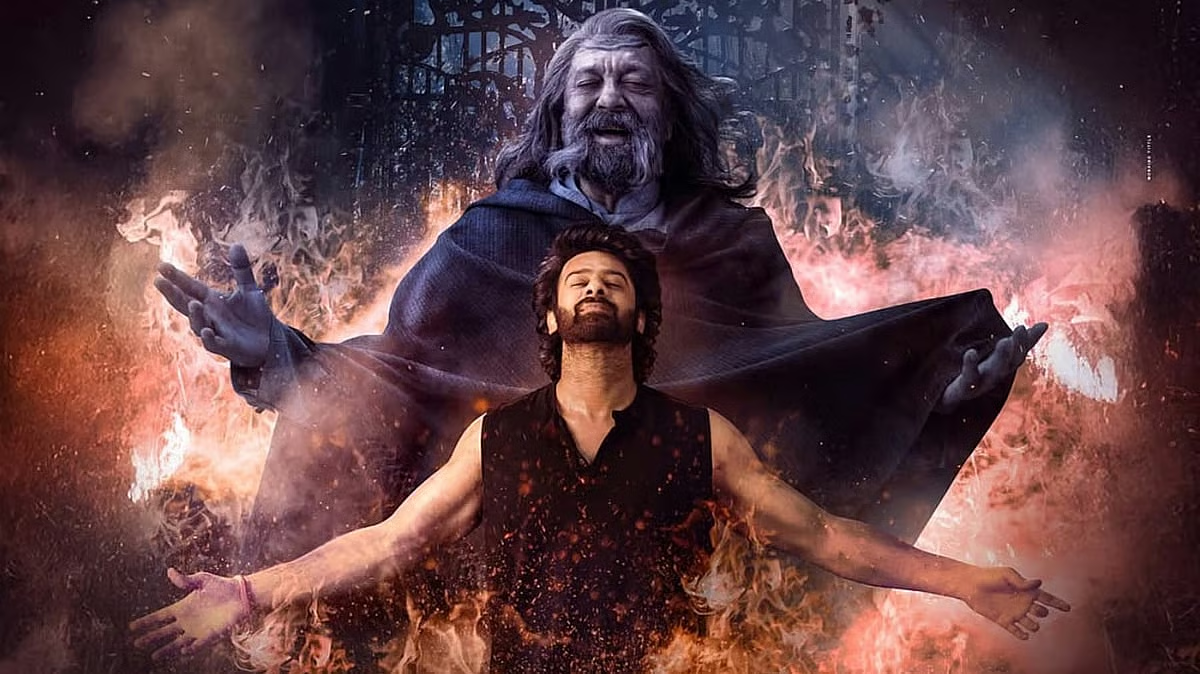
The Raja Saab movie is at its best when it treats horror like a theme-park ride, loud, playful, and built around Prabhas’ charm in a lighter role. The spooky mansion setup has some fun visual ideas, and the movie does land a few solid comedy beats.
The downside is the uneven tone and stop-start pacing. Some scenes build tension, then cut it with jokes that don’t always land, and a few predictable turns make the mystery feel less sharp than it could’ve been.
Watch it if:
- You want Prabhas in a more relaxed, comedy-forward mode.
- You like spooky set pieces that feel more “creepy fun” than terrifying.
- You enjoy big, noisy crowd energy during holiday releases.
Skip it if:
- You need tight pacing and a clear genre identity.
- You’re picky about horror rules and consistent suspense.
- You’d rather wait for a cleaner at-home watch than sit through slow patches.
Best reasons to watch
- Prabhas looks comfortable when the film lets him be playful and silly.
- The mansion setting creates a few memorable, creepy images and gags.
- The movie has a big-screen scale that reads well in a theater.
- The supporting cast adds color when the script gives them space.
- The music and background score punch up the louder comedy-horror moments.
Main reasons it may not work for you
- The first half can feel slow, with scenes that repeat the same idea.
- Some jokes feel placed to break tension, even when tension was working.
- A few subplots crowd the main mystery instead of deepening it.
- The scares often feel “safe,” leaning on mood more than real fear.
- The film’s tone shifts can make the emotional beats feel rushed.

Story, genre mix, and pacing (spoiler-free)
The basic setup is simple and easy to follow. Raju lives with his grandmother, Gangamma, who has Alzheimer’s. He’s also searching for his missing grandfather, and that search pulls him toward a mysterious mansion with a sinister presence.
That mansion is the movie’s main playground. It’s where the film tries to juggle horror, comedy, and a splash of fantasy. When it clicks, it feels like a spooky bedtime story told with a wink. When it doesn’t, it feels like the movie is stopping and starting, unsure whether it wants you to laugh, flinch, or feel something deeper.
Pacing is the biggest swing factor. The film takes its time setting up Raju’s world and the mansion’s rules, and that stretch can test patience if you’re waiting for the “main ride” to begin. Once it commits to the haunted-house momentum, it’s more engaging, but it still pauses for comedic detours that don’t always help. The climax goes for scale, and while it has moments that look impressive, it may not feel fully earned for viewers who want a tighter build.
Does the horror-comedy tone feel smooth or messy?
It’s messy, but sometimes fun, messy.
The movie often does a classic horror-comedy move: it sets up a scare scene, holds the silence, then releases the pressure with a joke or a reaction shot. In the best bits, that rhythm works, because the punchline feels like a human response to fear. In the weaker bits, the joke arrives too early, and the tension evaporates before it gets a chance to do its job.
If you like horror that doesn’t take itself too seriously, you’ll probably be fine with these shifts. If you want suspense that stays suspenseful, the humor can feel like someone turning the lights on mid-scare.
How scary is it, and what is the content rating like?
In India, the film carries a U/A 16+ certificate, which generally signals it’s not meant for young kids, and teens may need guidance depending on what they’re sensitive to. Expect creepy imagery, loud moments, and some violence, but the overall intensity leans more creepy and theatrical than nightmare fuel.
There were also reports of some violent moments being edited for certification, which matches the film’s overall approach: it wants to be spooky enough to tease you, but not so harsh that it stops being “group watch” entertainment.

Performances and characters: Does Prabhas carry The Raja Saab movie?
Prabhas is the main reason this movie stays watchable even when it drifts. He’s built an image around larger-than-life action and mythic scale, so seeing him in a role that asks for casual humor and lighter body language is part of the draw.
When the writing gives him a clear comedic target, he hits it. When scenes are stretched or crowded with extra business, even his presence can’t fully keep the energy up.
The supporting cast is stacked: Sanjay Dutt, Boman Irani, Malavika Mohanan (in her Telugu debut), Nidhhi Agerwal, Riddhi Kumar, and Zarina Wahab as the grandmother. Not everyone gets equal room, but the ensemble does help the film feel “full,” which matters in a story that’s trying to sell a whole haunted universe, not just one haunted night.
For a quick pulse check on how critics responded to this mix, this review from The New Indian Express captures the more frustrated side of the conversation: A tedious fantasy that tests patience.
Prabhas as Raju: comedy timing, charm, and emotional beats
Prabhas’ biggest win here is approachability. Raju isn’t framed like an invincible action machine; he’s a guy reacting to strange things with a mix of confidence, confusion, and attitude.
His comedy works best when it’s simple: a look, a pause, a blunt line, a physical reaction that feels natural. The emotional beats, especially around family, are the film’s attempt to ground the chaos. They land in moments, but the movie doesn’t always build enough quiet space for them, so some scenes feel like they’re hurrying to the next set piece.
Raju himself feels partly familiar, the cocky hero with a soft side, but the horror-comedy wrapper makes him feel fresher than in recent action-heavy outings.
Supporting cast and standout moments
A few types of scenes show the supporting cast at their best:
- Comic group scenes where reactions bounce from one character to another, and the movie feels like a chaotic family gathering in a haunted house.
- Confrontation scenes that bring a sharper, more serious energy, especially when the film briefly commits to the “sinister” part of its premise.
- Mansion sequences where character actors get to sell fear, denial, and bravado in the same breath.
Zarina Wahab’s presence adds warmth, and that matters because without a real emotional center, a horror-comedy can start to feel like a long sketch. The film doesn’t always follow through, but the intention shows.

Direction, music, visuals, and overall theater experience
Director Maruthi goes for a broad, mass-friendly style: big reactions, clear emotional cues, and set pieces designed to play to a crowd. That approach can be a blast when the theater is lively. It can also magnify the film’s weaker stretches, because the pauses feel louder when you’re waiting for the next payoff.
Visually, the mansion and production design carry a lot of weight. The movie reportedly has a massive budget (widely reported in the ₹300 to ₹350 crore range), and you can see the spending in the scale of sets, lighting, and effects-driven moments. It doesn’t look small.
Thaman S’s music and background score do a lot of the heavy lifting. When the film needs to switch moods quickly, the score becomes the signpost, sometimes for better, sometimes too obviously.
Best way to watch: if you’re already leaning yes, a theater is the right place for it, because the sound design and crowd reactions are part of the fun. If you’re on the fence, this is the kind of movie that may play better at home, where you can take a break during slower portions.
Maruthi’s writing and the mansion atmosphere
The mansion is the film’s strongest tool, and when the camera treats it like a living space with secrets, the movie perks up. Hallways, locked rooms, odd sounds, and sudden reveals all work best when they build anticipation first.
The writing is where things wobble. The mystery is clear enough to track, but the movie sometimes chooses extra jokes or side beats instead of tightening the central thread. It also relies on sudden moments more than slow-building suspense, so the tension can feel “on-off” rather than steadily rising.
Thaman S’s score and the film’s big-movie scale
Thaman’s score is loud when it needs to be, playful when it wants a wink, and dramatic when the film pushes emotion. The best parts are when the music supports the scene without announcing itself.
On the scale side, The Raja Saab movie generally looks like a big release. The effects vary by moment, but the ambition is obvious, and the film commits to a heightened, fantasy-tinged horror tone instead of trying to be grounded in realism.

After the credits, box office talk, and streaming details
If you like tracking the “how’s it doing” side of a new release, this one opened with strong attention. Early reporting on day one indicated solid earnings in India, with estimates moving quickly as the shows ramped up. It was also released during Sankranthi, which is a crowded window where audience excitement is high, and competition is real.
Online reactions have also been split, with many praising Prabhas while criticizing the screenplay and pacing. If you want a snapshot of that mixed social response, this roundup is one example: Prabhas’ horror comedy gets mixed reactions.
Is there a sequel, and should you stay for the credits?
Stay for the credits.
There’s a tease for The Raja Saab Part 2, titled The Raja Saab 2: Circus 1935. The setup points toward a continuing horror universe, and it’s positioned as a new story rather than a strict continuation of every thread from this film. If you enjoy franchise breadcrumbs, the credits moment is one of the cleaner “promise of more” beats in the whole package.
When and where you can stream it
Streaming rights are with JioHotstar, and the expected online release window is around the end of February 2026, though timing can vary by region and final announcements.
- Wait for streaming if you’re a casual viewer, you’re mostly curious, or you don’t love uneven pacing.
- Go to theaters if you’re a Prabhas fan, you like horror-comedy hybrids, or you want the sound and crowd energy.
Conclusion
The Raja Saab movie is a mixed-bag entertainer that wants to be scary, funny, and heartfelt, sometimes all in the same five minutes. When it’s in the groove, it’s easy to enjoy: Prabhas is lighter, the mansion has style, and the film remembers it’s supposed to be fun.
If you need a tightly written horror-comedy with clean momentum, you may walk out feeling unsatisfied. If you’re open to tonal bumps and you mainly want a big-screen, holiday-style ride, it can still be a decent night out.


