



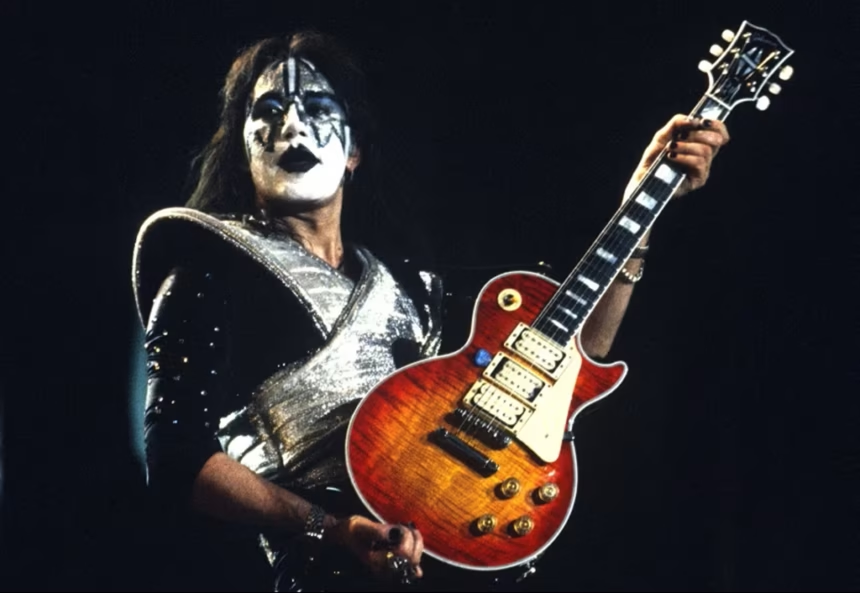
NEW JERSEY – Ace Frehley, the guitarist who helped launch Kiss into rock history, has died at 74. The co-founder of the band, adored for his silver face paint and sky-scorching solos, passed away on Thursday in Morristown, New Jersey.
His family confirmed his death with a message filled with love and grief, saying they were able to surround him with care and calm as he slipped away. They spoke of his warmth, his humour, and a life lived on a grand scale.
His final weeks were anything but easy. A fall in his home studio late last month led to a serious brain bleed, hospitalization, and life support. What began as a minor scare soon spiralled into a fight for his life.
He was initially reported to be fine, apart from doctor-ordered rest that forced him to cancel a California fair date. By 7 October, the mood had changed. The rest of his 2025 tour dates were pulled due to ongoing medical issues.
TMZ then reported an intracranial hemorrhage and a ventilator. He held on for weeks, with family close by, before they made the painful choice to let go. No drama, no excess, just a fall and its brutal aftermath. It felt stark for a man whose music had once lit up stadiums.
Tributes came fast and loud. Paul Stanley and Gene Simmons, his long-time bandmates in Kiss, put out a joint statement that caught the weight of the moment: they said they were devastated, called him essential during the band’s formative years, and said he would always be part of the Kiss legacy.
Our hearts are broken. Ace has passed on. No one can touch Ace’s legacy. I know he loved the fans. He told me many times. Sadder still, Ace didn’t live long enough to be honored at the Kennedy Ctr Honors event in Dec. Ace was the eternal rock soldier. Long may his legacy live on!
— Gene Simmons (@genesimmons) October 16, 2025
Eternal Rock Soldier
Simmons also posted on X, saying his heart was broken and that no one could touch Ace’s legacy. He said Ace loved the fans and that he had said so many times. He added a sad note about Ace not living long enough to be honoured at the Kennedy Center Honours in December, calling him an eternal rock soldier.
Peter Criss, the Catman and fellow original member, wrote that his love and prayers were with Ace’s family and friends. Bruce Kulick, who took up lead guitar during the 1980s, called the news devastating for rock. Across social media, famous players and everyday fans lined up to say goodbye.
The shock rippled far beyond Kiss diehards. X is filled with clips of crowd-pleasing solos and photos of teenagers in silver makeup. Many shared how Ace shaped their love for the guitar. Pearl Jam’s Mike McCready credited a childhood obsession with Kiss for putting a guitar in his hands and called Ace a hero and a friend.
Bret Michaels of Poison thanked him for the music, the festivals, and the guest solo on Nothing But A Good Time. John 5 from Mötley Crüe called him a hero and a friend he had known since 1988, and said Ace changed the world.
Tool’s Maynard James Keenan posted a childhood photo in Spaceman paint with a simple farewell. The Kennedy Center promised to honour his work and legacy later this year. From hair metal to grunge, across generations and styles, the respect was clear.
The Shaping of Kiss
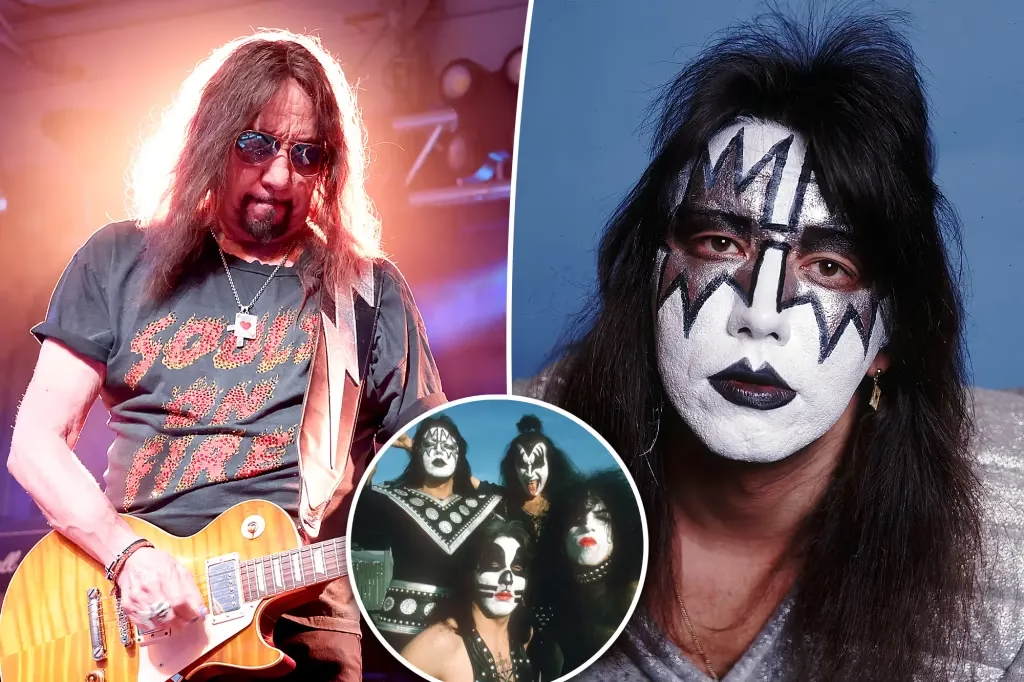
Frehley’s story began in the Bronx. Born on 27 April 1951, he got his first guitar at 13, a Christmas gift that sent him chasing the sounds of Jimi Hendrix, Jeff Beck, and Buddy Guy. Mates at school nicknamed him “Ace” for his easy charm.
By 1973, he was auditioning for a new band with Paul Stanley and Gene Simmons, playing a part in shaping Kiss from the start. Legend has it a riff on Deuce sealed it. He never trained formally. He liked to say he could not read music, yet he became one of the most famous guitarists in rock. That raw approach became part of his style.
Then came the look. The Spaceman makeup, silver star across the eye, and guitars that smoked and sparked became his calling card. Kiss launched in 1974 with a blast of spectacle, fire, blood capsules, and explosions that shook arenas.
Under the paint, Ace wrote some of the band’s signature tracks. Cold Gin, Parasite, and Shock Me carried his stamp, while New York Groove, from his 1978 solo record, took him into the charts on his own terms, hitting No. 13 in the US. By the time Dynasty landed in 1979, Kiss were at the summit, with sales in the tens of millions.
Ace Frehley’s Battles
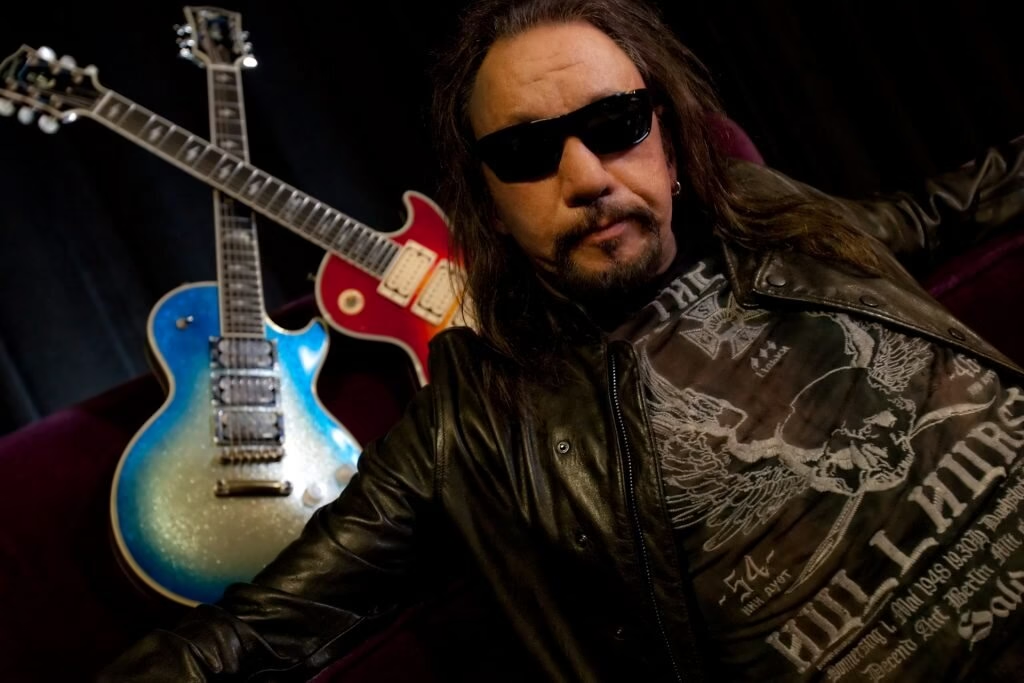
Success did not quiet tension. As the band grew more powerful, Ace battled cocaine and alcohol, and clashed with Stanley and Simmons over control and direction. He later admitted he was lost in those years. He left in 1982, during the Creatures of the Night period, though his face was still used in parts of the campaign.
He did not disappear. Under the banner Frehley’s Comet, he returned to the road in the mid-80s, mixing swagger with hooks. His 1978 solo album, also titled Ace Frehley, had already gone platinum, and late-80s singles like Into the Night kept him in rotation. The 1996 reunion brought him back to Kiss for a blockbuster run, with suits of armour, greasepaint, and stadiums full of people roaring along to Rock and Roll All Nite.
Sobriety, in the end, became his true second act. In 2006, his daughter Monique told him she was not hearing good things. He looked in the mirror and called his sponsor that evening. He said he had stayed sober ever since.
His 2011 memoir, No Regrets, took stock of a wild life and paid tribute to his fans, who he said had stuck with him through highs and lows. Even in later years, he kept releasing music. His 2024 album, 10,000 Volts, cracked the Top 10, a late proof of his pull as a writer and player.
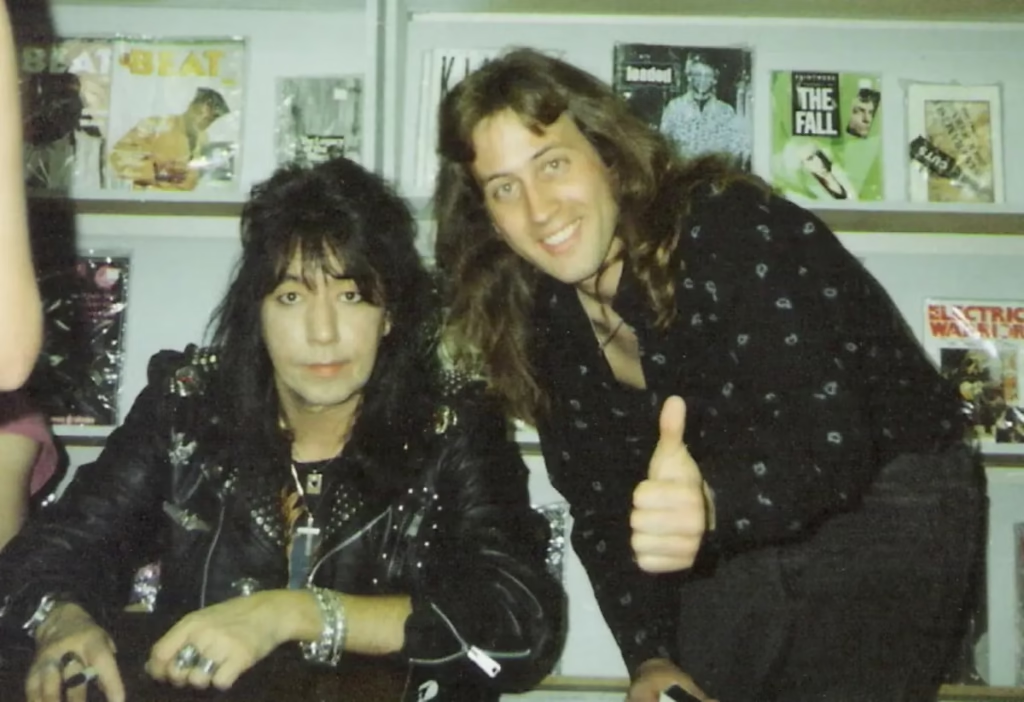
Bronx Kid with a Guitar
Across interviews, he never hid his feelings about the job. In a 2013 sit-down with Rolling Stone, he laid out a simple truth. Performing was the point. Travel and the rest of it felt like a grind. The stage was where it all made sense.
That summed him up. A Bronx kid with a guitar, turning riffs into escape. For many supporters, Kiss without Ace always sounded a bit like a machine without a heartbeat. His influence stretched far.
Bands like Poison and Mötley Crüe built part of their swagger on his example. Alternative and grunge players picked up on his bite and attitude. When Kiss went into the Rock and Roll Hall of Fame in 2014, Gene Simmons acknowledged it plainly. Ace’s style had been copied many times, but never matched.
His final post on X kept the wink he carried through the decades, a plug for 10,000 Volts with the promise that it would blow minds. It did. As fans crank Detroit Rock City and Shock Me tonight, what lingers is the sense of escape he offered. For a few minutes at a time, guitars roared, lights flared, and the outside world fell away.
Ace Frehley leaves behind a body of work that shaped arena rock, a look that generations copied, and a sound that still sparks young players into picking up a guitar. He was the Spaceman, the Bronx kid with a star on his face, the man who made smoke pour from his pickups while the crowd went mad. He made rock feel large, and he made it feel fun.
He is gone at 74, yet the legacy keeps going, loud and bright. Long live the Spaceman.