


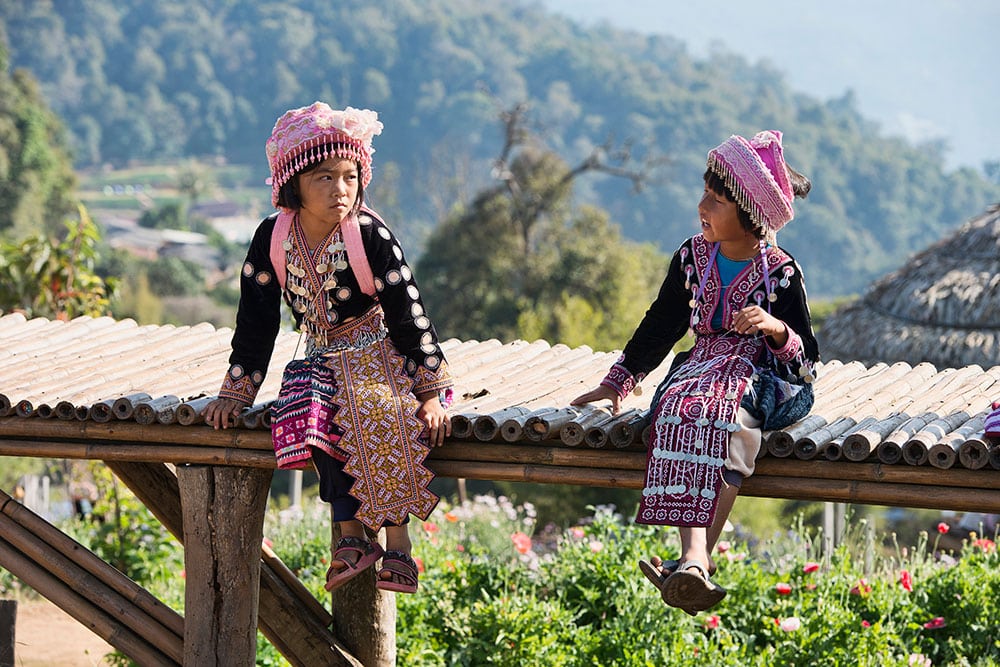
CHIANG RAI – Up in the cool, misty mountains of Northern Thailand, days feel slower and quieter. Chiang Rai is known for the bright, modern White Temple, but the deeper story of the region sits in the hills. Communities such as the Akha, Karen, Lahu, and Yao have lived here for generations, keeping their own languages, bold traditional clothing, and long-held spiritual practices.
A hill tribe visit can be one of the most meaningful parts of a Thailand trip. It also calls for care. When tourism is handled poorly, villages can end up feeling like displays for outsiders. When it’s done with respect, it becomes a real cultural exchange, it brings fair income to families, and it helps traditions stay strong.
The Tribes of Chiang Rai: A Closer Look
It helps to learn a little before you go. Each group has its own history, with roots tied to places like Tibet, China, and Myanmar.
1. The Akha: Spirit Traditions and Signature Dress
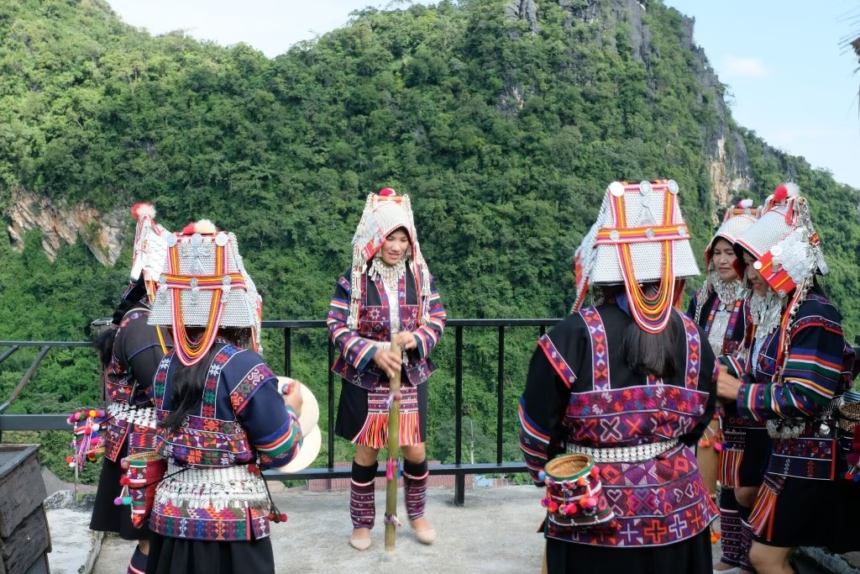
The Akha are often the group visitors notice first. With roots in Yunnan, China, they’re known for detailed silver headdresses. These headpieces can include coins, beads, and bright accents, and families pass them down over time.
- The spirit gate: At the entrance of many Akha villages, you may see a wooden spirit gate. It marks the line between everyday life and the spirit world. Don’t touch the gate, it’s sacred and meant to protect the village.
- Daily life: Many Akha families grow coffee and tea. Homes are often built from bamboo and wood, raised on stilts to help with airflow and rain.
2. The Karen: Skilled Weavers with Deep Forest Ties
The Karen (pronounced Ka-ren) are the largest hill tribe group in Thailand. They’re known for weaving and for a lifestyle shaped by the forest and nearby farmland.
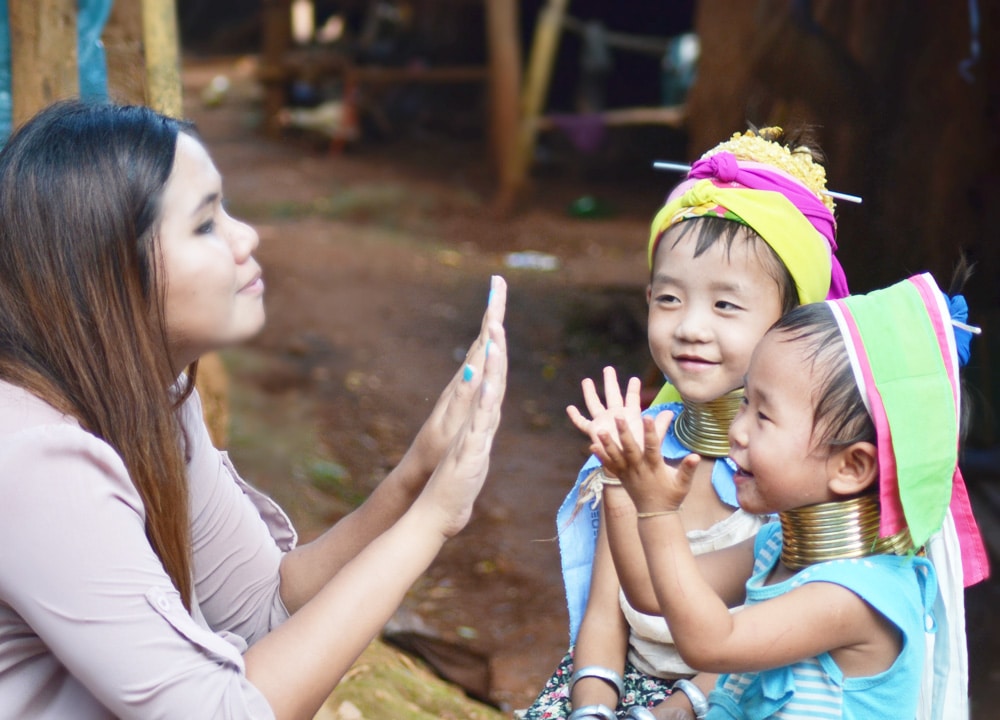
- About the “long neck” Karen: You may have heard of the Kayan (a Karen subgroup), where some women wear brass coils. It’s a sensitive topic because many live in staged tourist villages. For a more everyday experience, look for Sgaw Karen villages, where life centers on terraced rice fields and forest care.
- Clothing: Unmarried women often wear long white tunics. Married women may wear brighter sarongs and patterned tops.
3. The Lahu: A Hunting Past and a Love of Music
The Lahu are sometimes called “The Great Hunters.” Most farms today, but their hunting history still shows up in traditions, including the use of crossbows.
- Shared roles: Lahu communities are often described as more gender-equal than many others. Men and women commonly share work and responsibilities. Music matters, too, and bamboo flutes are part of local traditions.
- Beliefs: Many Lahu practice animism, a belief that spirits exist throughout nature. In some villages, you might see a central pole used for ceremonies and dances.
How to Visit Ethically: People Come First
A lot of travelers worry about whether a village visit supports the community or harms it. These steps help keep your visit respectful and welcome.
1. Skip “Show Villages” and Photo Stops
Some tours bring big groups to places built for quick visits. In these “show villages,” people may be asked to sit and pose, and it can feel staged.
- A better choice: Pick a tour that visits a real working village, where daily life continues as normal, cooking, farming, fixing tools, caring for children, and resting at home.
2. Book Guides Who Are Local
The strongest trips are led by people with personal ties to the area. A guide from the community can explain what you’re seeing with care and accuracy. It also helps keep more of the money in the village.
3. Choose Hands-On Cultural Time, Not Just Quick Stops
Photos are easy. Shared experiences take more time and feel more human. Look for tours that include:
- Cooking lessons: Make meals over a wood fire using simple tools.
- Craft sessions: Try embroidery, bamboo weaving, or other local skills.
- Homestays: An overnight stay is often the best option. It turns you from a passerby into a guest.
4. Follow Local Etiquette (Even If No One Lists the Rules)
- Ask before taking photos: Always ask before photographing people, especially kids. A polite gesture and a smile usually work.
- Dress modestly: Many villages are conservative. Cover shoulders and knees.
- Don’t hand out candy or cash to children: It can create begging. If you want to support the village, buy local crafts or donate through the school or a community project.
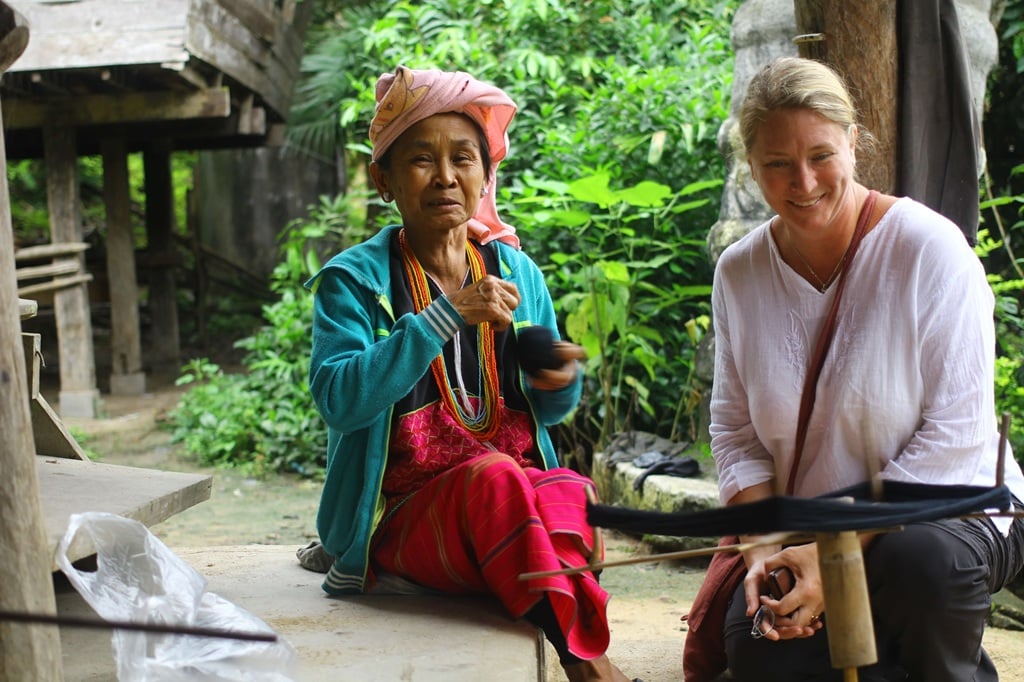
Finding Ethical Tours in Chiang Rai
If you want tours and projects that focus on respectful, community-led travel, these options are well-known and often recommended.
PDA (Population and Community Development Association)
In central Chiang Rai, the Hilltribe Museum and Education Center is run by the PDA. They’ve supported community-based tourism for years. The museum is a great first stop if you want context before heading into the mountains. They also arrange tours where revenue supports village needs, such as clean water and education.
Thailand Hilltribe Holidays
This small company focuses on private, slower trips. Their tours aim for natural interactions, not tourist setups. Many guides have local community ties, and the routes often avoid crowded stops.
Akha Hill House
Set high in the mountains near Chiang Rai, Akha Hill House works well for travelers who want to stay in an Akha village without a rigid tour format. It’s run by an Akha family and offers treks that support the local area.
Why Your Visit Matters
Ethical hill tribe travel is more than getting great pictures. When money fairly goes to communities, it can support local work, help young people stay closer to home, and keep language, craft skills, and cultural practices from fading.
Cultural immersion works both ways. You learn what daily life looks like in the mountains, with fewer comforts and a stronger tie to the land. Villages gain income and support that can help protect their heritage for the next generation.
Below are contact details and websites for several trusted ethical tour operators in Chiang Rai. These groups are known for community-based travel that supports families and local traditions.
This itinerary is built around slow travel, with time for real conversations, gentle hiking, and hands-on experiences.
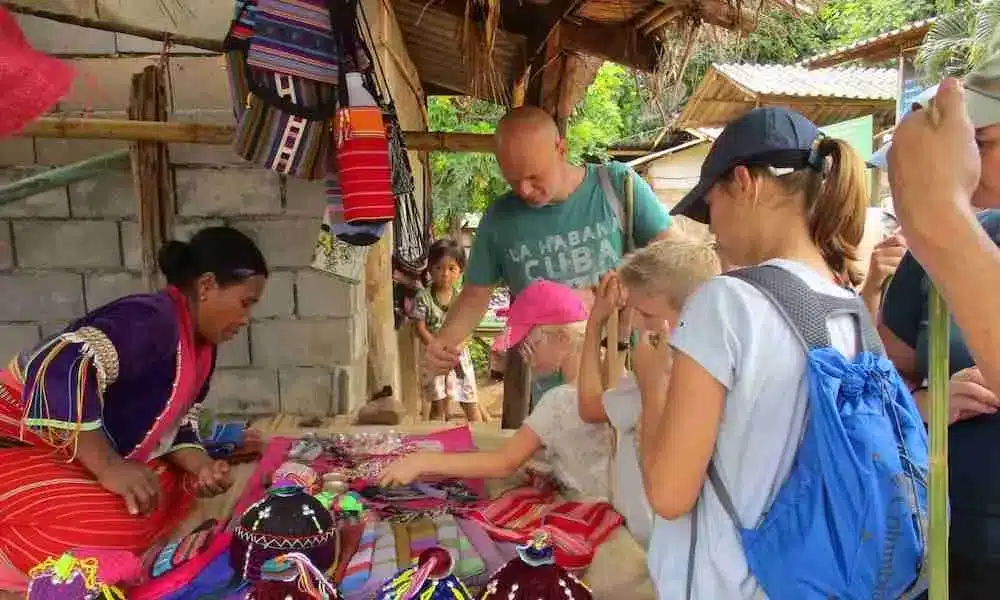
2-Day Ethical Hill Tribe Itinerary
Day 1: River Routes and Ridge Trails
- Morning: Market stop and river travel
Start at a local wet market in Chiang Rai. With your guide, shop for fresh ingredients for dinner. Then take a long-tail boat along the Mae Kok River. It’s scenic, but it’s also a historic route used by hill communities for generations. - Midday: Cooking with bamboo
Get off the boat near a Karen village. Instead of a restaurant lunch, cook using bamboo. You’ll cut fresh bamboo, fill it with rice and herbs, then roast it over a fire. - Afternoon: Hike to a Lahu village
Set out on a 2 to 3-hour walk through bamboo stands and rice fields. You’ll head toward a Red Lahu village (such as Ban Yafu). Many homes are wooden and raised high on stilts. - Evening: Homestay and stories
Spend the night in a simple bamboo guesthouse or with a host family. Share a meal, often seated on the floor. It’s also a good time to learn a few Lahu words (like “Ooboo Ooja” for “Good Day”) and listen to local stories about mountain life.
Day 2: High Hills and Rest Stops
- Morning: Crafts and tea time
Wake to roosters and woodsmoke. After breakfast, spend time with an elder or craft worker. You might try bamboo weaving or see how crossbows are used in tradition. Later, hike past higher-elevation tea plantations, where mist often hangs over the slopes. - Midday: Visit an Akha community
Continue to a nearby Akha village. You can see spirit gates and learn about silverwork and traditional dress. Eat a simple picnic lunch with wide views toward the Myanmar border. - Afternoon: Waterfall and hot springs
The last stretch drops toward a quiet waterfall (like Huay Mae Sai). A cold swim can feel perfect after two days of walking. Before returning to town, stop by the Pong Phra Soet Hot Springs and soak your feet in mineral pools. - 4:00 PM: Return to Chiang Rai
You’ll arrive back in the city with a side of Northern Thailand many visitors never see.
What to Pack
- Shoes: Sneakers or hiking boots with a strong grip (trails can get slick).
- Clothes: Long pants and a T-shirt to help with the sun and bugs. Pack a light jacket, nights can be cool in the mountains.
- Basics: Bug spray, sunscreen, a reusable water bottle, and small bills (100-baht notes) for local crafts.
1. PDA (Population and Community Development Association)
A widely respected nonprofit in Thailand. Their tours support local projects, including clean water and education.
- Website: pdacr.org
- Location: 3rd Floor, PDA Building, 620/25 Thanalai Road, Chiang Rai (above the “Cabbages and Condoms” restaurant).
- Phone: +66 (0) 53 740 088 or +66 (0) 83 897 3715
- Email: pdatour.cr@gmail.com
- Best for: Learning-focused trips with clear community support.
2. Thailand Hilltribe Holidays
Known for small, private tours tailored to your pace. They work with local guides to keep visits respectful and low-pressure.
- Website: thailandhilltribeholidays.com
- WhatsApp/Phone: +66 855 480 884
- Email: info@thailandhilltribeholidays.com
- Best for: Homestays and quieter trekking routes.
3. Akha Hill House
A guesthouse and trekking option that is owned and run by an Akha family. It sits above tea fields and rice terraces.
- Website: akhahill.com
- Phone/Mobile: +66 91 747 9499 (Contact: Mr. Apae)
- Email: apaehouse@gmail.com
- Best for: Staying in an Akha village while supporting local owners.
4. Local Alike
A social enterprise that links travelers with communities across Thailand. They highlight “Hloyo,” an Akha community near Mae Salong, known for its award-winning sustainable tourism model.
- Website: localalike.com
- Email: group@localalike.com
- Best for: Well-planned community-based tourism (CBT) trips.
Quick Tip for Booking
When you contact an operator, say you want a community-based tourism (CBT) experience. It signals that you’re looking for trips where villagers help plan the visit and receive most of the income.